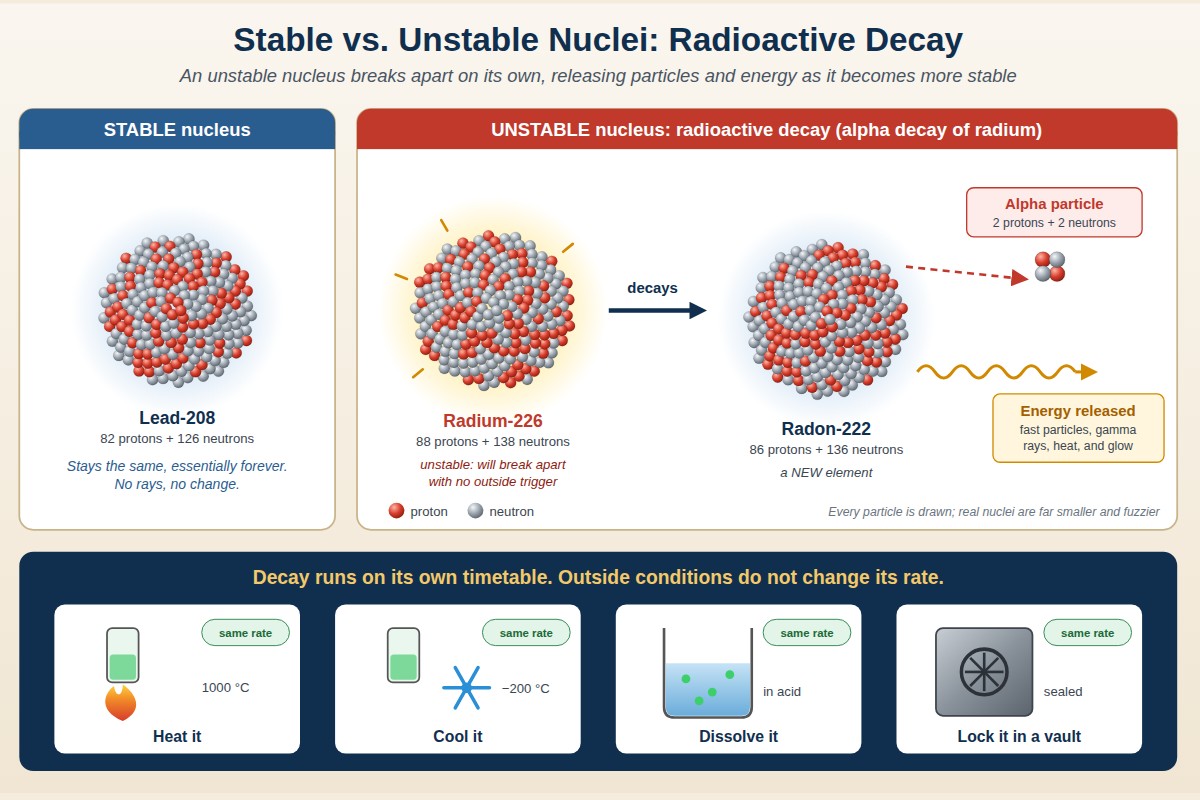
Modern PhysicsGlowing in the Dark: Marie Curie and the Atom That Wouldn't Sit StillA mysterious mineral that glows brighter than the uranium it should have come from — the puzzle that led Marie Curie into the nucleus of the atom itself, and into a discovery that would go on to power cancer treatment, WWI battlefield X-ray units, and the science of nuclear decay.Open Reading PassageRegents Practice VersionInteractive Regents Practice
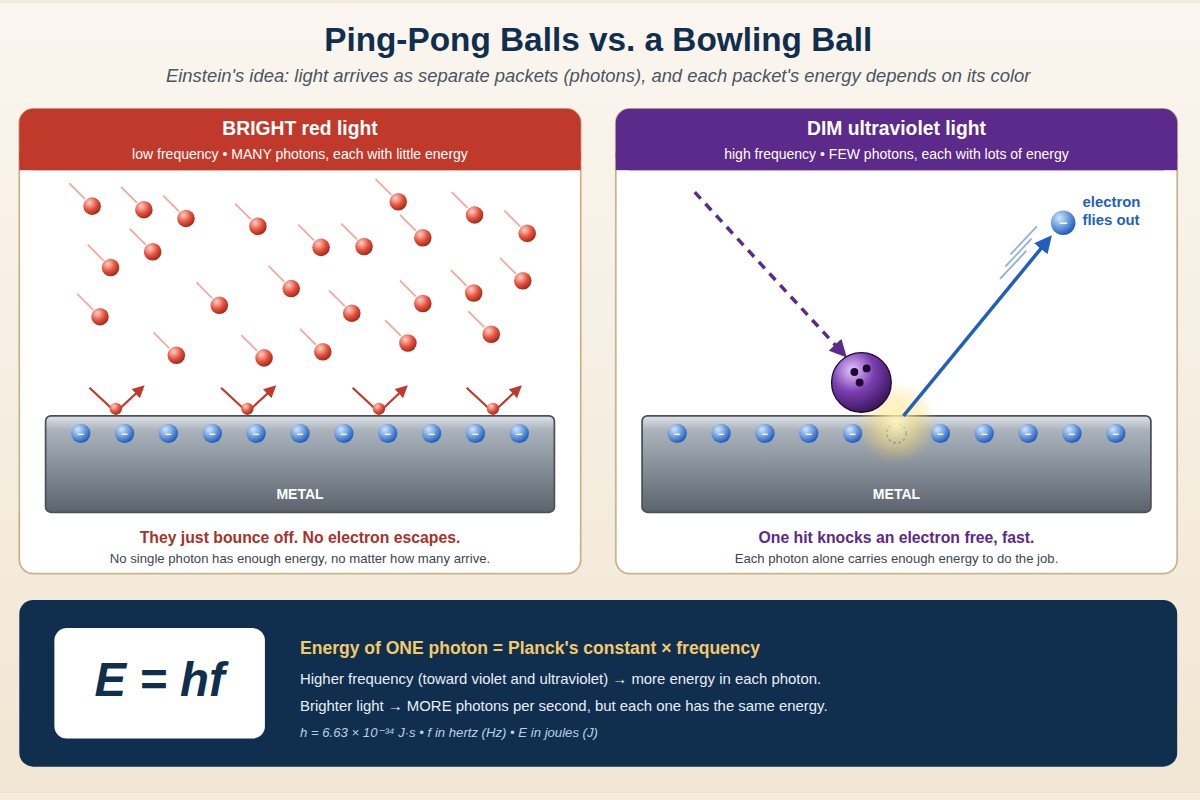
Modern PhysicsThe Light in the Dark: Einstein, the Photoelectric Effect, and the Battle for RealityA struggling patent clerk, a stubborn experimental result wave theory couldn't explain, and a wild idea — that light itself arrives in discrete energetic packets, not a smooth continuous wave. The photoelectric effect that a young Albert Einstein used to upend a century of physics, and that now powers everything from solar panels to digital cameras.Open Reading PassageRegents Practice VersionInteractive Regents Practice
Interactive Regents Practice from the Lessons
Each link jumps to the self-grading NYSSLS practice section at the bottom of a lesson page (31 lessons): a Regents-style question plus a challenge set with Support/Refute, substitute-values, vector, bar-graph and constructed-response questions.