Early Models of the Atom
From Thomson and Rutherford to the nuclear model of matter
| | ||||||||||||||||







Check Your Understanding
5 quick questions — pick an answer to see if you’re right.
1. In Rutherford's gold foil experiment, what did most alpha particles do?
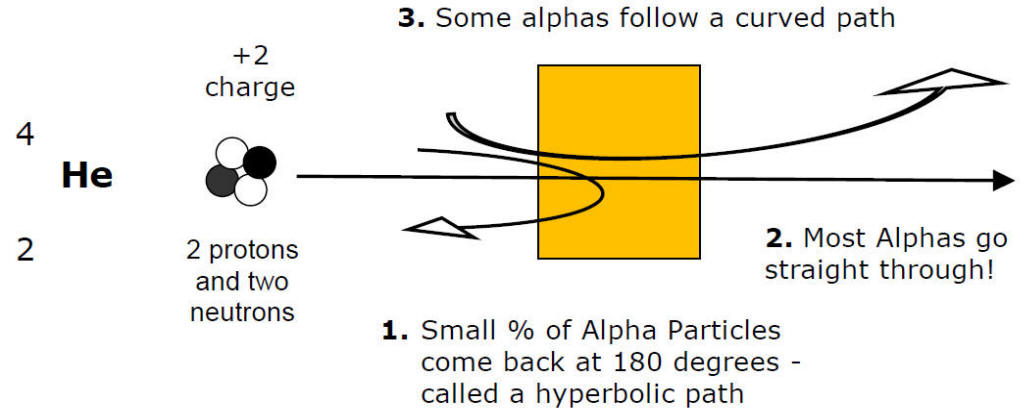
2. A few alpha particles were deflected at large angles. What does this indicate?
3. What force caused the alpha particles' curved paths near the nucleus?
4. Where is virtually all of an atom's mass found?
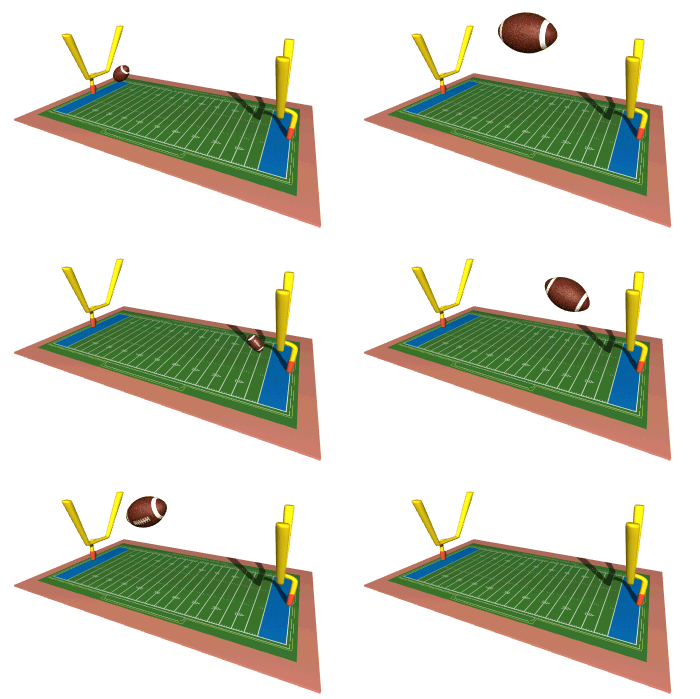
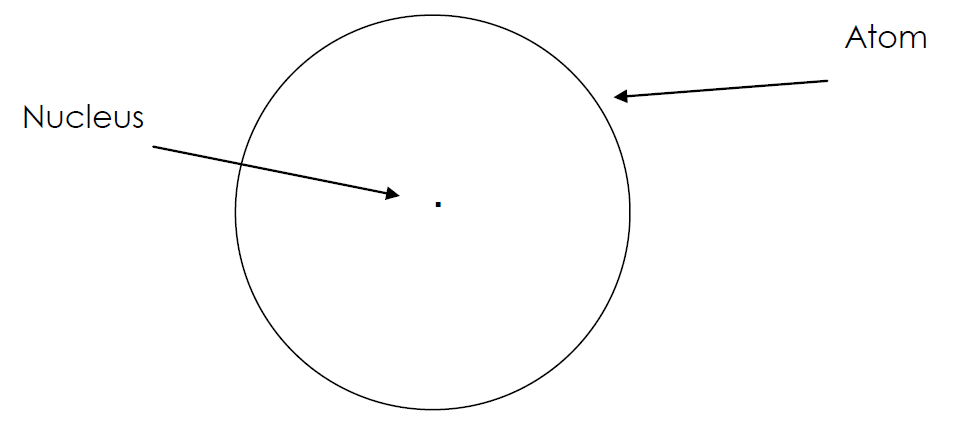
5. If an atom were the size of a football stadium, the nucleus would be about the size of…
A Timeline of Atomic Models
Our model of the atom changed as new evidence appeared: Dalton’s solid sphere (1803), Thomson’s “plum pudding” (1897), Rutherford’s nuclear model (1911), and Bohr’s energy levels (1913).
What evidence led J. J. Thomson to change Dalton’s model of an indivisible atom?
▶ Want a challenge? Open 6 more Regents-style questions (harder · mixed formats)
Challenge score: 0 / 6
C1. In Thomson’s “plum pudding” model, how is the atom arranged?
C2. Place a check mark in three boxes to indicate experimental evidence that led scientists to revise the model of the atom.
C3. A student makes the following claim about Thomson’s “plum pudding” model.
Place a check mark in either the Support or Refute box. Justify your response.
C4. An atom is about 10−10 m across, while its nucleus is about 10−15 m across. In a scale model, the nucleus is a marble 1 cm (0.01 m) across. Determine how wide the whole atom would be in the scale model.
C5. Why was Rutherford’s model, by itself, unstable according to classical physics?
C6. Choose one change in the timeline of atomic models (Dalton → Thomson, Thomson → Rutherford, or Rutherford → Bohr). Identify the evidence that caused the change and describe how the model was changed to explain it.