Kinetic Energy of the Photoelectron
How light frequency determines the maximum energy of emitted electrons
|
K.E. of Photoelectron
| Flash |
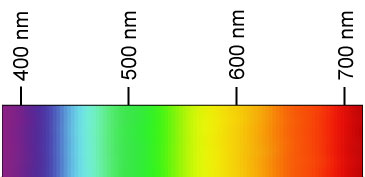
The white light was unable to discharge the electroscope (eject the electrons) but the ultraviolet light could. Why??? The ultraviolet light had a higher frequency .... ... a higher energy.
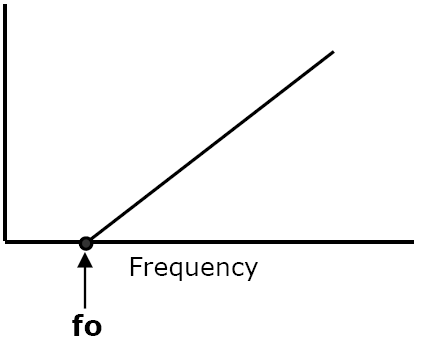
b) nature of emitting metal Typical Plot of Frequency of
fo - Threshold Frequency - frequency below which no photoelectrons will be emitted
Below Threshold?
No Emission
Above Threshold?
Emission
|
||||


Check Your Understanding
5 quick questions — pick an answer to see if you’re right.
1. The kinetic energy of a photoelectron is determined by the light's frequency and…
2. What is the threshold frequency?
3. Ultraviolet light discharged an electroscope but white light did not. Why?
4. Very bright light below a metal's threshold frequency shines on it. What happens?
5. Which color of visible light would give photoelectrons the most kinetic energy from the same metal?
A Calculator’s Solar Cell Material
A metal with a work function of 2.3 eV is illuminated with light of wavelength 4.0 × 10⁻⁷ m (violet). (h = 6.63 × 10⁻³⁴ J·s; c = 3.00 × 10⁸ m/s; 1 eV = 1.60 × 10⁻¹⁹ J)
What is the maximum kinetic energy of the emitted electrons?
▶ Want a challenge? Open 6 more Regents-style questions (harder · mixed formats)
Challenge score: 0 / 6
C1. Red light (7.0 × 10⁻⁷ m, 1.8 eV) shines on the same metal. What happens?
C2. Determine the longest wavelength of light that can eject electrons from this metal (work function 2.3 eV). Give your answer in nanometers (1 nm = 10−9 m).
C3. A student makes the following claim.
Place a check mark in either the Support or Refute box. Justify your response using a mathematical relationship.
C4. The fastest electrons have a kinetic energy of 1.3 × 10⁻¹⁹ J. Substitute numerical values into a mathematical representation that can be used to determine their speed. Then calculate the speed. (me = 9.11 × 10⁻³¹ kg)
C5. Which change would increase the maximum kinetic energy of the photoelectrons?
C6. An engineer wants to use this metal (work function 2.3 eV) in a light meter for outdoor sunlight. Identify one benefit and one drawback of this choice, using the photoelectric equation.