How Much Energy?
Nuclear vs. chemical energy, and how we use nuclear processes
Do Now: A uranium fuel pellet is about the size of a pencil eraser. Guess: how much coal would you need to burn to get the same energy?
About a ton of coal! Nuclear reactions release millions of times more energy per atom than chemical reactions like burning.
A. Nuclear vs. Chemical Energy
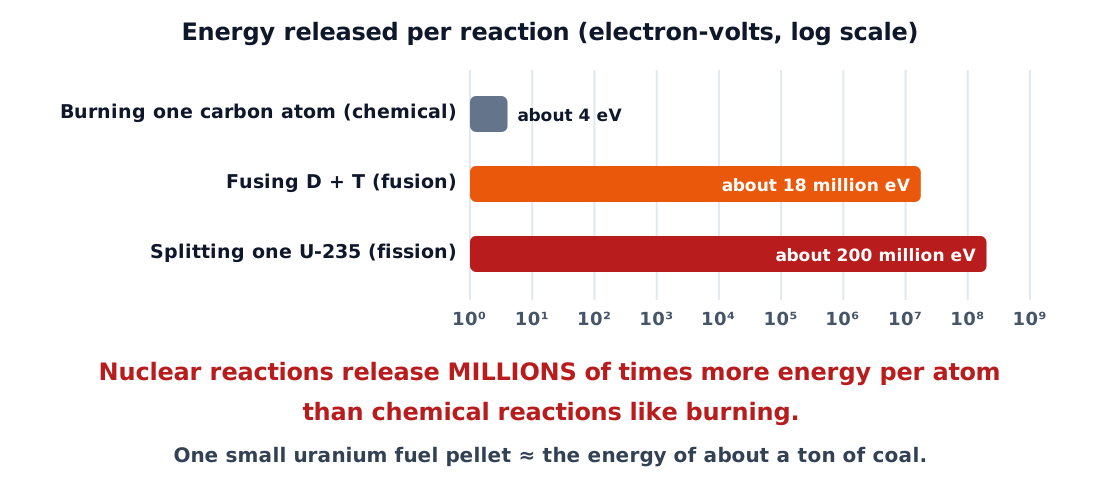
Chemical reactions (burning, batteries) rearrange electrons between atoms: a few eV per atom.
Nuclear reactions rearrange the nucleus itself, where the strong force is much stronger: millions of eV per atom.
B. Nuclear Processes at Work
Nuclear power: fission heats water to make electricity, with no carbon dioxide released while running.
Smoke detectors: americium-241 gives off alpha particles that make the air conduct a tiny current. Smoke blocks it and sets off the alarm.
PET scans: positron emitters like fluorine-18 show active areas inside the body.
Cancer treatment: gamma rays from cobalt-60 and other sources can destroy tumors.
Carbon dating: the half-life of carbon-14 tells the age of once-living things up to about 50,000 years old.
The Sun: fusion provides the energy for nearly all life on Earth.
C. Weighing the Trade-offs
Benefits of Nuclear Power
Huge energy from little fuel
No carbon dioxide while operating
Runs day and night in any weather
Concerns
Radioactive waste must be stored safely for thousands of years
Accidents are rare but serious
Expensive and slow to build
Your town is choosing between a new natural gas plant and a new nuclear plant. Give one argument for each, using what you learned about energy per reaction.
Nuclear: a tiny amount of fuel gives enormous energy and no carbon dioxide while running. Natural gas: cheaper and faster to build, with no long-lived radioactive waste — but it burns fuel, releasing carbon dioxide and needing far more fuel for the same energy.
Check Your Understanding
5 quick questions — pick an answer to see if you’re right.
1. Compared with burning, a nuclear reaction releases energy per atom that is about
2. Chemical reactions involve changes in
3. Which uses positron-emitting isotopes?
4. Why are smoke detectors that use alpha sources safe?
5. One major concern with nuclear power is