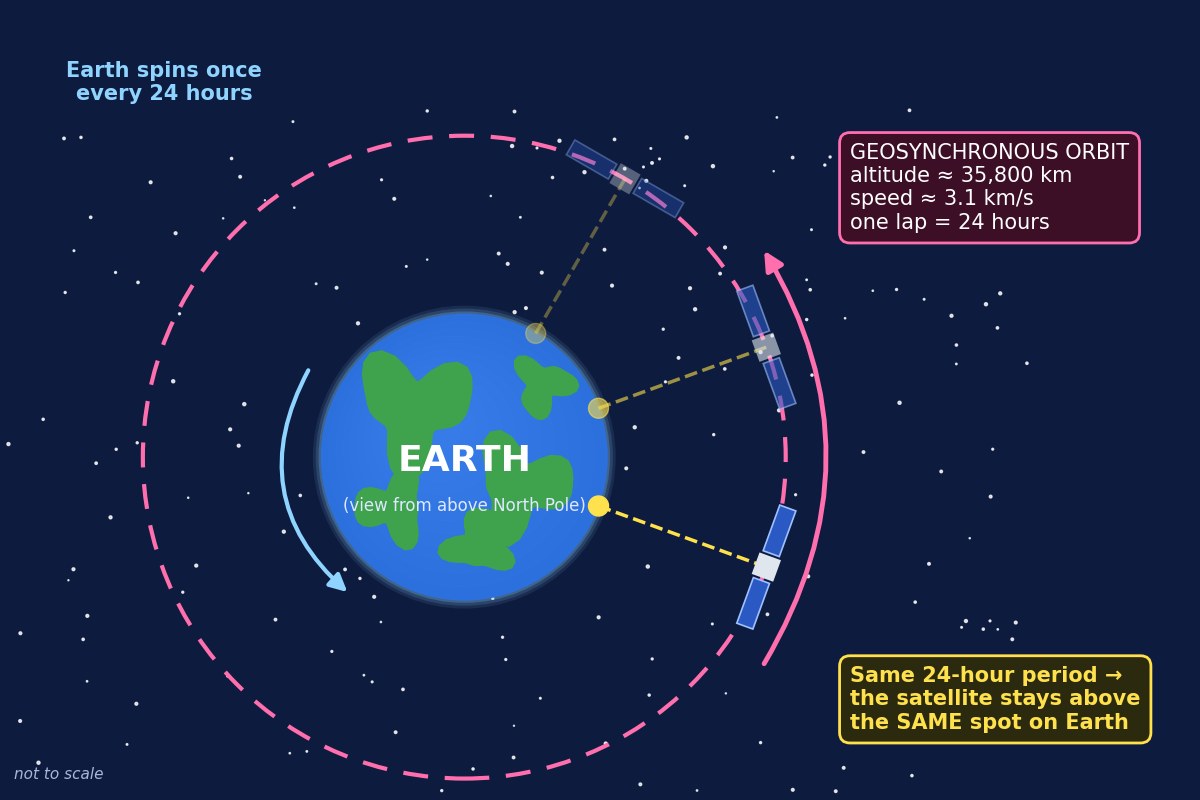
2D MotionPhysics of Geosynchronous SatellitesA satellite hangs over the same patch of Earth for years without ever firing an engine. Students unpack the circular-motion balancing act — gravity pulling in, orbital speed pushing out — that keeps it locked in place, and why that "golden altitude" is the same for every geostationary craft.Open Reading Passage
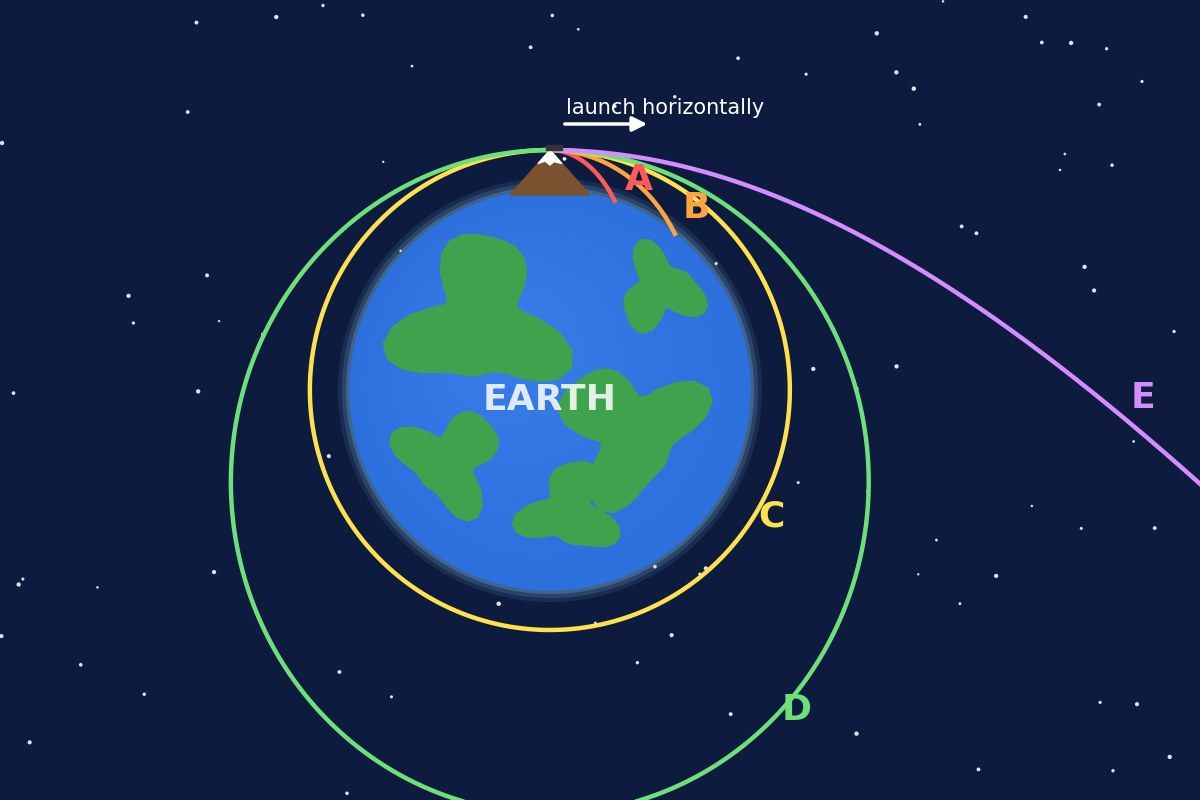
2D MotionNewton's Cannonball: The Thought Experiment That Explained OrbitsFire a cannonball fast enough from a tall enough mountain, and it never lands — it just keeps falling as the Earth curves away beneath it. Students use Newton's own thought experiment to see how an orbit is really projectile motion in disguise, with horizontal velocity and vertical gravity acting completely independently — then go further to explore artificial satellites and the escape velocity needed to leave Earth for good.Open Reading Passage