Photoelectric Effect Summary
Connecting the experimental evidence for the particle model of light
|
From the Authors - "Here you go: metronomes (or "pendula") when on table, oscillate with random phases, since that is how they started and they are "uncoupled" (no energy/information flows from one to other so they do not "know" each other.) When they are all together on the cans, notice that the cans themselves oscillate little, providing coupling/information crossover. which forces "synchronization" in periodic systems (discovered by Huygens in 17th century)."
Summary
1. Photoelectric Effect - Proved to us that light sometimes can act like a
particle
2. What's the Photoelectric Effect?
- When you shine light on certain metals they give off photoelectrons
3. Changing the light in this experiment produced unexpected results
When you brighten light….
Get more
Increase frequency of light used…
Increase the energy of photoelectrons
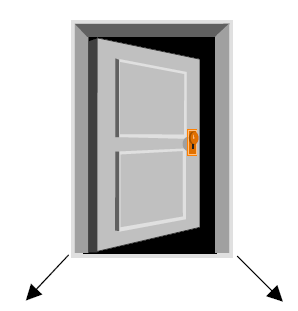
4. Threshold Frequency-'DOORWAY '
Below Threshold f
No Emission
Above Threshold
Emission
|
|


Check Your Understanding
5 quick questions — pick an answer to see if you’re right.
1. The photoelectric effect proved that light sometimes acts like…
2. Increasing the frequency of light (above threshold) in the photoelectric experiment…
3. Brightening the light (above threshold) in the photoelectric experiment produces…
4. The threshold frequency acts like a "doorway." This means…
5. A student says, "Any light will eject electrons if it's bright enough." Why is this wrong?
Designing a Better Light Sensor
An engineer is choosing a metal for a sensor that must respond to green light (photon energy 2.3 eV). Table 1 lists work functions of several metals.
Table 1: Work Functions
| Metal | Work Function (eV) |
|---|---|
| Cesium | 2.1 |
| Sodium | 2.3 |
| Calcium | 2.9 |
| Zinc | 4.3 |
Which metal would produce photoelectrons with the greatest maximum kinetic energy under green light?
▶ Want a challenge? Open 6 more Regents-style questions (harder · mixed formats)
Challenge score: 0 / 6
C1. A student makes the following claim.
Place a check mark in either the Support or Refute box. Justify your response using a mathematical relationship.
C2. Which metals would emit no electrons with green light?
C3. Substitute numerical values into a mathematical representation that can be used to determine the longest wavelength of light that can eject electrons from cesium. Then calculate the wavelength. (h = 6.63 × 10⁻³⁴ J·s; c = 3.00 × 10⁸ m/s; 1 eV = 1.60 × 10⁻¹⁹ J)
C4. The engineer also tests blue light with a photon energy of 2.8 eV. Place a check mark in two boxes to indicate the metals in Table 1 that would emit electrons under this blue light.
C5. To make the sensor respond to red light (1.8 eV) as well, what should the engineer look for?
C6. The engineer chooses cesium for the green-light sensor. Using Table 1, identify one benefit and one drawback of this choice.