Einstein and the Photoelectric Effect
Using photons to explain intensity, threshold frequency, and electron energy
|
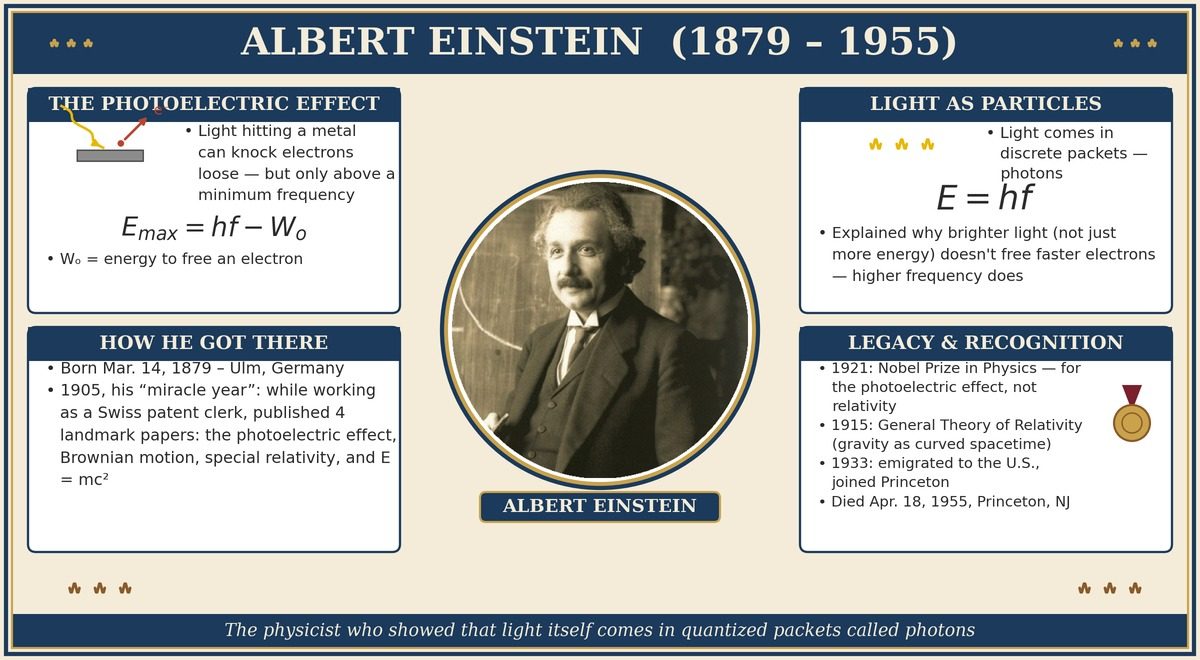
Meet Albert Einstein
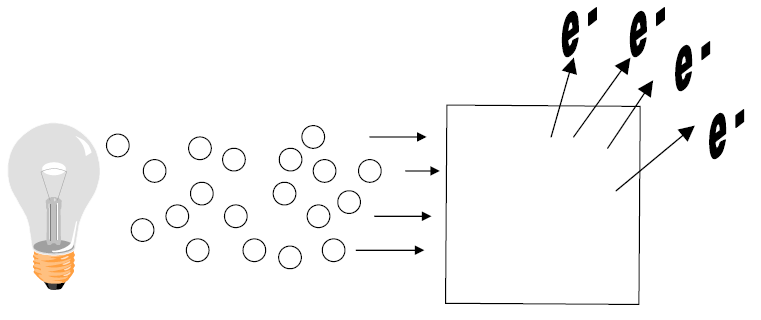
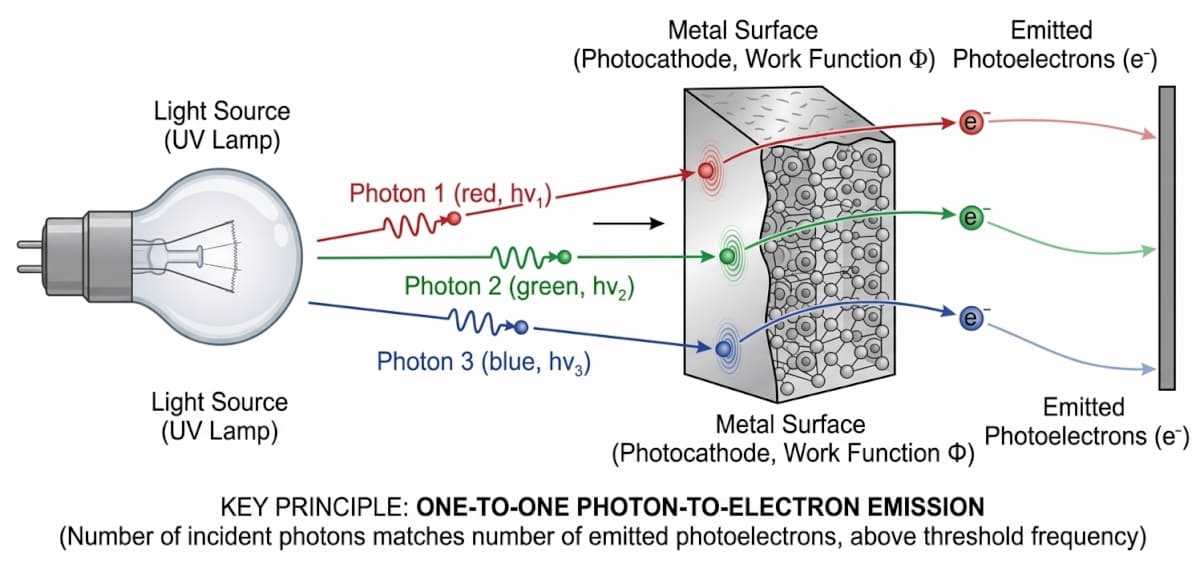
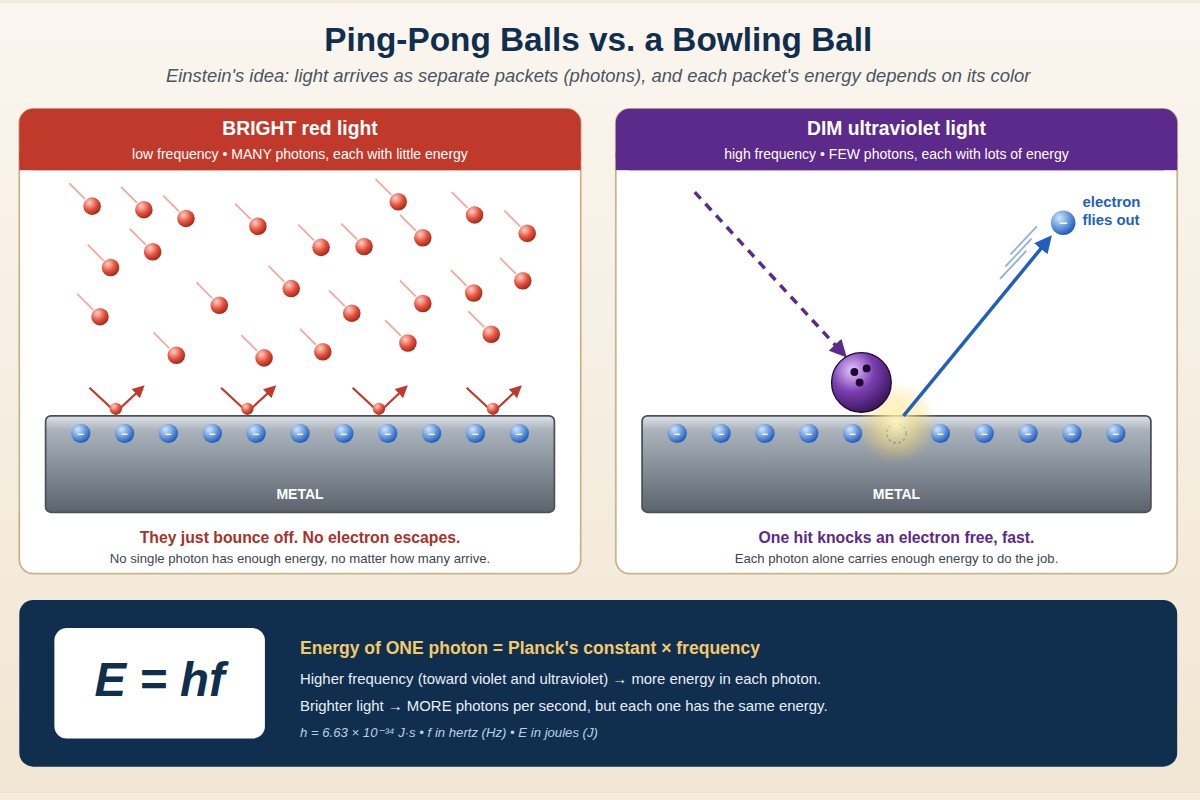
B) Einstein explains photoelectric effect 1) Light intensity and electron emission explained.
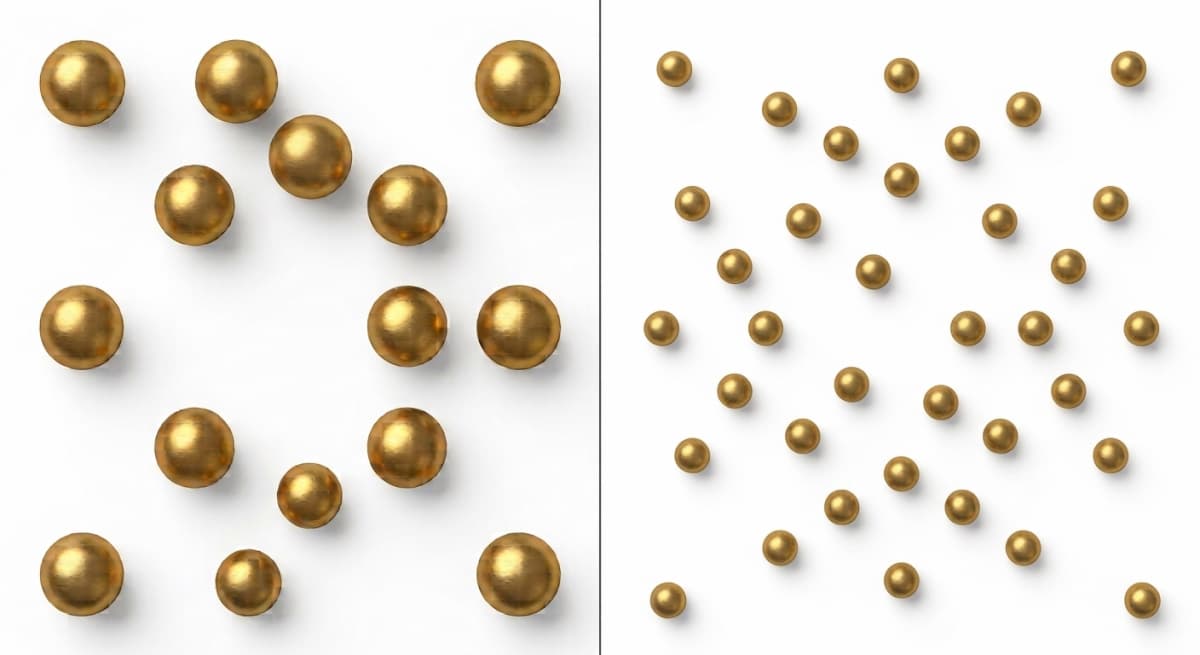
Brightness (Intensity) - measure of # of photons emitted.
Frequency measure of
energy of light
**eV - electron volts - unit of energy
How much work did this photon have to do to remove the electron?
Answer: 3 eV
What would happen if a photon
Photon would not have enough energy to emit an electron
|
|||||||||||||||||||||||||||||||||||



NYSSLS Reading Passage
The Light in the Dark: Einstein, the Photoelectric Effect, and the Battle for Reality
Open Reading Passage → Regents Practice Version →Einstein’s Photon Model
Einstein proposed that light consists of photons, each carrying energy E = hf. Ultraviolet light with a frequency of 1.5 × 10¹⁵ Hz shines on a zinc plate. (h = 6.63 × 10⁻³⁴ J·s; 1 eV = 1.60 × 10⁻¹⁹ J)
What is the energy of one ultraviolet photon?
▶ Want a challenge? Open 6 more Regents-style questions (harder · mixed formats)
Challenge score: 0 / 6
C1. Zinc has a work function of 4.3 eV. Substitute numerical values into a mathematical representation that can be used to determine the threshold frequency for zinc. Then calculate the threshold frequency.
C2. Visible light has frequencies up to about 7.5 × 10¹⁴ Hz (3.1 eV). Will any visible light eject electrons from zinc?
C3. A student makes the following claim.
Place a check mark in either the Support or Refute box. Justify your response using a mathematical relationship.
C4. The fastest electrons ejected from zinc by the 1.5 × 10¹⁵-Hz light have a kinetic energy of 1.9 eV. Determine their speed. (me = 9.11 × 10⁻³¹ kg) Enter the number that goes in front of × 105 m/s.
C5. In Einstein’s model, how many electrons can one photon eject?
C6. Einstein’s model predicts that the maximum kinetic energy of photoelectrons increases linearly with the frequency of the light. Describe how you could test this prediction with a zinc plate, and state what graph result would support the model.