Radioactive Decay
Alpha, beta, positron, and gamma decay

Do Now: Uranium slowly turns into lead over billions of years. How can one element turn into a completely different element?
By changing the number of protons in its nucleus. Each radioactive decay can change the nucleus, and changing Z changes the element.
A. Four Types of Decay
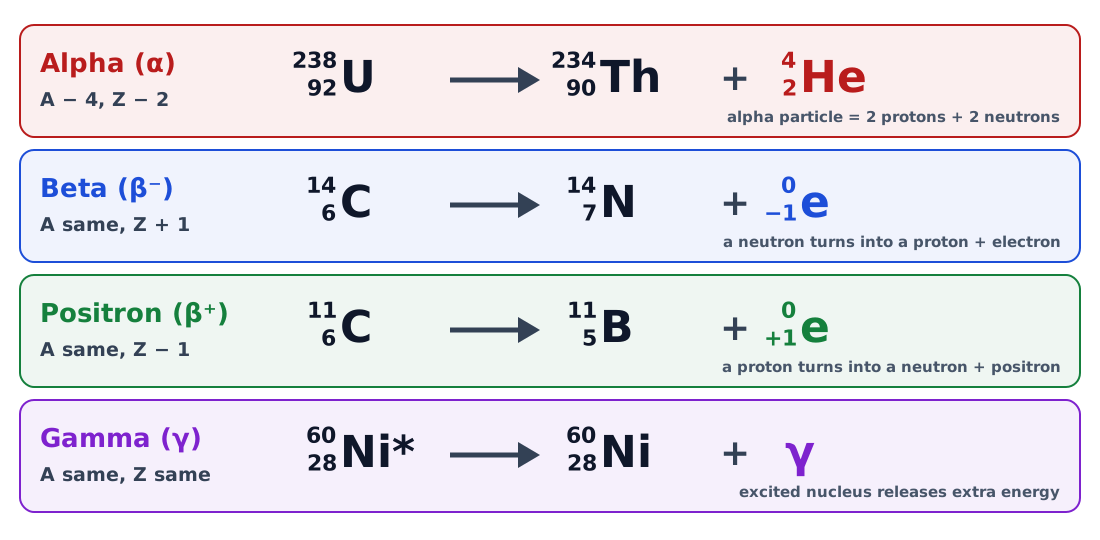
| Decay | Particle Given Off | Mass Number A | Atomic Number Z |
|---|---|---|---|
| Alpha (α) | 42He (2 protons + 2 neutrons) | −4 | −2 |
| Beta (β−) | 0−1e (electron) | same | +1 |
| Positron (β+) | 0+1e (positron) | same | −1 |
| Gamma (γ) | γ (high-energy photon) | same | same |
B. Balancing Nuclear Equations
Radium-226 gives off an alpha particle. What does it become?
Top: 226 = ? + 4 → 222
Bottom: 88 = ? + 2 → 86 (radon)
Answer: 22286Rn — radon-222
Carbon-14 undergoes beta decay. What does it become?
Top: 14 = ? + 0 → 14
Bottom: 6 = ? + (−1) → 7 (nitrogen)
Answer: 147N — a neutron turned into a proton
Fluorine-18, used in PET scans, gives off a positron. What does it become?
Top: 18 = ? + 0 → 18
Bottom: 9 = ? + 1 → 8 (oxygen)
Answer: 188O — a proton turned into a neutron
Explore: Decay Builder
Pick a starting nucleus, then press a decay button. Watch the protons, neutrons, and notation change.
1. Start with U-238. Do alpha, then beta, then beta. What element do you get?
2. Start with C-14 and do beta decay. Compare with Example 2.
3. Try gamma decay before any other decay. What happens, and why?
1. U-238 → Th-234 → Pa-234 → U-234 — back to uranium, but a lighter isotope! (This is the real start of uranium’s decay chain.) 2. You get N-14. 3. Nothing happens — gamma rays only come from a nucleus that has extra energy, usually right after another decay.
C. How Far Does Radiation Go?
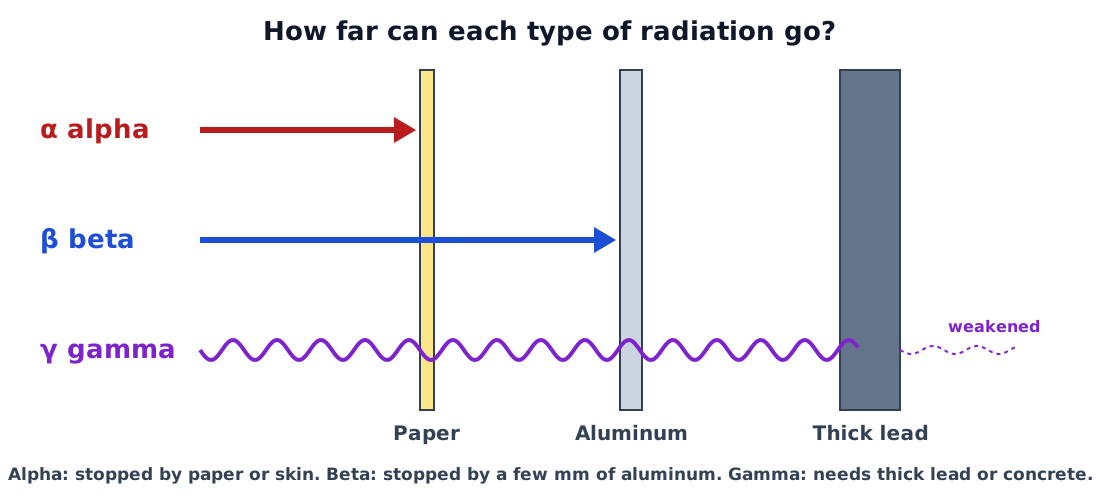
Alpha particles are big and have a +2 charge, so they hit atoms quickly and stop. Beta particles are small and get farther. Gamma rays have no mass and no charge, so they go the farthest.
D. Half-Life
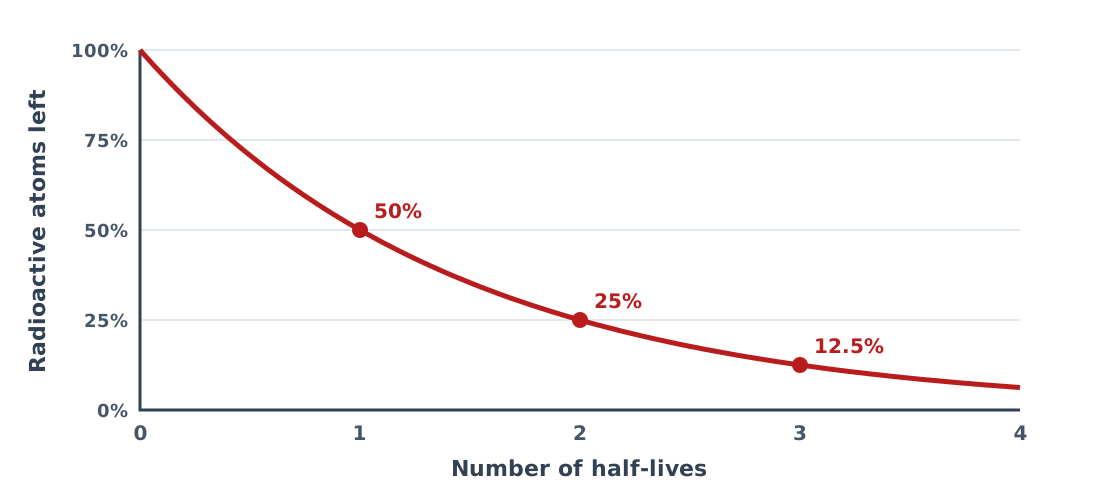
Half-life = the time for half of the radioactive atoms in a sample to decay.
Carbon-14: 5,730 years. Iodine-131: about 8 days. Uranium-238: about 4.5 billion years.
A sample of iodine-131 (half-life 8 days) starts at 80 g. How much is left after 24 days?
24 days = 3 half-lives: 80 → 40 → 20 → 10 g
E. Practice
Complete: 21084Po → ? + 42He
20682Pb (lead-206)
Complete: 13153I → ? + 0−1e
13154Xe (xenon-131)
Complete: 2211Na → ? + 0+1e
2210Ne (neon-22)
What particle is missing? 24195Am → 23793Np + ?
Top: 241 − 237 = 4; bottom: 95 − 93 = 2 → an alpha particle, 42He. (This is the decay inside smoke detectors.)
Check Your Understanding
5 quick questions — pick an answer to see if you’re right.
1. In alpha decay, the mass number
2. In beta (β−) decay, the atomic number
3. Which decay does NOT change the element?
4. Which radiation can be stopped by a sheet of paper?
5. A 40-g sample has a half-life of 2 hours. How much is left after 6 hours?