The Head-to-Tail Method
Adding Vectors Graphically, Tip to Tail

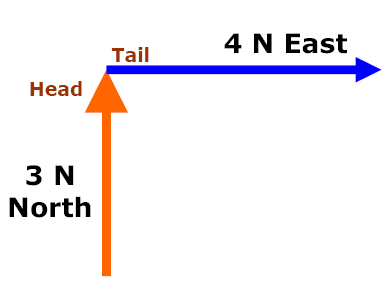
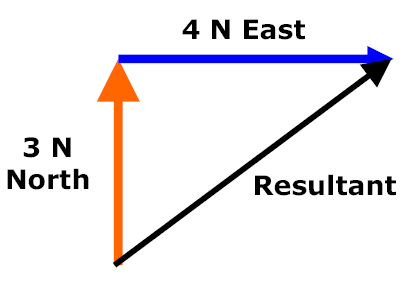
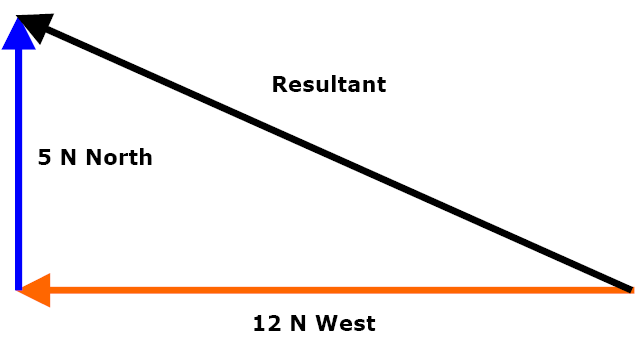
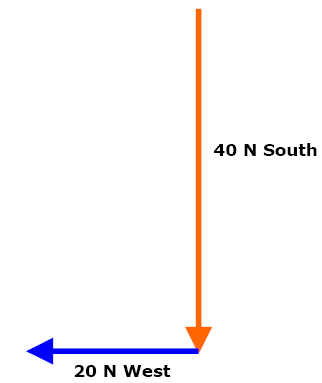
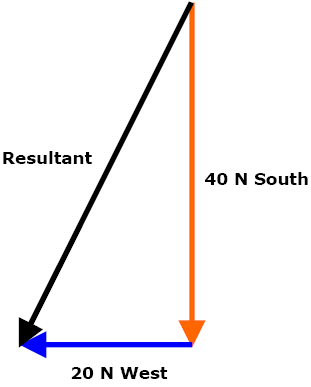
Head-to-Tail Method — draw vectors tip-to-tail; the resultant runs from the first tail to the last tip.
Two forces, 3 N and 4 N, act at an angle of 90° to each other.
Find: the resultant of these forces.
Review — Weightlessness
Zoom PBS (Flash Version)
(QuickTime Version)
Monster Shoot Out Game
Monster Shoot Out Game
Show Me The Physics
Vector Resultants Simulation
[ Flash ]
Finding Resultants
“Head to Tail”
Try This at Home!
The Coanda Effect
Show Me The Physics
YouTube Channel
School blocks YouTube?
Download the file below.
When a fluid moves in a single direction, it exerts very little pressure perpendicular to the direction of its flow. The external air pressure keeps the ball in place.
Check Your Understanding
5 quick questions — pick an answer to see if you’re right.
1. In the head-to-tail method, where is the resultant drawn?
2. Forces of 3 N and 4 N act at 90° to each other. What is the magnitude of their resultant?
3. A 4 N east force and a 3 N north force are added head-to-tail. What is the direction of the resultant?
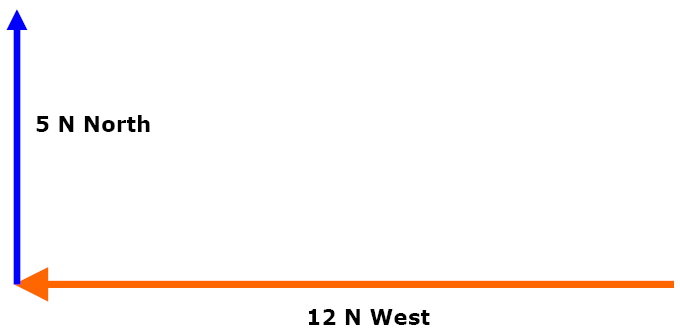
4. A 12 N force west and a 5 N force north are added head-to-tail. What is the magnitude of the resultant?
5. A hair dryer blowing upward can hold a ping pong ball in its stream. Why does the ball stay in place?