Resultants at 90°
Finding the Resultant & Equilibrant of Two Perpendicular Forces

Two forces at 90° to each other combine like the legs of a right triangle
Angle = 90°
Two forces act on a body. Rank the angles between the forces below, from largest resultants to smallest.

Video Instruction
showmethephysics.com
D. Finding Resultants When the Angle Between Forces = 90°
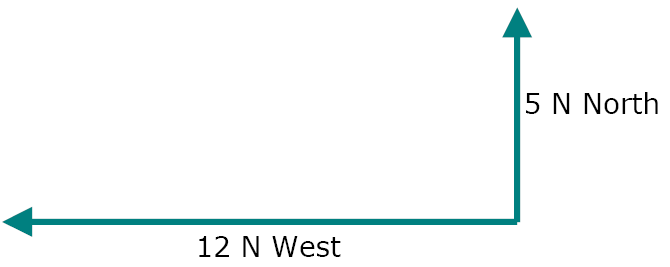
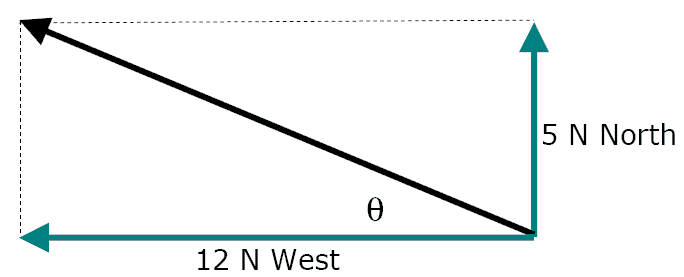
Ex 1) A 5.0 N force pulls an object north while a 12 N force is pulling the object west.
Find: the resultant.
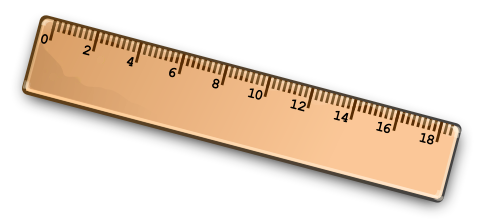
Scale 1 cm = 1 N???
Two Methods
Method One — Graphical Method
(Draw It!!)
1. Draw vectors to scale (1 N = 1 cm)
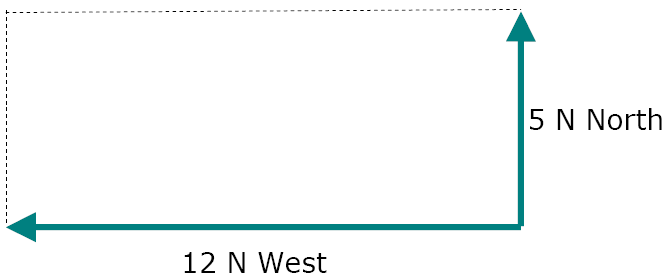
2. Make a parallelogram
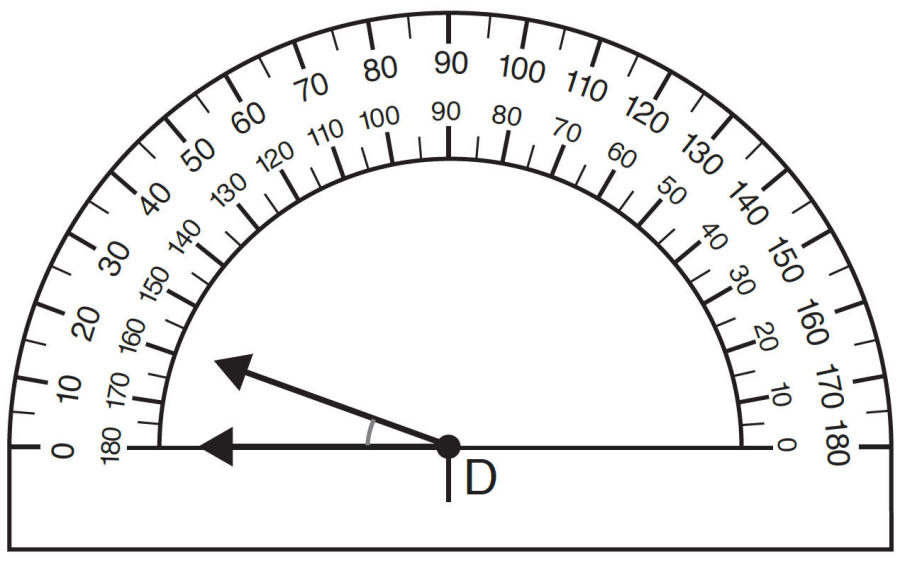
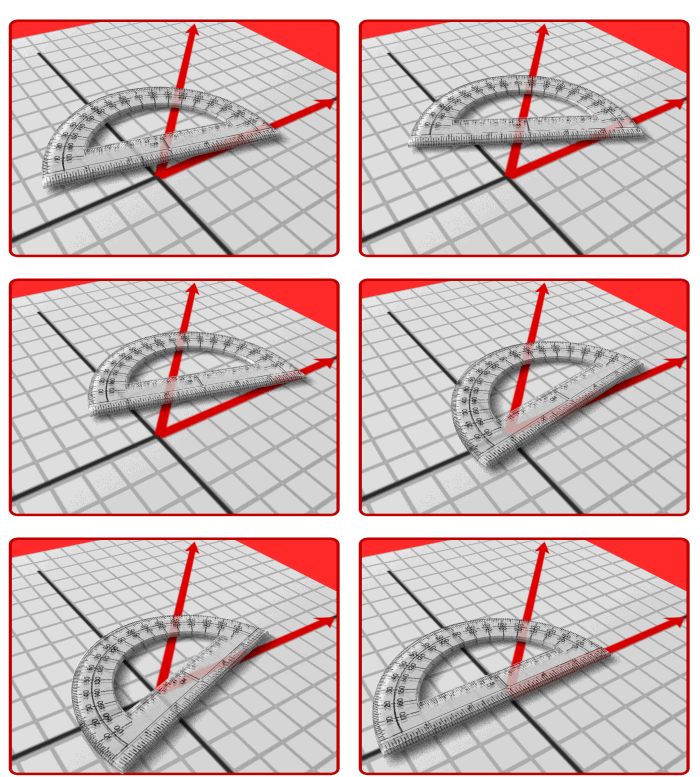
Protractor 101
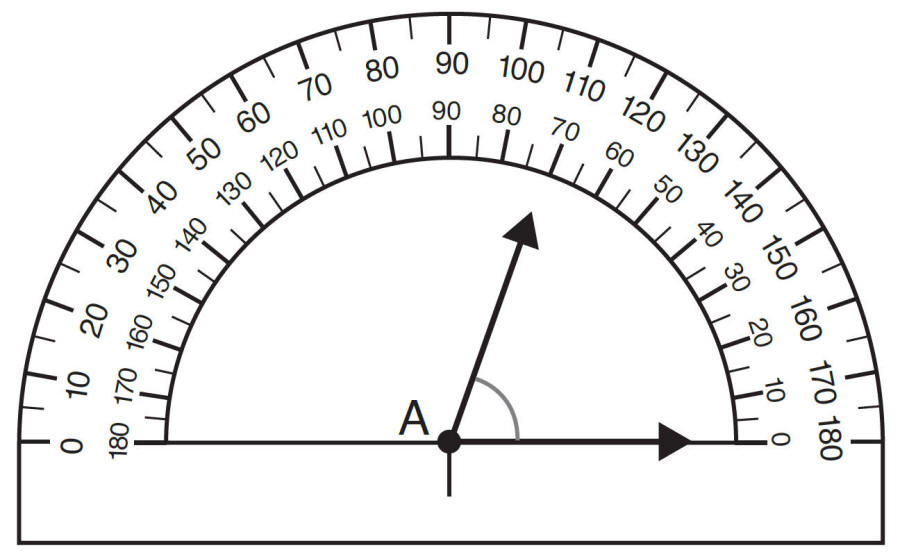
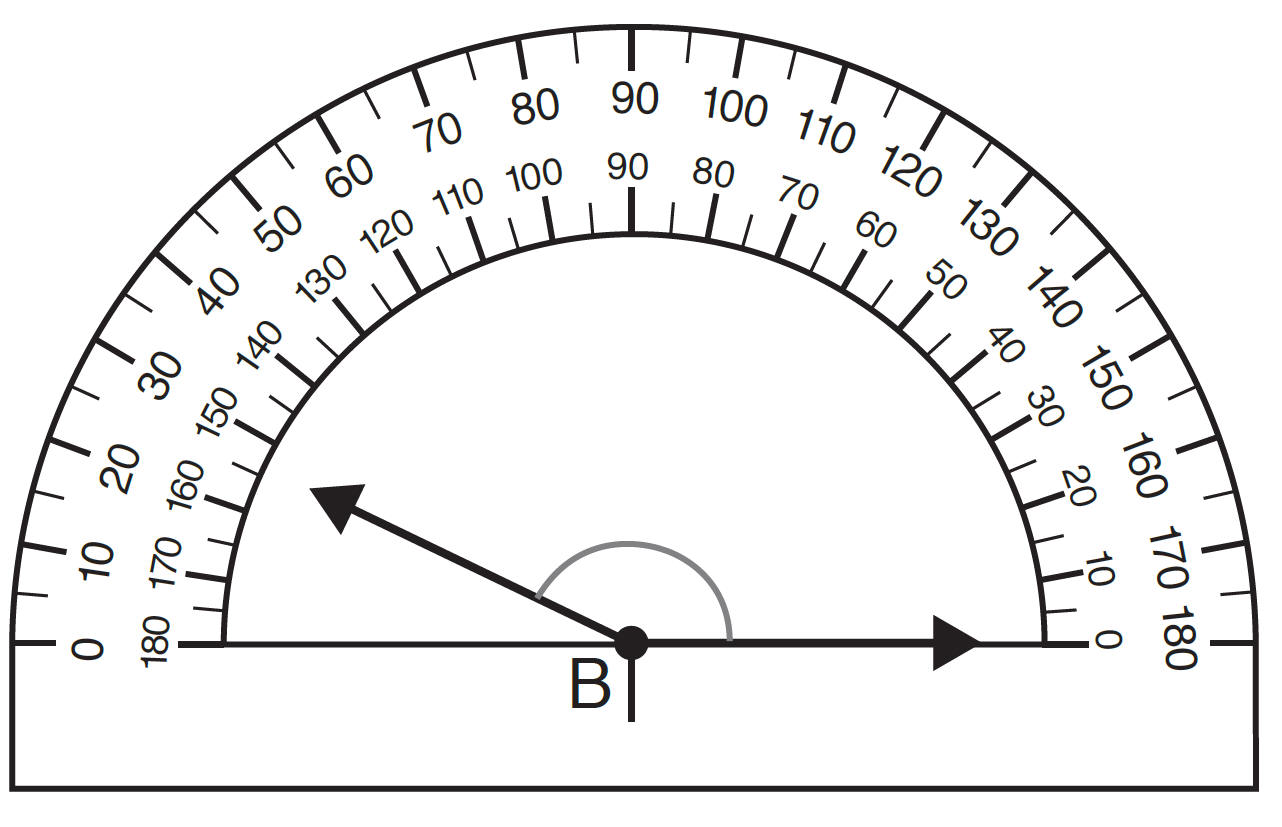
3. Draw diagonal (resultant)
4. Find magnitude & direction of vector
 |
 |
Parallelogram Method
Method Two — Trig. and Pythagorean
(More accurate)
1. Use a² + b² = c² (to find magnitude)
5.0 N² + 12 N² = R²
2. Tan θ = Opp./Adj.
Tan θ = 5.0/12 → θ = ?

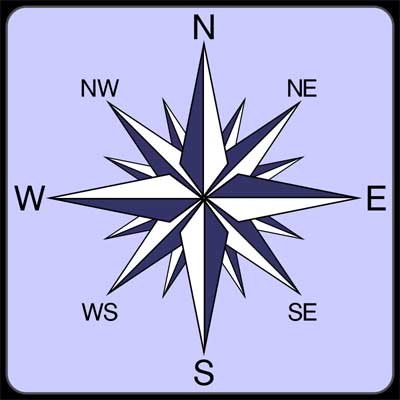
Name That Direction
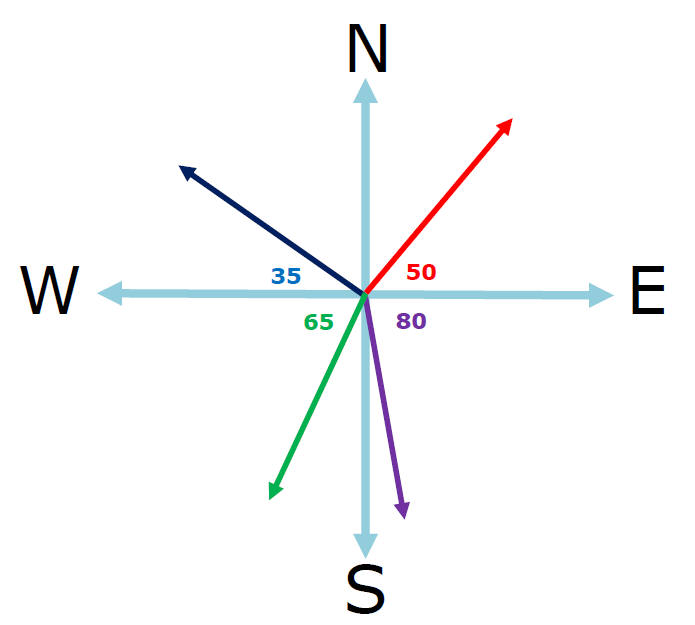
50 degrees N of E, 35 degrees N of W
65 degrees S of W, 80 degrees S of E
Video Instruction
showmethephysics.com
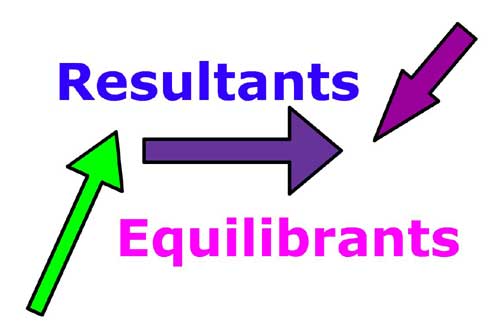
E. Equilibrant — Balancing Force

Show Me The Physics
Video Instruction
showmethephysics.com
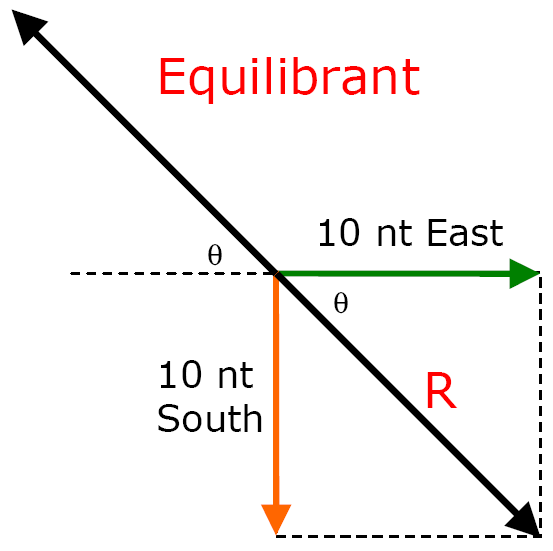
The Equilibrant is always equal in magnitude and opposite in direction to the resultant.
If the Resultant = 5 N, 53° N of W…
Video Instruction
showmethephysics.com
Ex 2
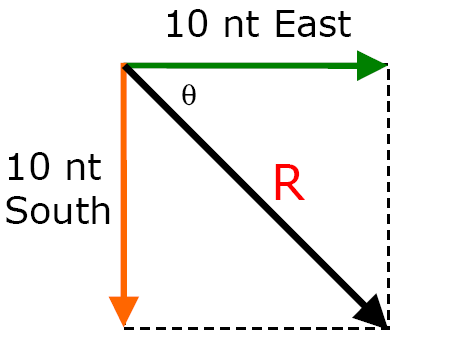
Concurrent forces (acting together) of 10. nt east and 10. nt south act on an object.
Resultant & Equilibrant using Trig. & Pythagorean Theorem
Let’s go to the Videotape!
Intermolecular bonds between water molecules are very strong
kentchemistry YouTube Channel
Check Your Understanding
5 quick questions — pick an answer to see if you’re right.
1. A 5.0 N force pulls north and a 12 N force pulls west on an object. What is the magnitude of the resultant?
2. How does the equilibrant compare to the resultant?
3. A resultant is 5 N, 53° N of W. What is the equilibrant?
4. Forces of 10. N east and 10. N south act on an object. What is the equilibrant?
5. For two perpendicular forces, which trig function finds the direction of the resultant?