Wire-Resistance Questions
Applying resistance relationships to wires, circuits, and classroom problems
|
Brainiac, Season 1 Episode
4. School blocks YouTube? Use the file below.
Show Me
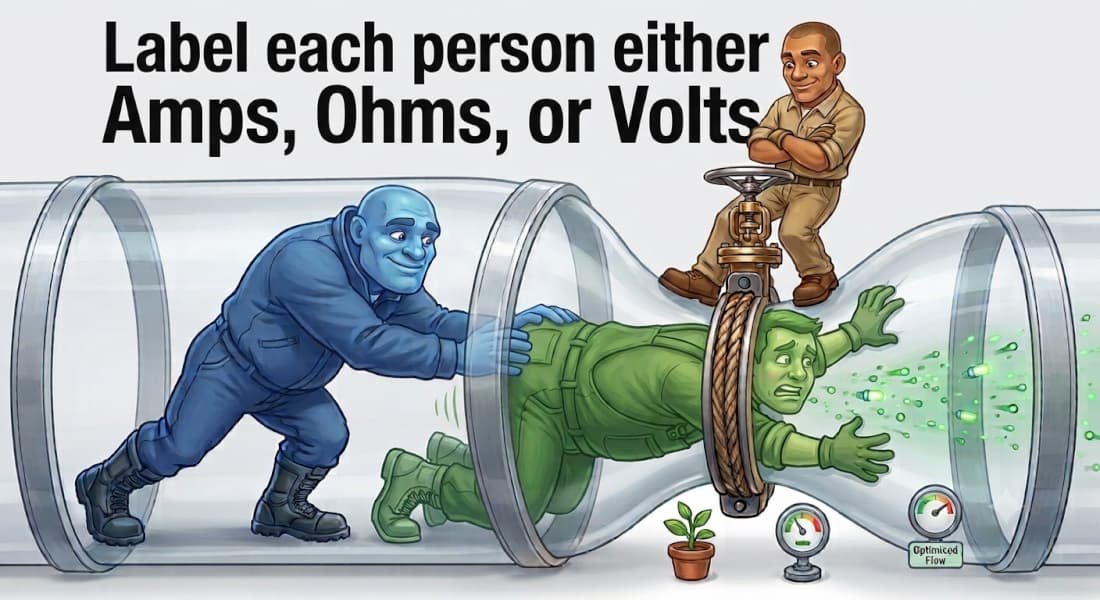
The Physics
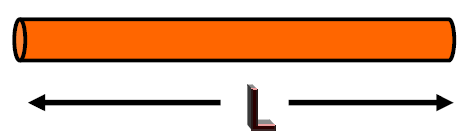
1) What is the resistance of .30 m length of copper wire that has a cross-sectional area of 5.0 x 10⁻⁵ m2?
R = ρL/A
L = .30 m
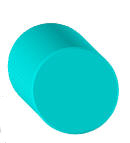
A = 5.0 x 10⁻⁵ m2
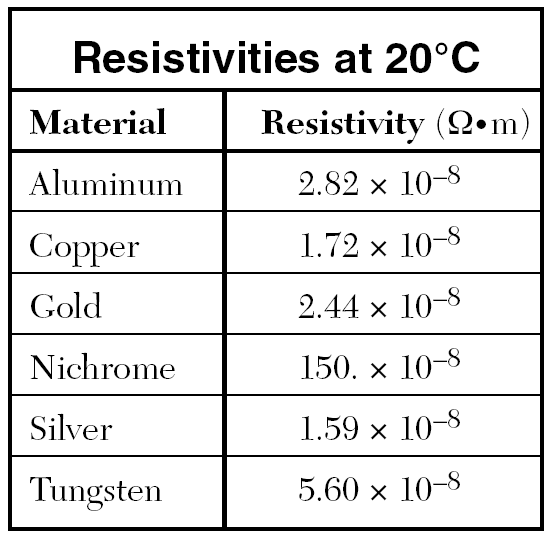
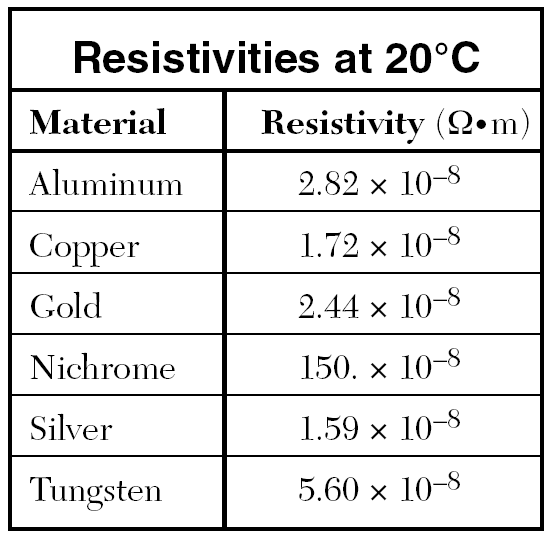
Page 4 Reference Table
ρ = 1.72 x 10⁻⁸ Ωm (reference)
R = 1.0 x 10⁻⁴ Ω
a) How could you alter the dimensions of this wire to reduce the resistance?
R = ρL/A
To reduce the resistance in a wire you could: L ?
Shorten
A?
Increase
2) If the length of a wire were halved, how would that change the wires resistance? R = ρL/A
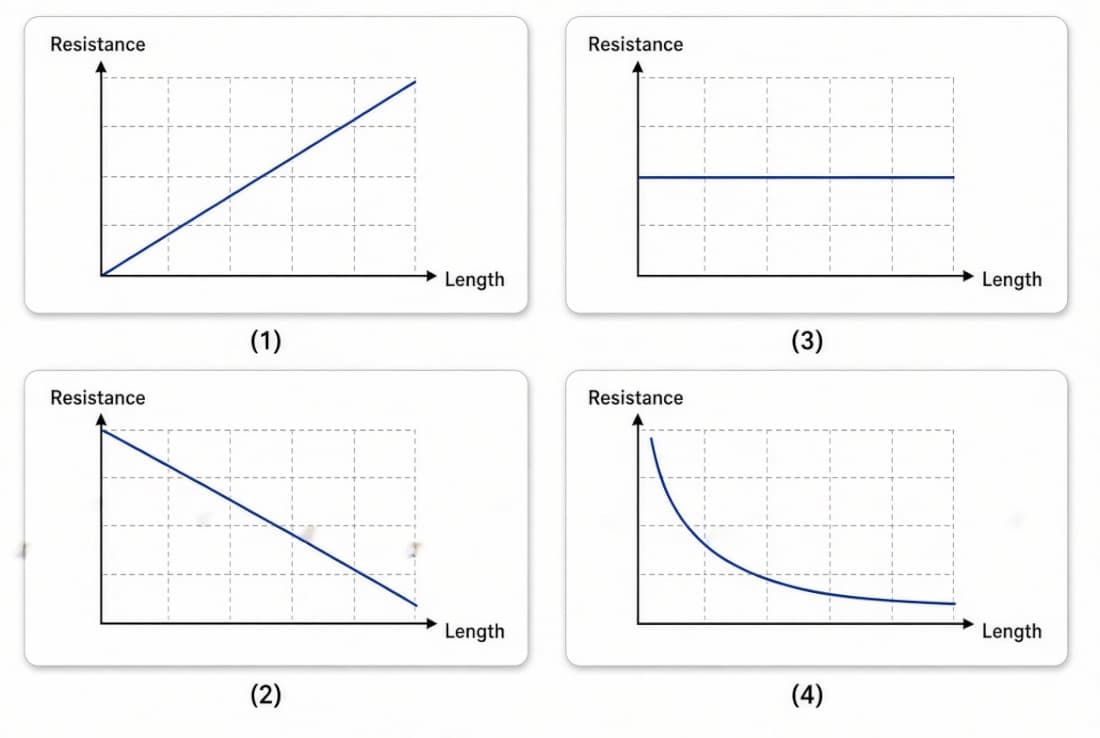
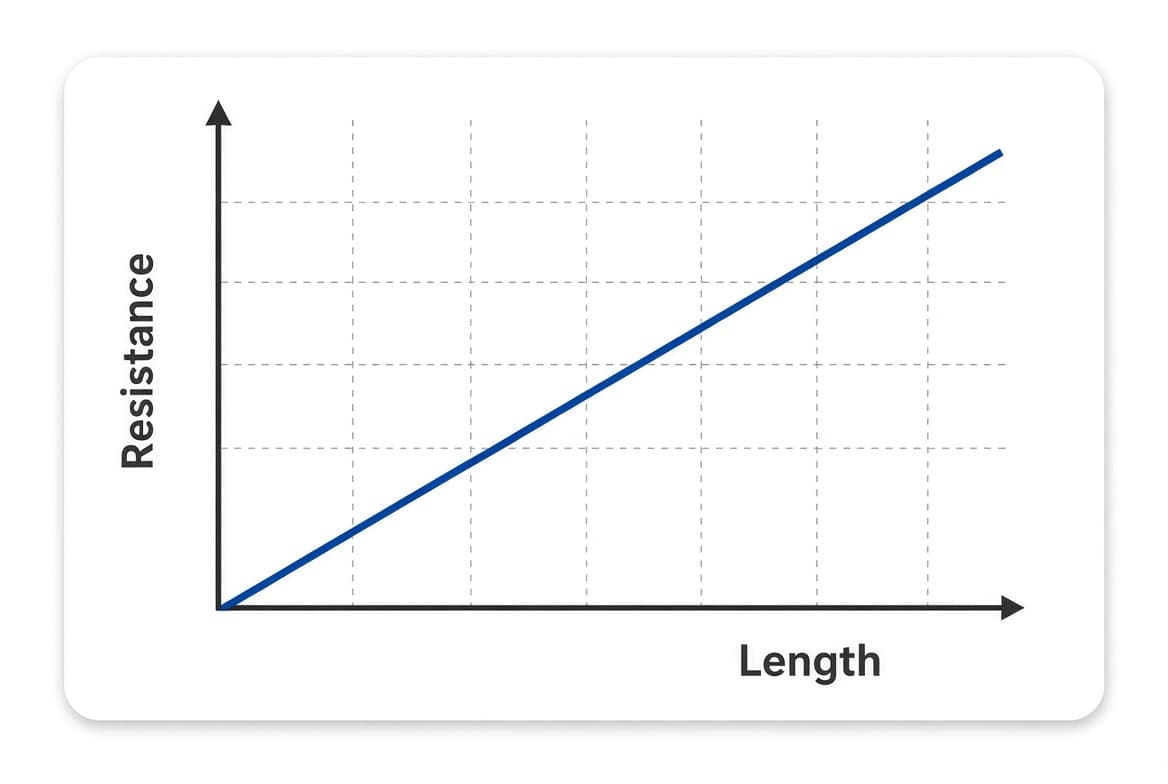
R, L direct
Cross-sectional Area (A) doubled?
R = ρL/A
R, A inverse
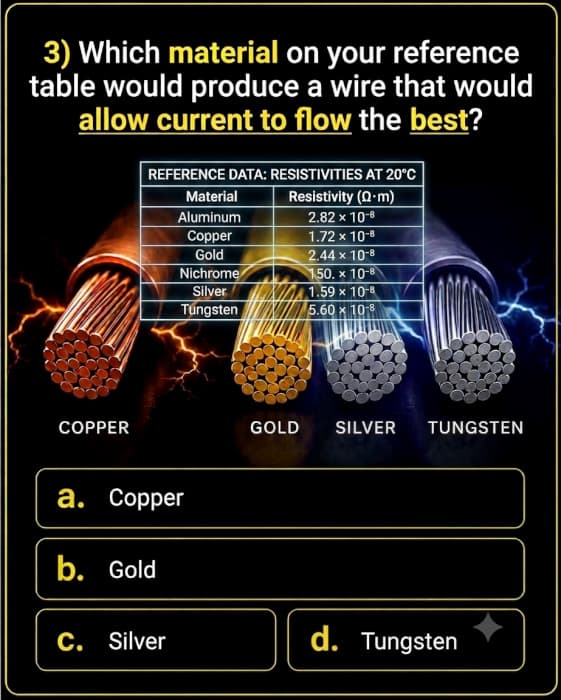
3) Which material on your reference table would produce a wire that would allow current to flow the best?
Silver, lowest resistivity
R, L plot for resistor?
(June 1997)
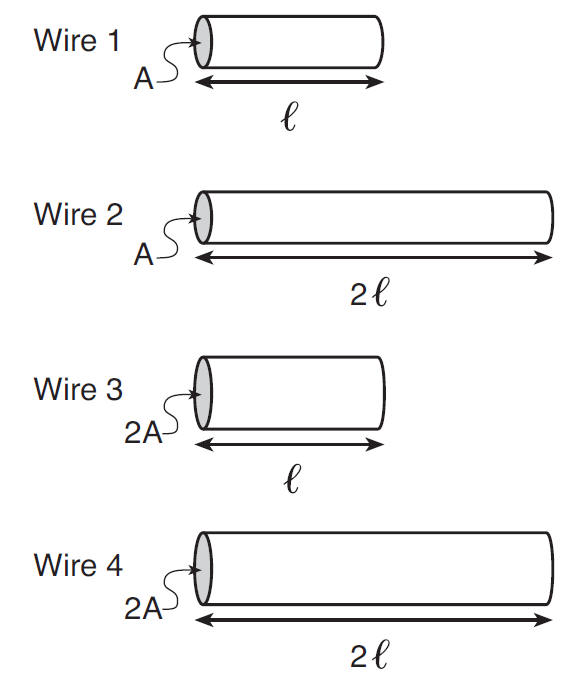
Rank the wire resistance from least to greatest
June 2017
|
||||||


Check Your Understanding
5 quick questions — pick an answer to see if you’re right.
1. Find the resistance of 0.30 m of copper wire (ρ = 1.72 × 10⁻⁸ Ω·m) with area 5.0 × 10⁻⁵ m².
2. To reduce the resistance of a wire, you could:
3. A wire's length is halved AND its cross-sectional area is doubled. Its new resistance is:
4. Wires of the same size are made of silver, copper, aluminum and nichrome. Which carries current best?
5. People touching an electric fence while standing on thick styrofoam did not get shocked. Why?