Resistance in a Wire
How material, length, area, and temperature affect electrical resistance
|
Is resistance in a wire always bad?
School blocks YouTube? Use the file below.
Show Me
The Physics
2) The resistance in a wire depends on:
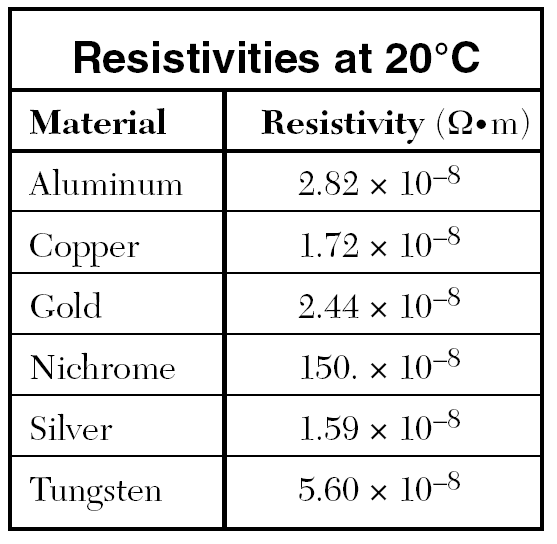
a) resistivity - ρ a metals structural resistance to electron flow p. 4 Reference
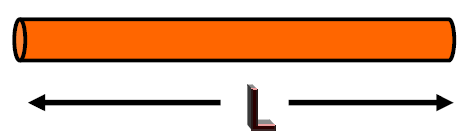
b) Length (L) of the wire
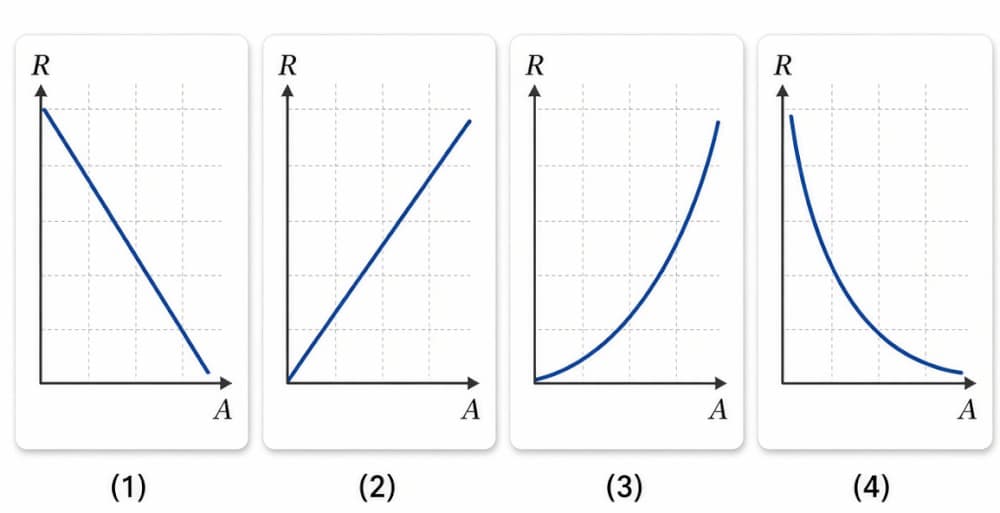
c) Thickness (Cross Sectional Area) of the wire (A)
Ex) R, A relationship?
Inverse relationship 4
3) Resistance and Temperature
(Double Click on Picture above to start video) Full Size Video
Scientific Advisors: Dr. Saul Dushman; Dr. Roman
Smoluchowski; Dr. David Harker
Metals
T down, R down
T up, R up
(many electrical devices
Nonmetals – When temperature increases, resistance decreases
Superconductor - conductor with no resistance
Achieved only at very low temperatures
|
|||||||||



 Task
Task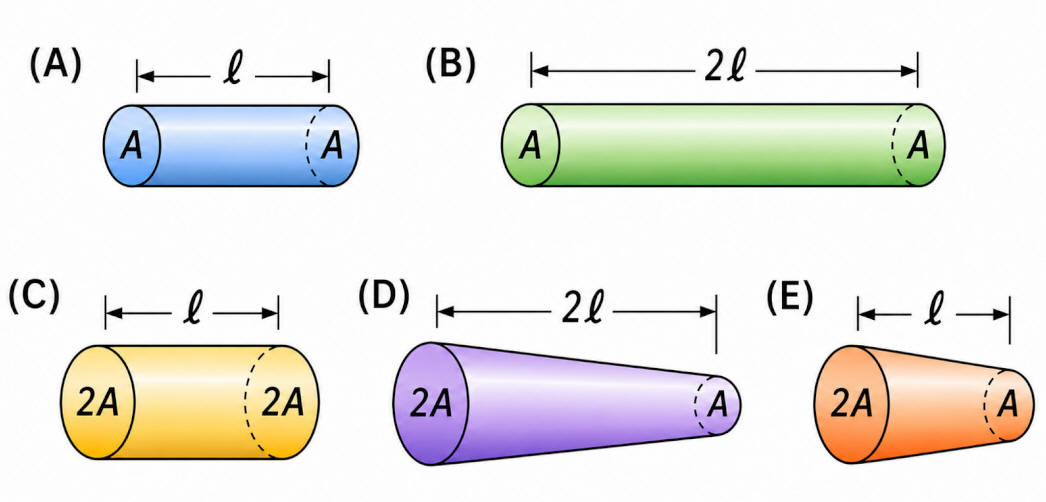


Check Your Understanding
5 quick questions — pick an answer to see if you’re right.
1. A wire's length is doubled while its material and thickness stay the same. Its resistance:
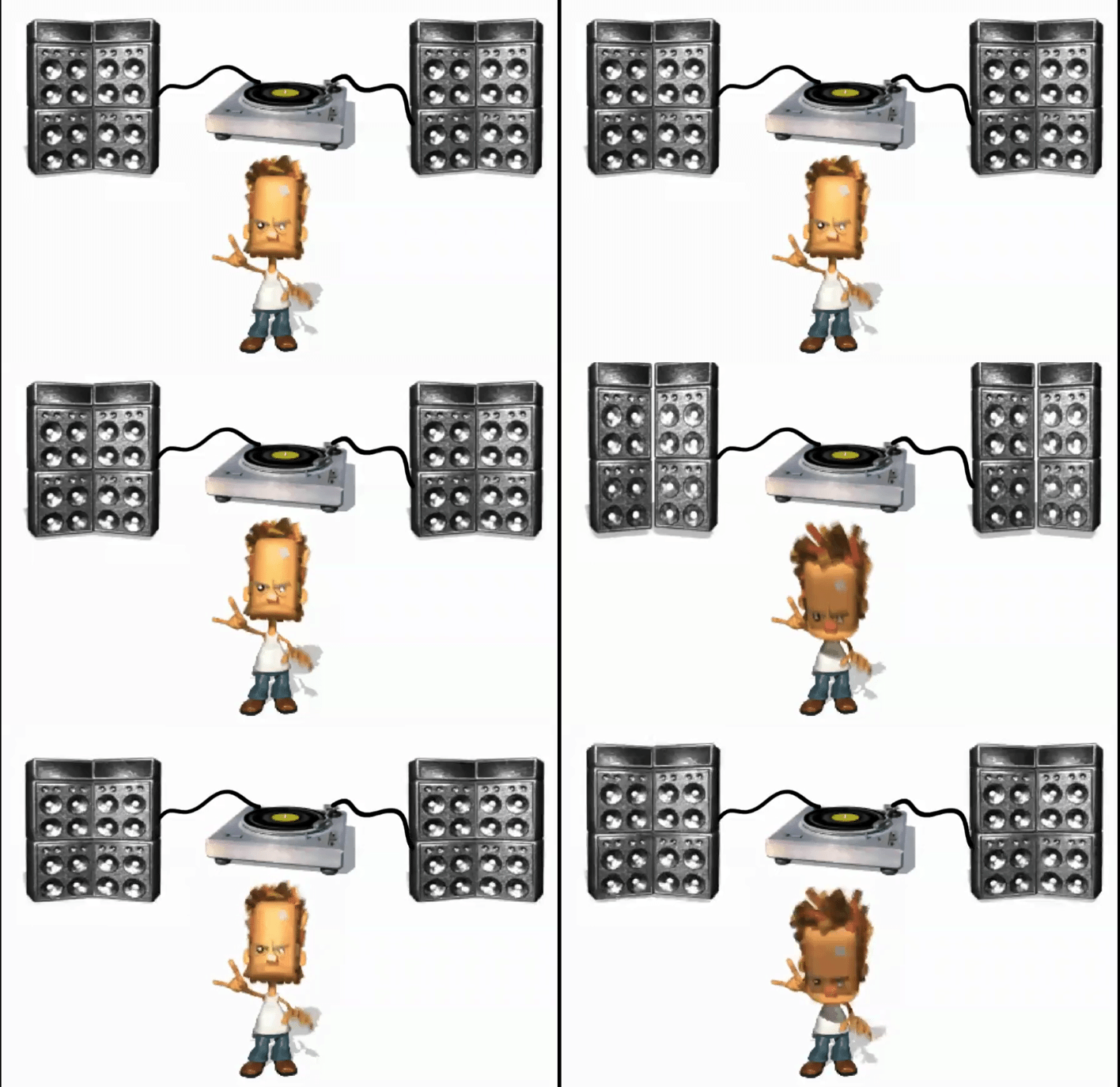
2. Why do powerful speakers need thick speaker wire?
3. A uniform 10 Ω wire is cut into two pieces, one 20% and one 80% of the length. What are their resistances?
4. As a metal wire gets hotter, its resistance:
5. A superconductor is a material that: