Circuit Concepts
Current conservation, junctions, voltage changes, and Kirchhoff's rules
|
Temperature and Current - MIT TV
Show Me
The Physics
II. Circuit Concepts
Conservation of charge and energy for electric current
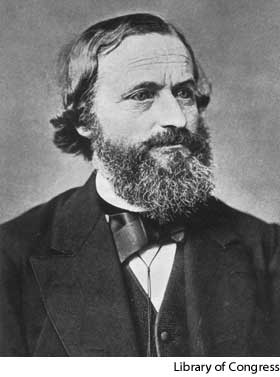
Gustav Robert Kirchhoff This image is in the public domain because its copyright has expired.
1) Kirchhoff's 1st Law
“Amps In = Amps Out”
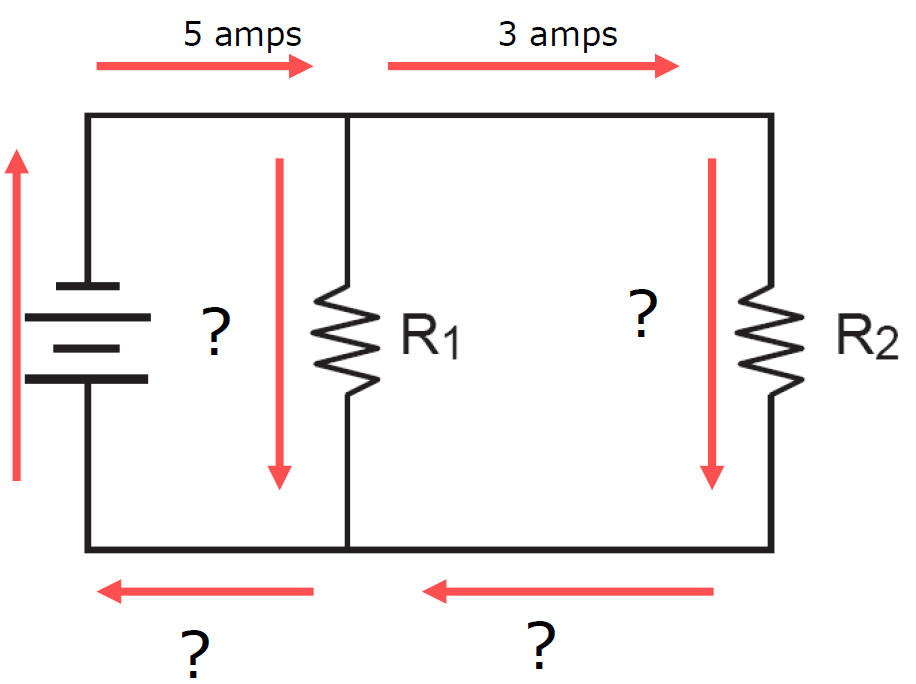
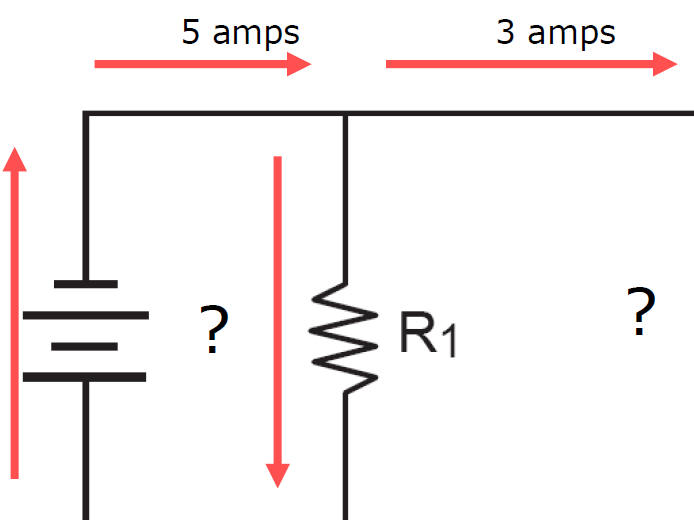
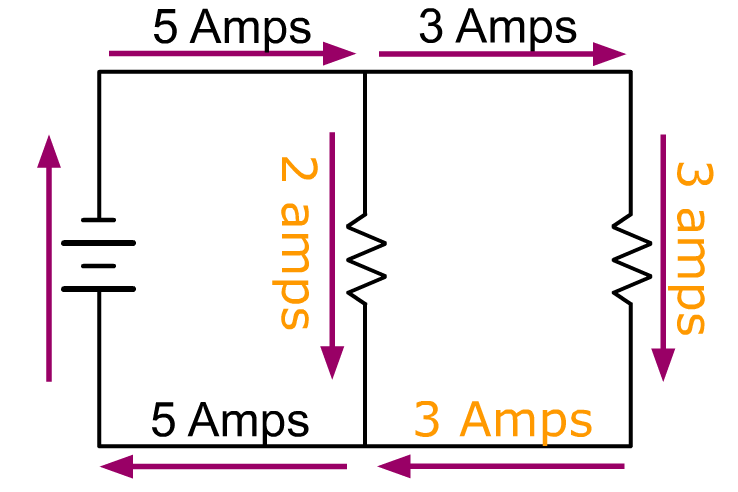
Ex 1)
Amps In = Amps Out 5 Amps = 3 Amps + x
X = 2 amps
Remember
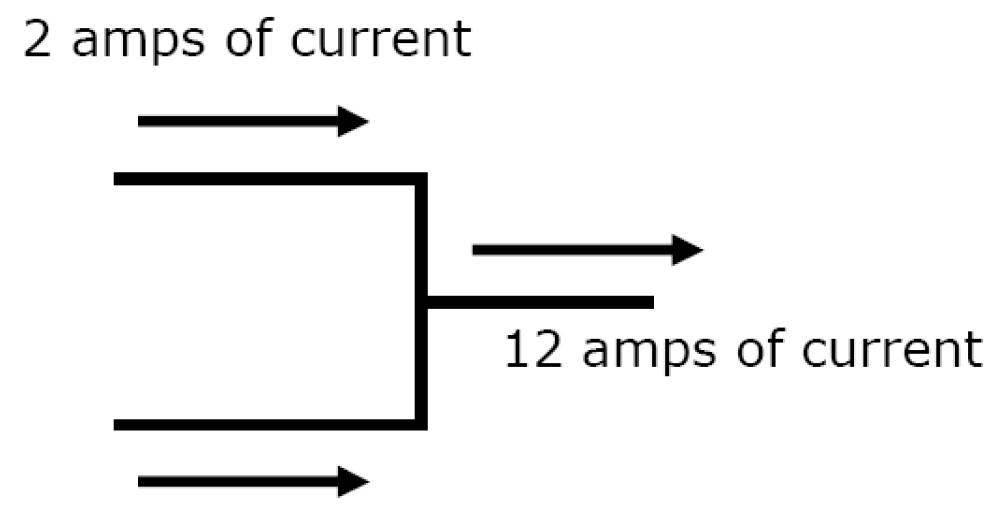
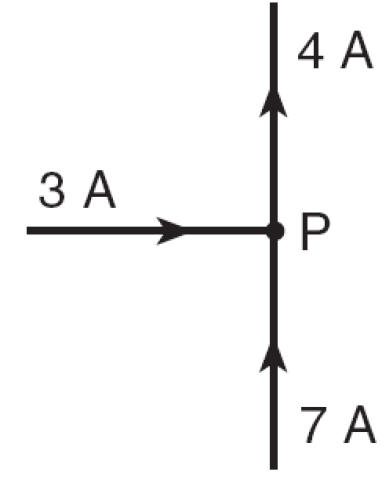
Ex 2) Current in bottom branch?
Amps In = Amps Out
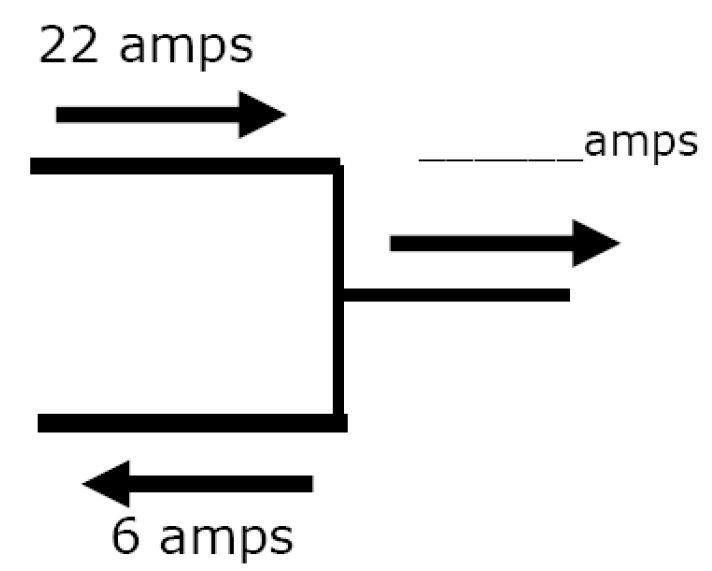
Ex 3)
Amps In = Amps Out
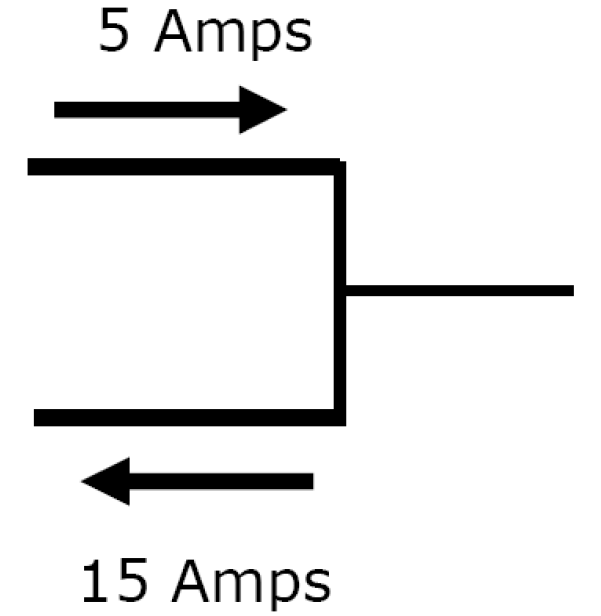
Ex 4)
Amps In = Amps Out 5 A + x = 15 A
x = 10 A IN
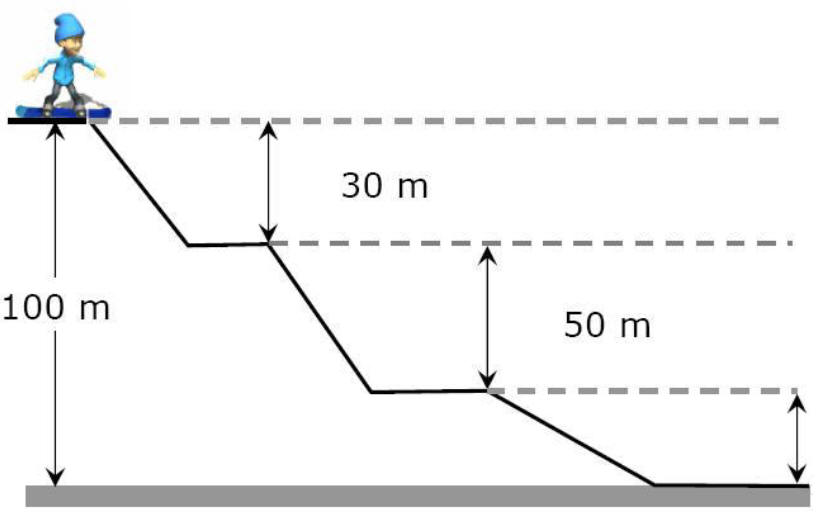
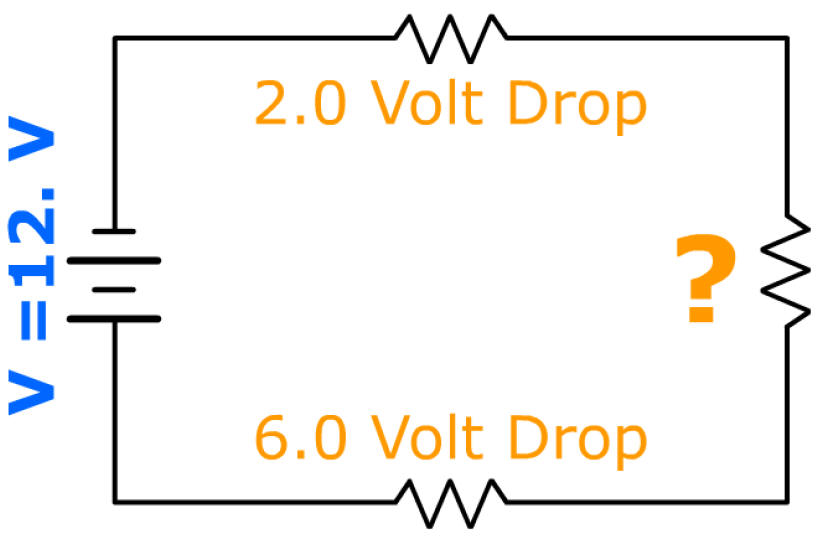
2) Kirchhoff's 2nd Law - the algebraic sum of all the voltage drops and applied voltages around a circuit = 0 (conservation of energy)
Amount of PE gained
when you go up a ski slope = energy released
going down a ski slope (KE, Work against friction and snow)
Applied Voltage
( + )
0 = 12 V + -2 V + x + -6 V
0 = 12 V + -8 V + x
0 = 4 V + x
x = - 4 volts
|
||||||||||||||


Check Your Understanding
5 quick questions — pick an answer to see if you’re right.
1. Kirchhoff's 1st Law ("Amps In = Amps Out") is based on the conservation of:
2. 12 A of current flows into a junction. One wire leaving it carries 2 A. How much does the other leaving wire carry?
3. Kirchhoff's 2nd Law (voltages around a circuit add to zero) is based on the conservation of:
4. A 12 V battery is connected to three resistors in a loop. Two have drops of 2 V and 6 V. What is the third drop?
5. A wire in a bulb circuit is dipped in liquid nitrogen and the bulb gets brighter. Why?