Thermal Equilibrium
Heat flows from hot to cold — the second law of thermodynamics
Do Now: You drop an ice cube into a glass of warm juice. Does the ice make the juice cold, or does the juice make the ice warm?
Energy flows from the warm juice into the ice. The juice loses energy and cools down. “Cold” does not flow — only energy does, and it flows from hot to cold.
A. Heat Flows From Hot to Cold
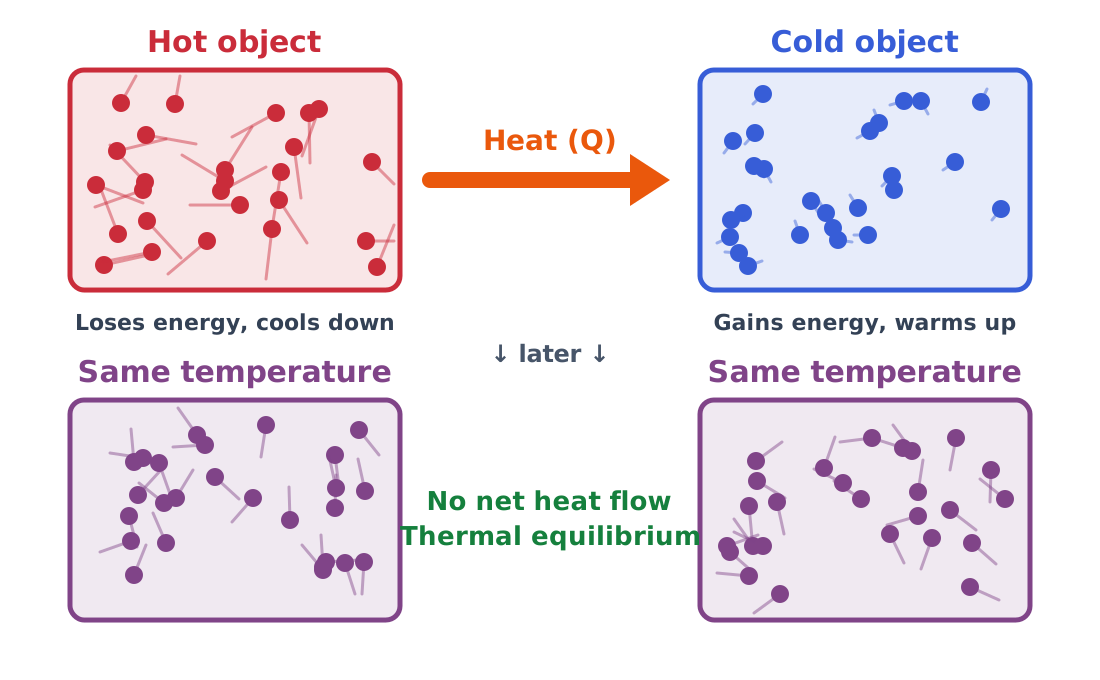
When two objects at different temperatures touch, faster particles in the hot object collide with slower particles in the cold object and pass along energy.
The hot object cools down and the cold object warms up.
Heat flow stops when both objects reach the same temperature. This is called thermal equilibrium.
B. What the Graph Looks Like
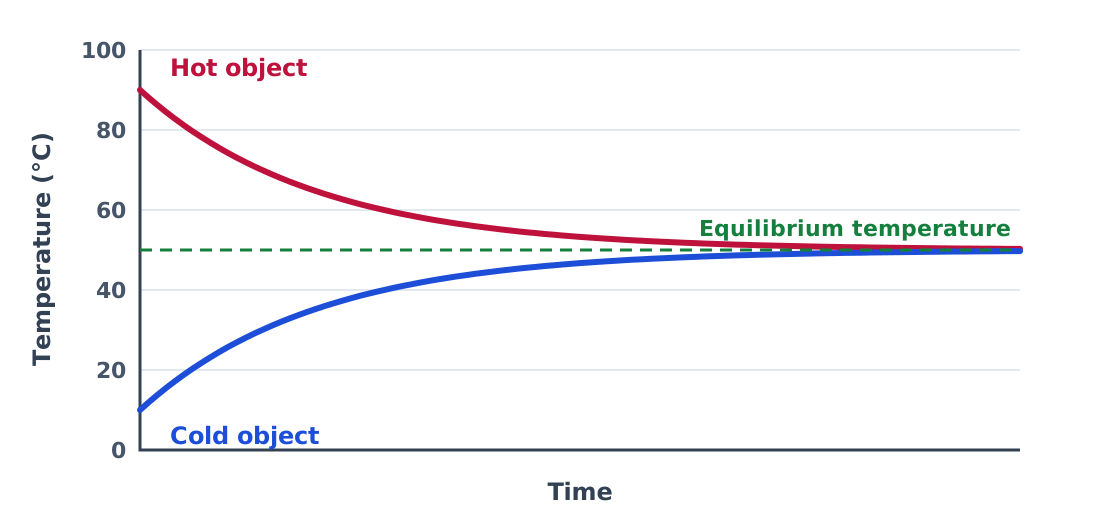
Why do both curves get flatter as time goes on?
The bigger the temperature difference, the faster heat flows. As the temperatures get closer, the heat flow slows down, so the temperatures change more slowly.
Explore: Two Objects in Contact
Pick the materials, masses, and starting temperatures, then press “Touch them!”
1. Start with two equal masses of water at 80 °C and 20 °C. Predict the final temperature, then test it.
2. Make object A twice as massive. Is the final temperature closer to A’s start or B’s?
3. Change A to copper. Which object’s temperature changes more? Compare the energy changes in the readout.
1. 50 °C — exactly halfway. 2. Closer to A’s starting temperature (about 60 °C). 3. The copper’s temperature changes much more, but the energy it loses is exactly equal to the energy the water gains.
C. The Second Law of Thermodynamics
Closed system: no energy enters or leaves, so the energy lost by the hot object equals the energy gained by the cold object.
Energy spreads out: energy starts concentrated in the hot object and ends up spread more evenly among all the parts of the system.
No going back: you never see lukewarm water separate on its own into a hot half and a cold half.
Refrigerators move heat from cold to hot only because they use outside energy (electricity) to do it.
Check Your Understanding
5 quick questions — pick an answer to see if you’re right.
1. A hot metal block is placed in cool water. Which statement is correct?
2. Two objects are in thermal equilibrium when they have the same
3. In a closed system, the energy lost by the hot object is
4. On a temperature-vs-time graph, why do the curves flatten out?
5. Which event would violate the second law of thermodynamics?