Free Fall - Word Problems
Worked Examples: Displacement, Velocity, Time, and Acceleration

B. Free Fall - falling where the only force is gravity (no friction)
Why would a crumpled piece of paper dropped from a height of 3 m have a greater acceleration than an uncrumpled one?
What Is a Vacuum?
Brain Bites - NASA
School blocks YouTube?
Download the file below.
vacuum_hi.mov
Video Instruction
showmethephysics.com
1. Free Fall Word Problems
Use the same method and equations as before, except always remember when you read…
Step 1 - Read and underline all the important information.
Step 2 - Turn all your information into letters.
Step 3 - Substitute and solve.
“…an object is dropped”
Vi = 0
a = g = +9.8 m/s2
(make down +)
“…an object is ascending”

a = g = -9.8 m/s2
(make down -)
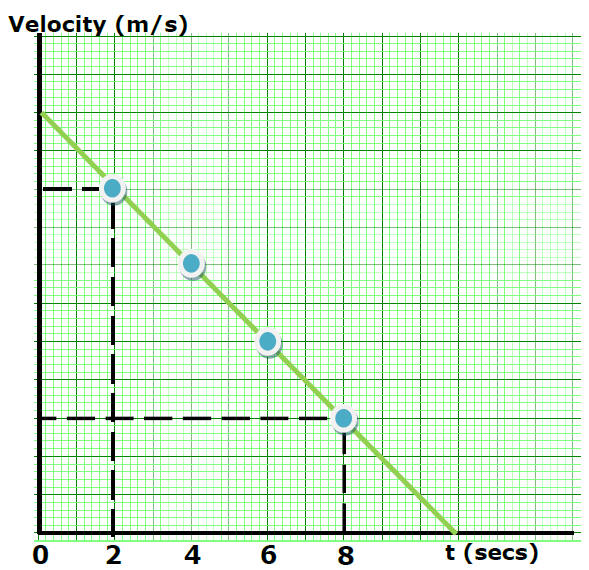
Object thrown up, Vi = 110 m/s.
Sketch a V vs. t plot of the object from the throw to the peak (use a = -10 m/s2).
a. Simple Free-Fall Problems
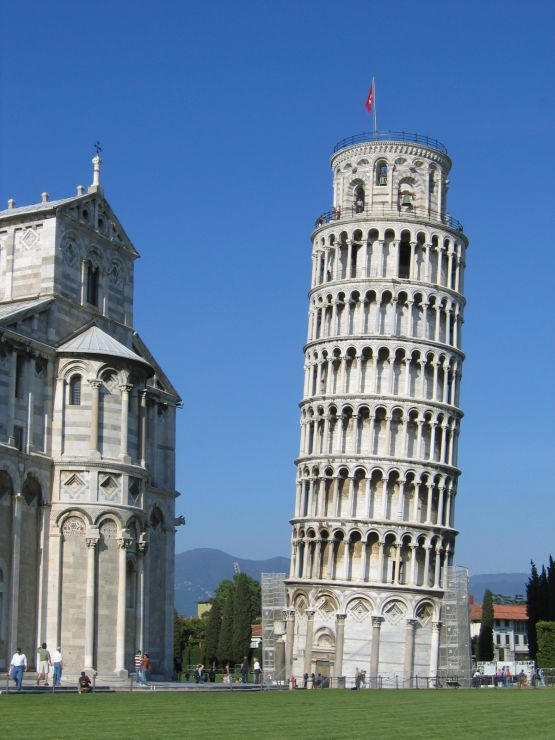
Leaning Tower of Pisa, in Pisa, Italy.
(Wednesday 19 May 2004, 17:37)
The lean of this tower has been tried to fix several times. The most recent time I believe was in 2001 when they tried to drill into the ground and pour cement underneath the sandy surface.

Ex
A coin is dropped in a vacuum tube.
Find: its displacement after .30 seconds.
Ex
A coin is dropped in a vacuum tube.
Find: the coin's velocity after .30 seconds.
Ex
A rocket is fired vertically upward with an initial velocity of 29 m/s.
Find: the rocket's maximum altitude.

Ex
An object dropped on planet X falls 64 m in 4 seconds.
Find: the acceleration due to gravity on planet X.
AP Question
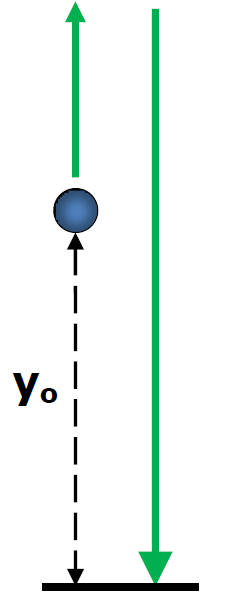
A ball is thrown upward from a position (y0) above the ground with a velocity of 8 m/s.
Find: y0, if it took 3.0 seconds for the ball to hit the ground.
Same ball as above.
Find: what velocity does the ball hit the ground?
Conceptual Check
Paul Hewitt Question
When you drop a ball it accelerates downward at 9.8 m/s2. If you instead throw it downward, then its acceleration immediately after leaving your hand, assuming no air resistance, is…
A. 9.8 m/s2.
B. more than 9.8 m/s2.
C. less than 9.8 m/s2.
D. Cannot say, unless the speed of throw is given.
Ex
A basketball player jumped straight up to grab a rebound. She was in the air for 0.80 second.
Find: how high did she jump?
Ex
A stone is thrown vertically upward with a speed of 12.0 m/s from the edge of a cliff 70.0 m high.
Find (a): how long does it take to reach the bottom of the cliff?
Check Your Understanding
5 quick questions — pick an answer to see if you’re right.
1. A coin is dropped from rest in a vacuum tube. What is its speed after 2.0 s? (g = 9.8 m/s²)
2. An object is dropped from rest. How far does it fall in 1.0 s? (g = 9.8 m/s²)
3. A ball is thrown straight up at 9.8 m/s. What is its maximum height? (g = 9.8 m/s²)
4. You throw a ball straight down instead of dropping it. Ignoring air resistance, its acceleration just after leaving your hand is...
5. An object dropped from rest on planet X falls 18 m in 3.0 s. What is the acceleration due to gravity there?