Energy Problems II
Work–energy problems with carts, ramps, and springs

Name the energy conversion that occurs in a Grandfather clock.
School blocks YouTube? GrandfatherClock.mp4
Video Instruction
Ex 2
A 10 kg frictionless cart is resting on a horizontal table. A force of 10 N is applied for a distance of 8 m. What is the cart’s new kinetic energy?
m = 10 kg · F = 10 N · d = 8 m
KE = ½mv² ??
Ex 3
100 joules of work is needed to lift a 100 kg object from the ground.
What is the object’s new P.E.?

Ex 4
Crate is pulled 6.00 m up an incline with a force of 50.0 N. PE of the cart increases by 250. J. What is the total work done against friction?
d = 6.00 m · F = 50.0 N · ΔPE = 250. J
Ex 5
4 N is exerted on a 1 kg mass at rest for 2 m, causing it to move.
A. Find the object’s KE.
Find the object’s velocity.
Ex 6
A force of 100.0 N lifts the object 10.00 m off the ground. What is the object’s new potential energy? What is the mass of the object?
Ex 7
A spring has a spring constant of 2.0 N/m. How much work must be done to stretch it 5.0 m from its equilibrium position?
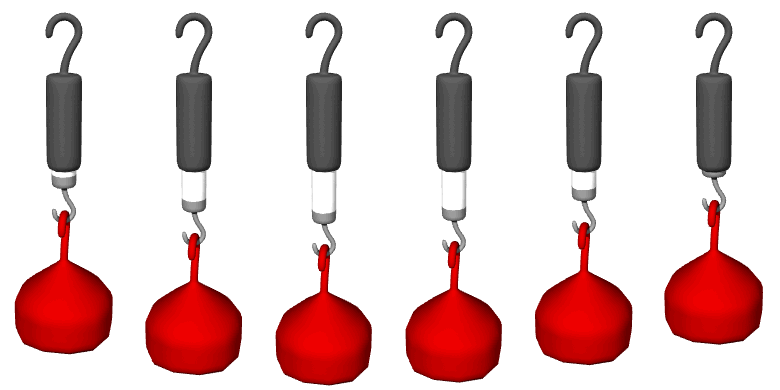
k = 2.0 N/m · x = 5.0 m · W = ?
Ranking Task
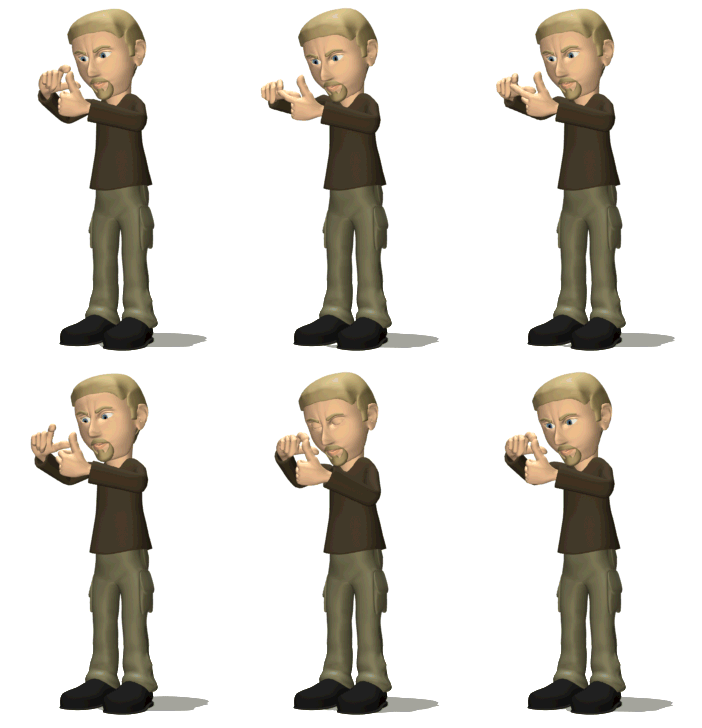
Rank the KE of the car from largest to smallest.
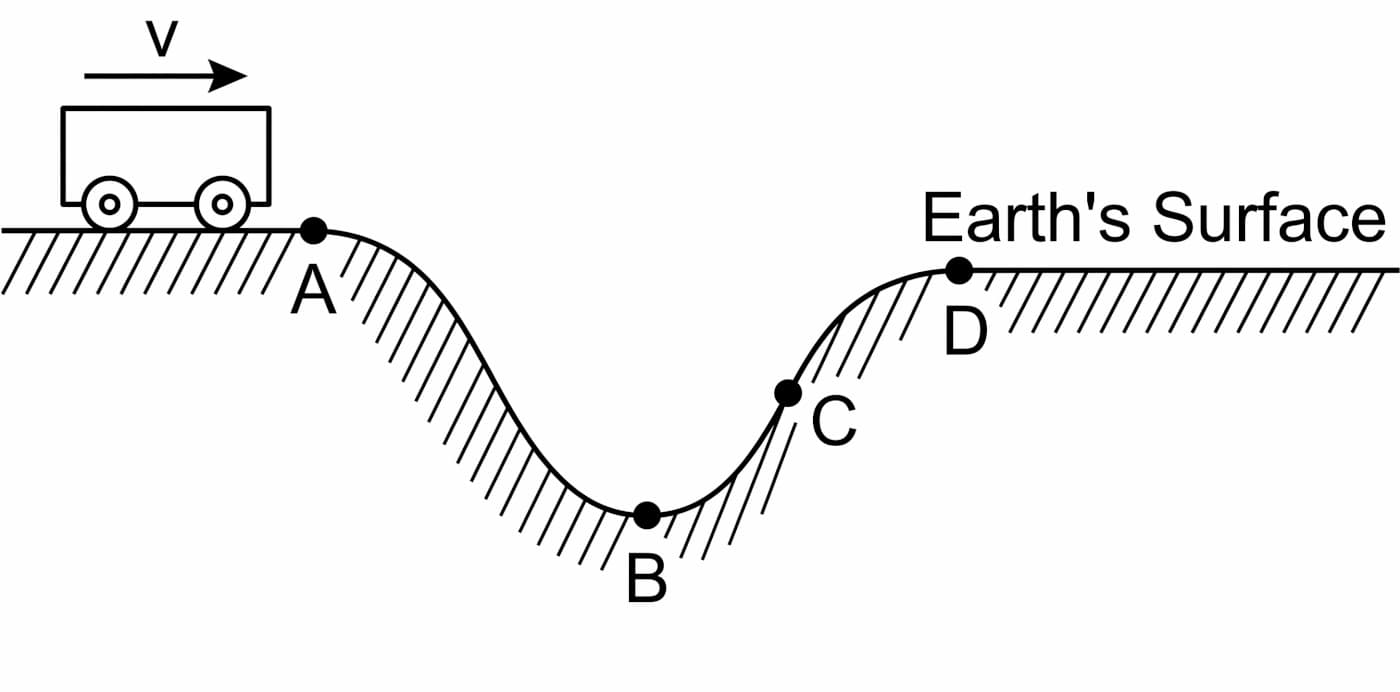
How much farther will a car traveling at 100 km/s skid than the same car traveling at 50 km/s?
A) 4× as far B) 2× as far C) The same distance D) 5× as far E) ½ as far
Enrichment

Superfluids
The strange behavior of liquid helium — BBC
Check Your Understanding
5 quick questions — pick an answer to see if you’re right.
1. A 10 kg frictionless cart at rest is pushed with a 10 N force for 8 m. What is its new kinetic energy?
2. A 4 N force acts on a 1 kg mass at rest for 2 m on a frictionless surface. What is its final speed?
3. A crate is pulled 6.00 m up a ramp with a 50.0 N force, and its PE increases by 250. J. How much work is done against friction?
4. How much work is needed to stretch a spring with k = 2.0 N/m a distance of 5.0 m from equilibrium?
5. A car skids to a stop on the same road at 100 km/h and at 50 km/h. How much farther does it skid at 100 km/h?
Skateboarding a Half-Pipe
A 50.-kg skateboarder rolls through the bottom of a half-pipe at 6.0 m/s and coasts up the curved wall without pushing. Friction and air resistance are negligible.
What maximum height above the bottom does the skateboarder reach?
▶ Want a challenge? Open 6 more Regents-style questions (harder · mixed formats)
Challenge score: 0 / 6
C1. Substitute numerical values into a mathematical representation that can be used to determine the skateboarder’s speed at a height of 1.0 m above the bottom. Then calculate the speed.
C2. At the highest point on the wall, which describes the system’s energy?
C3. Construct an energy bar graph for the skateboarder–Earth system at the instant the skateboarder’s speed has dropped to 3.0 m/s on the way up the wall. The zero level for gravitational potential energy is the bottom of the half-pipe, and friction is negligible.
Click a box to set each bar’s height; click it again to clear the bar to 0. The ET bar is drawn for you.
C4. A student makes the following claim.
Place a check mark in either the Support or Refute box. Justify your response using a mathematical relationship.
C5. A heavier 70.-kg skateboarder rolls through the bottom at the same 6.0 m/s. How high does he rise (frictionless)?
C6. Skaters “pump” by crouching near the top of the wall and standing up quickly at the bottom, which lets them rise higher than 1.8 m. Explain, in terms of energy and the skater–Earth system, how pumping makes this possible.