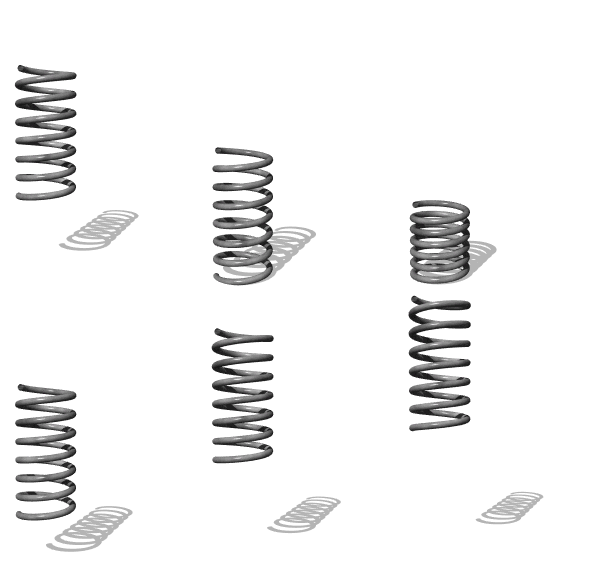
Elastic Potential Energy
Work stored in a deformed spring — Hooke's Law and the spring constant

If the force you apply to a spring is directly proportional to stretch, how many times would you have to increase your force to get 4 times the stretch?
Elastic P.E.
work stored in a deformed spring
a) General Equation
F = Average Force needed to deform the spring
x = distance deformed (stretch or compress)

Ideal Spring
b) Hooke's Law
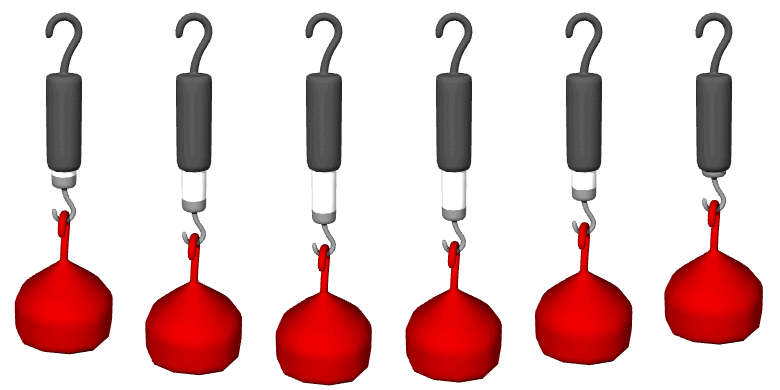
Force needed to deform an ideal spring a given amount is directly proportional to its displacement (deformation).

Graphic from Learning-Connections Clipart
Hooke's Law Through History
Explore five ways springs have helped people measure time, weight, motion, and position. Select an image to enlarge it and read the explanation.
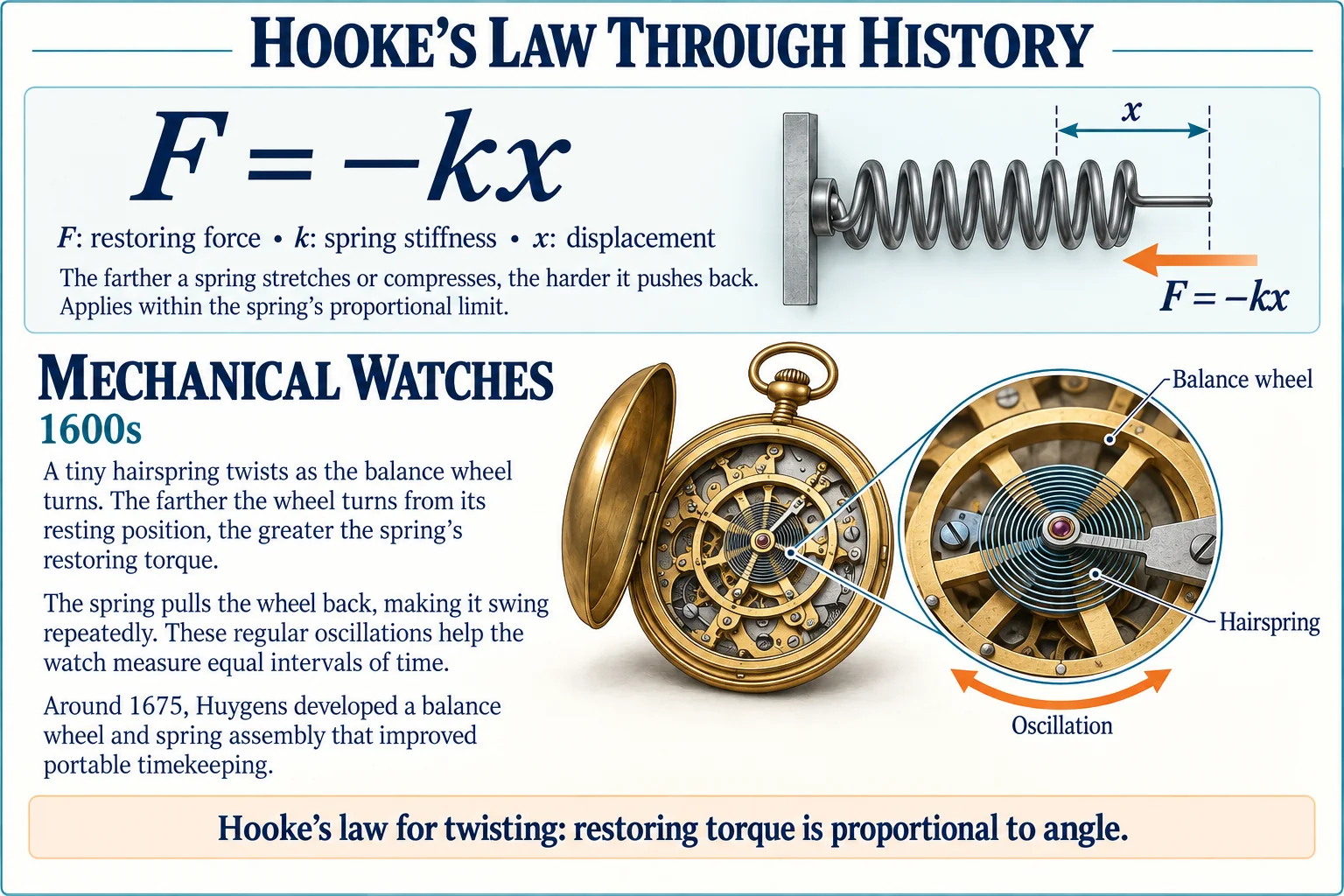 Mechanical Watches
1600s · Click to enlarge
Mechanical Watches
1600s · Click to enlarge
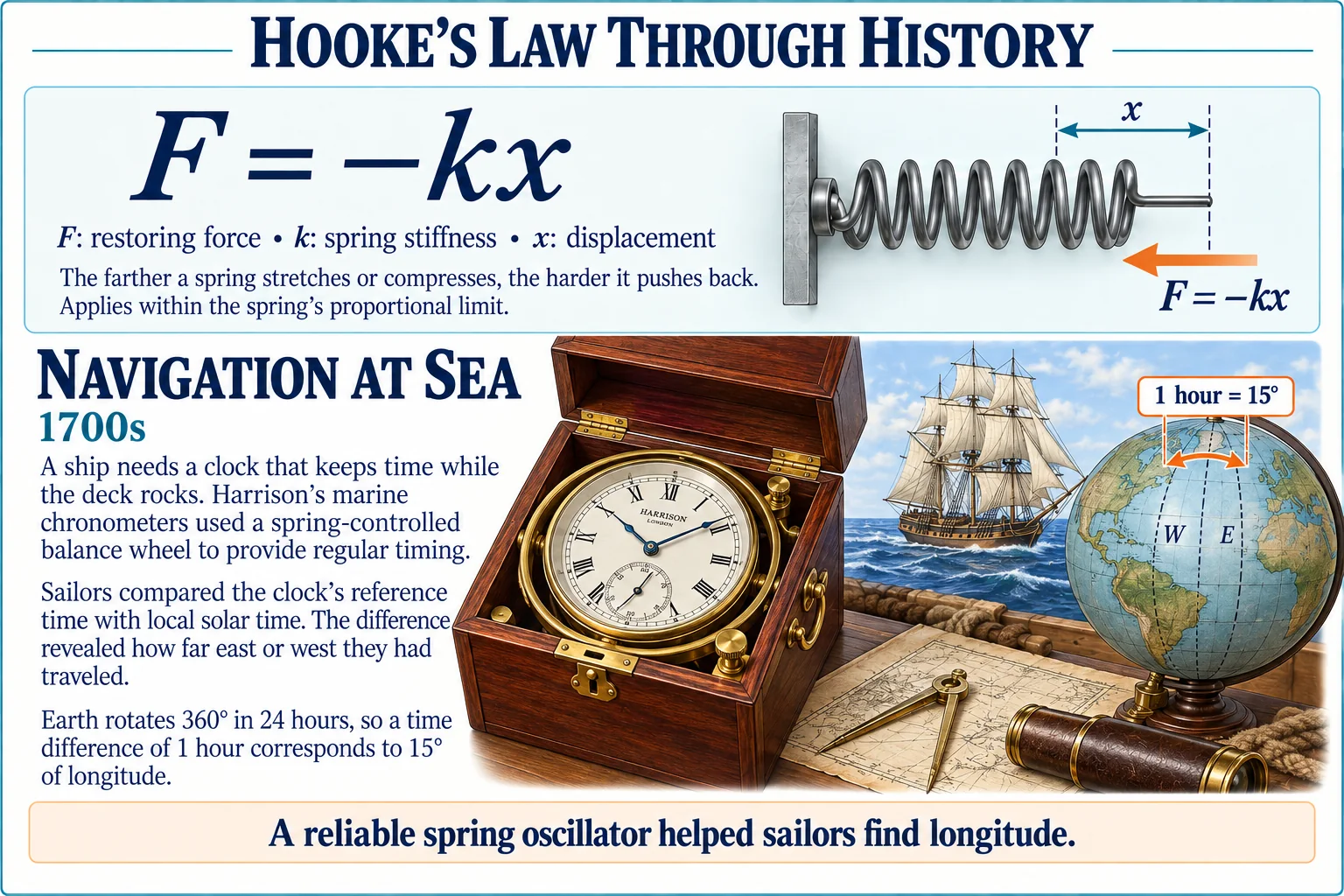 Navigation at Sea
1700s · Click to enlarge
Navigation at Sea
1700s · Click to enlarge
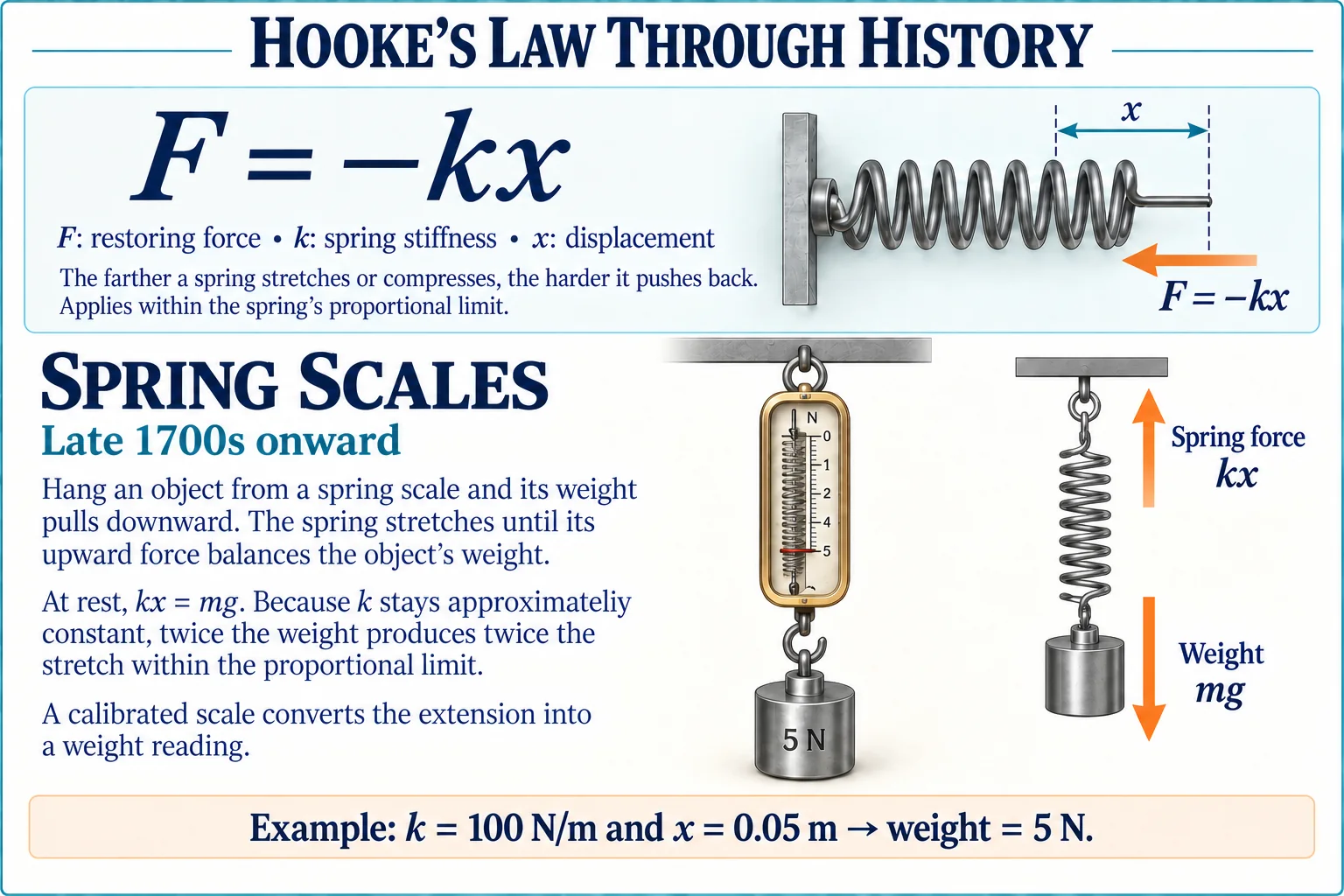 Spring Scales
Late 1700s onward · Click to enlarge
Spring Scales
Late 1700s onward · Click to enlarge
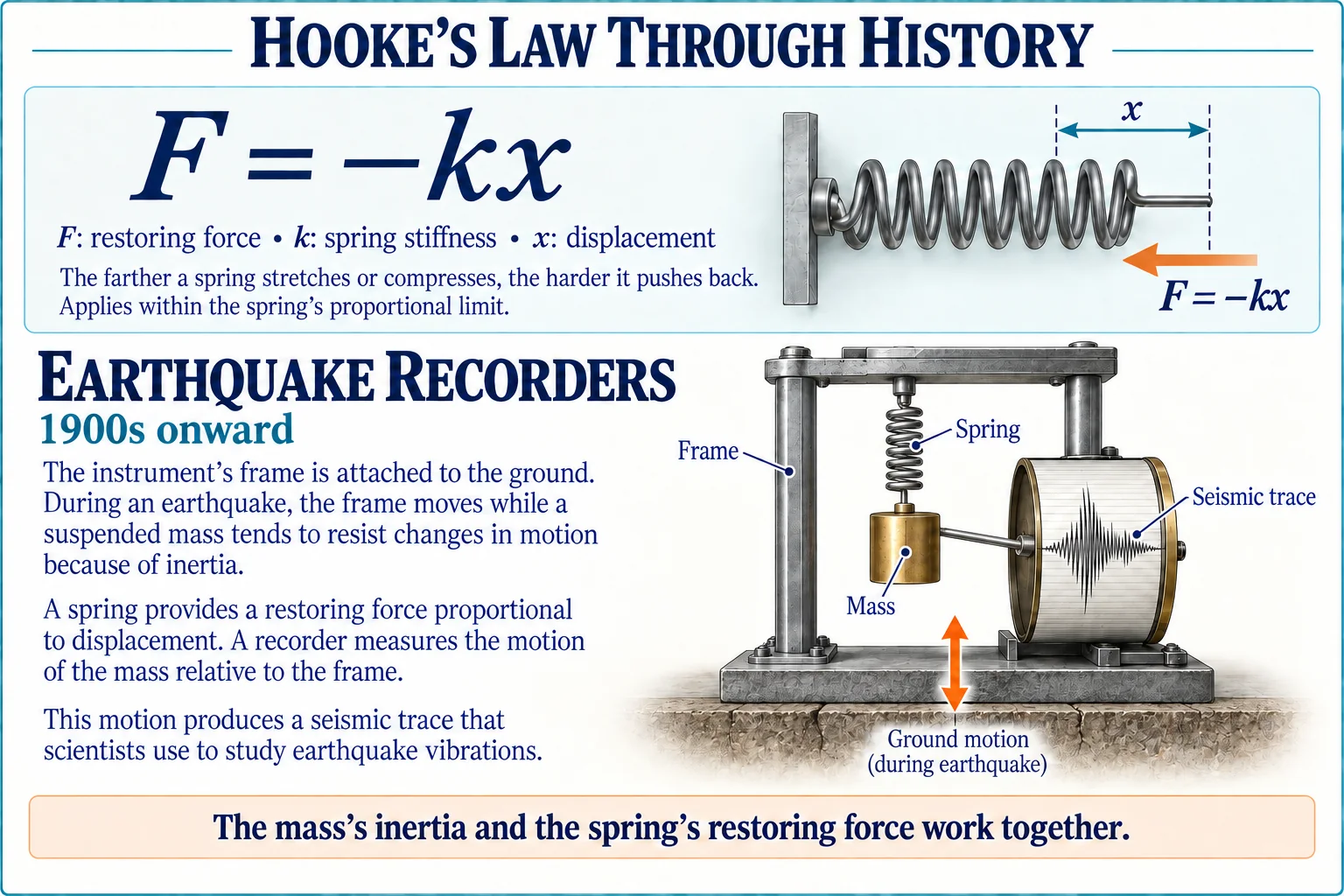 Earthquake Recorders
1900s onward · Click to enlarge
Earthquake Recorders
1900s onward · Click to enlarge
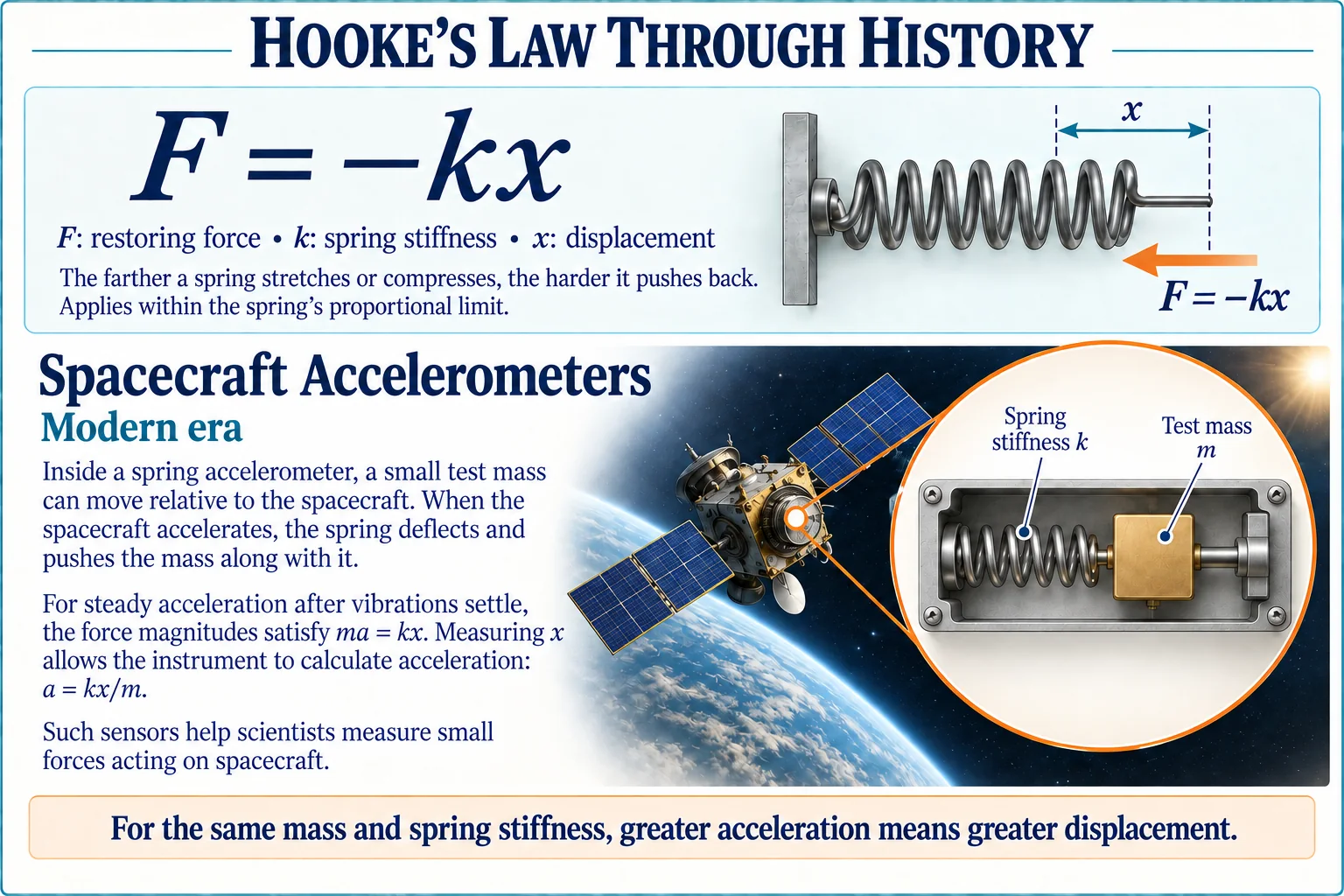 Spacecraft Accelerometers
Modern era · Click to enlarge
Spacecraft Accelerometers
Modern era · Click to enlarge
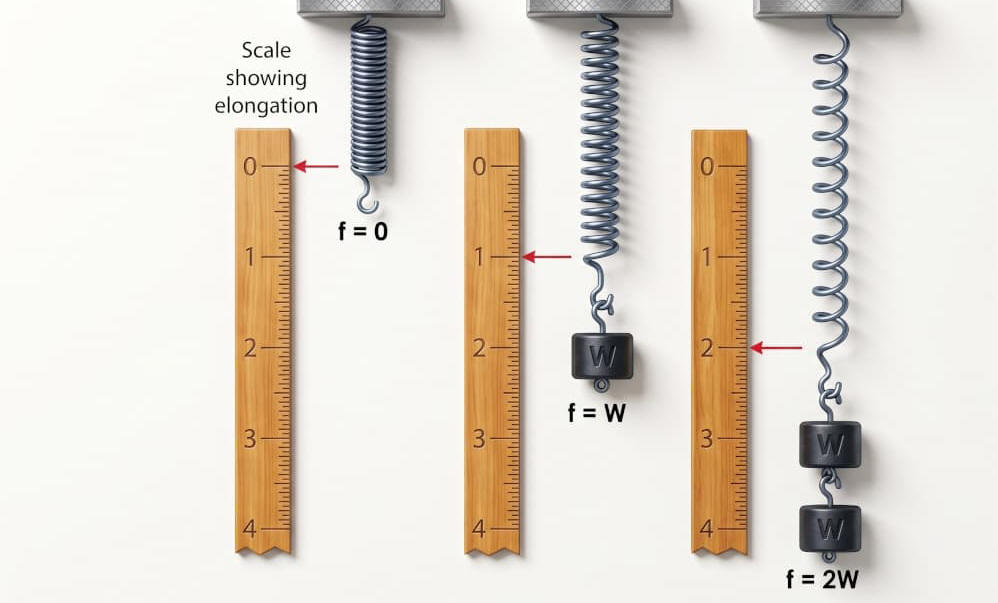
Ex) Ideal Spring
| F (Force to Deform) (N) |
x (distance deformed) (m) |
|---|---|
| 2.0 | 0.30 |
| 4.0 | 0.60 |
| 6.0 | 0.90 |
| 8.0 | 1.2 |
Hooke's Law
University of Colorado PhET
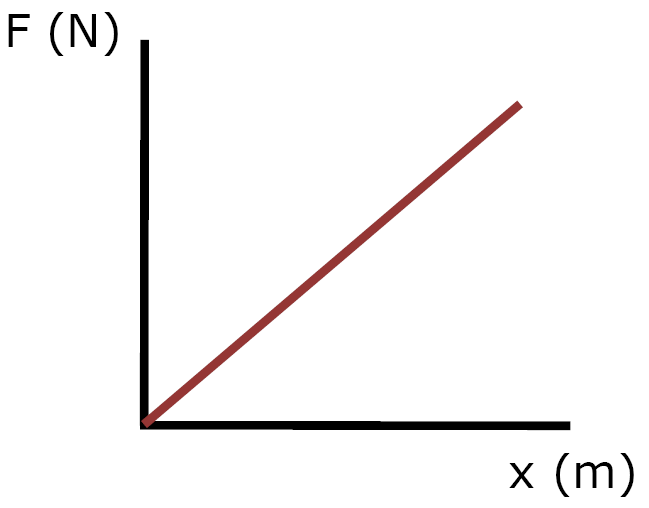
c) Spring Constant (k) — Ideal Spring
quantifies the stiffness of a spring
What is the spring constant of the spring that produced the data above?
| F (N) | x (m) |
|---|---|
| 2.0 | 0.30 |
| 4.0 | 0.60 |
| 6.0 | 0.90 |
| 8.0 | 1.2 |
Which is the stiffer spring?
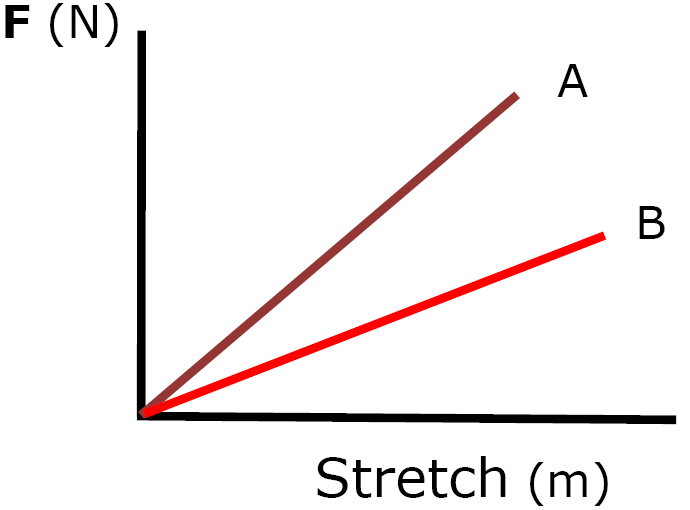
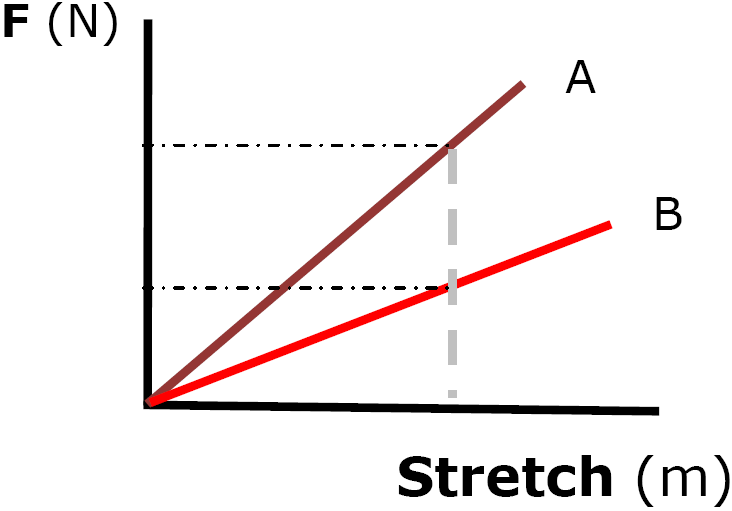
Ex) Plots and k
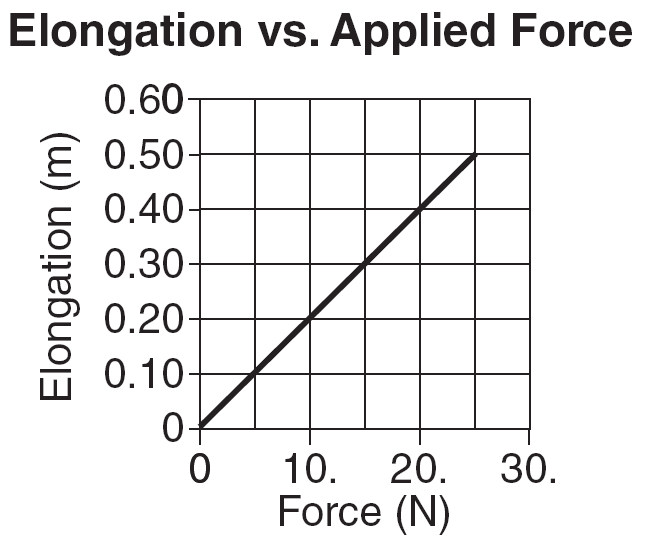
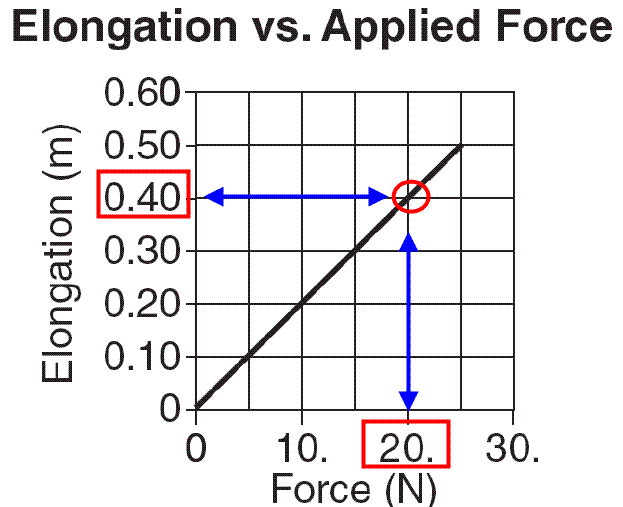
Pick any point on the line
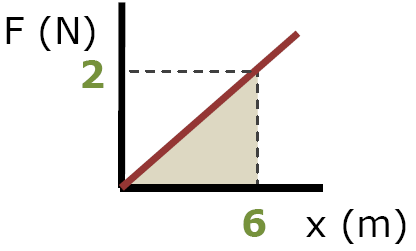
d) Elastic P.E.
= area of the triangle under the F vs x graph
Try This at Home!
What crushed this can?
S.M.U. Physics
The can implodes because the atmospheric pressure is greater than the pressure inside the can.
When the can was submerged in the water it caused the water vapor inside the can to rapidly cool. When a gas is cooled, its pressure goes down. This drop in pressure causes the pressure inside the can to be lower than the atmospheric pressure.
Note: Use less than 1 cm of water in this experiment (about ½ inch).
Check Your Understanding
5 quick questions — pick an answer to see if you’re right.
1. For an ideal spring, how many times must you increase the applied force to get 4 times the stretch?
2. A spring stretches 0.60 m when a 4.0 N force is applied. What is its spring constant?
3. Hooke's Law states that for an ideal spring, the force needed to deform it is
4. Spring A needs more force than spring B to stretch the same distance. Which is true?
5. A spring is stretched steadily from 0 to 0.40 m, with the force rising from 0 to 20. N. How much elastic PE is stored?