Electromagnetic Radiation
The electromagnetic spectrum, its shared wave properties, and its many uses
|
Electromagnetic
Video Instruction showmethephysics.com
Teachers' Domain: Infrared Gallery Teachers' Domain, Infrared Gallery,
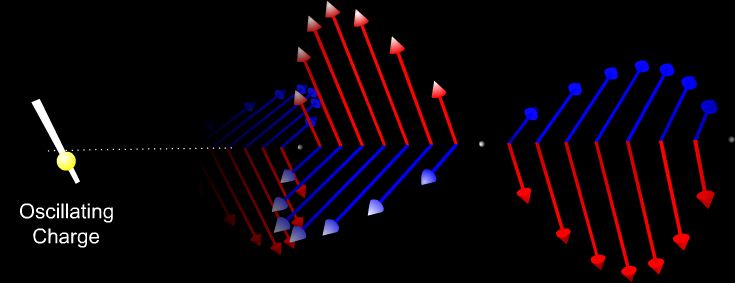
Electromagnetic Radiation - waves of energy generated by the acceleration of charges
Why can't neutrons make this kind of wave?
Have no charge
- travel at the speed of light in a vacuum
3 x 10⁸ m/s
Electromagnetic
Wave
NASA - Electromagnetic Waves
Charges "shake" off their energy
in waves when they vibrate
Vibrating Charges &
3d Electromagnetic Wave
3d Electromagnetic Wave # 2
Electromagnetic Radiation
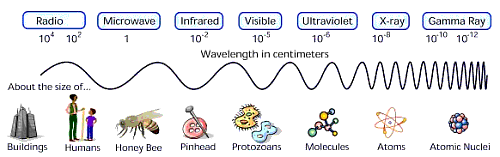
- Wavelength and Frequency
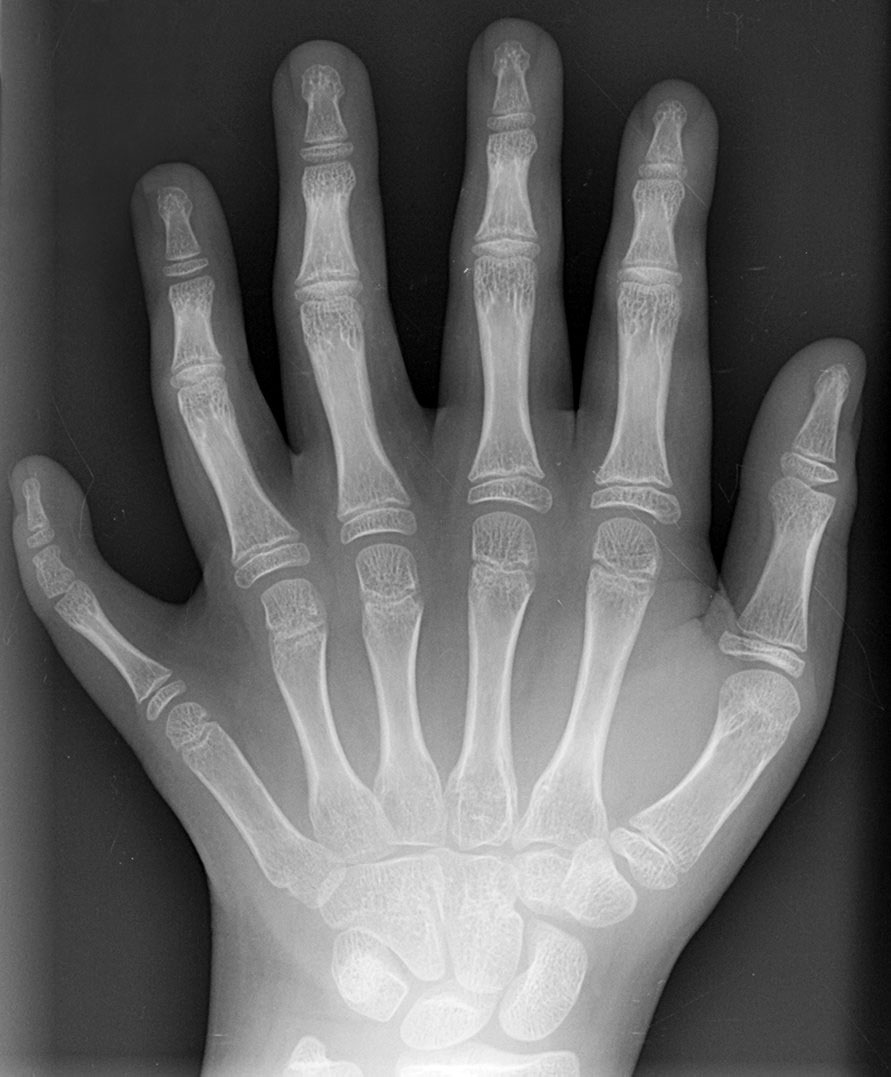
Conversion of a DICOM-format X-ray from a ten year old male showing polydactyly. This is the patient's left hand, posterior-anterior projection. Identifying tags and such have been stripped. en:User:Drgnu23, subsequently altered by Grendelkhan, Raul654, and Solipsist.
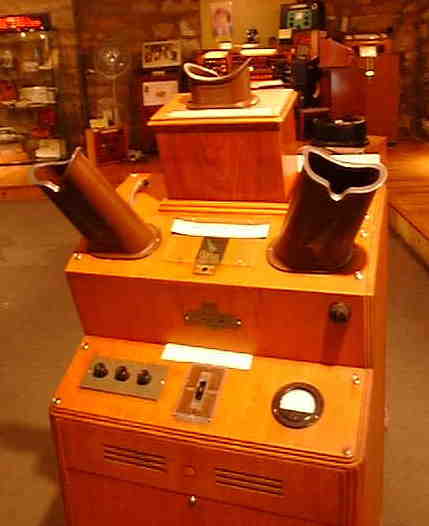
Meet the Pedoscope
Source - Museum of Quackery - Bob McCoy
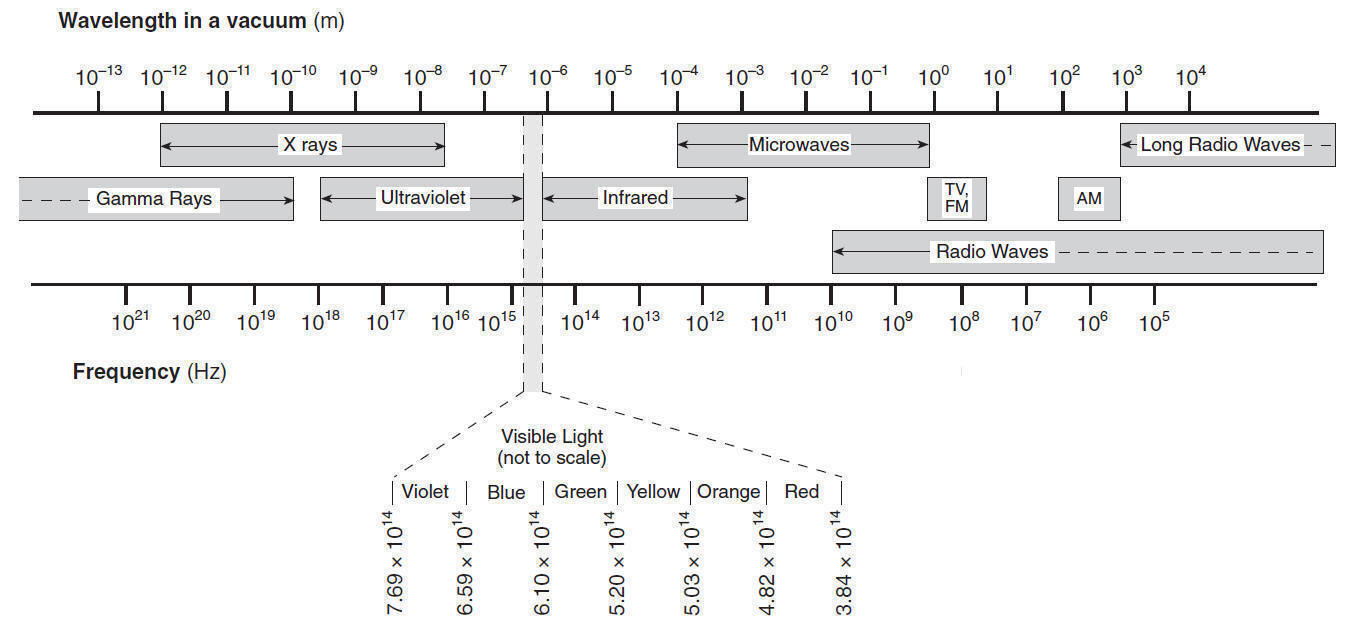
Which wave has the (hint: most penetrating)
Gamma Rays,
X-Rays
Which wave has the
Radio
Which Color Has the
Red
Smallest Wavelength?
Violet
Which color of light has a
Green
What is the frequency of light whose wavelength is 6 x 10⁻⁷ m?
v = fl
3x10⁸ m/s = f[6 x 10⁻⁷ m]
f = 5 x 10¹⁴ Hz What color?
Orange
Try this at home Seeing invisible waves with your cellphone
Enrichment
|
|||




 Waves
Waves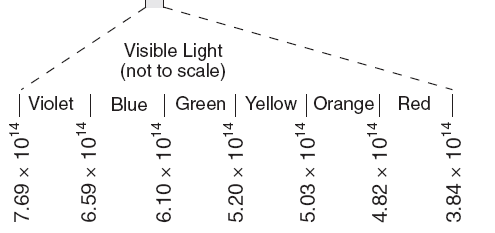
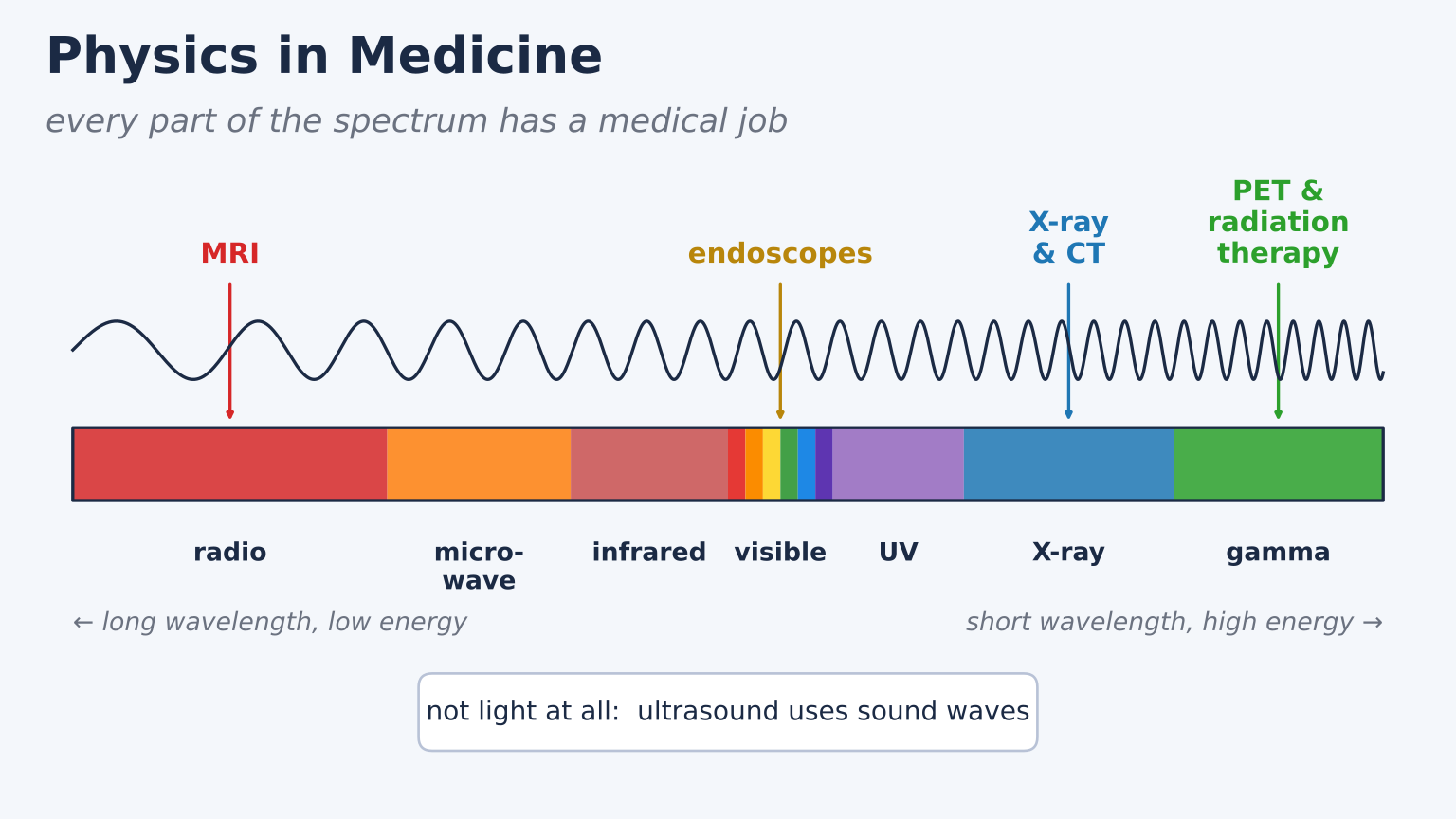
Explore: The Electromagnetic Spectrum
Slide from radio waves to gamma rays.
Watch the wavelength shrink and the energy of each photon grow as the frequency goes up.
Find the frequency of green light (about 5.5 × 10¹⁴ Hz). Then find a frequency where radiation becomes ionizing.
Green light is about 545 nm. Radiation becomes ionizing in the ultraviolet, around 2–3 × 10¹⁵ Hz (about 10 eV per photon).
Check Your Understanding
5 quick questions — pick an answer to see if you’re right.
1. Electromagnetic waves are produced by accelerating charges. Why can't a vibrating neutron produce them?
2. In a vacuum, how does the speed of radio waves compare to the speed of X-rays?
3. Which electromagnetic wave has the smallest wavelength?
4. What is the frequency of light with a wavelength of 6 × 10⁻⁷ m in a vacuum?
5. Which color of visible light has the greatest wavelength?