The Wave Nature of Light
Interference, diffraction, and the evidence that light behaves as a wave
|









Check Your Understanding
5 quick questions — pick an answer to see if you’re right.
1. Which behavior is diffraction?
2. Young's double-slit experiment produced a pattern of bright and dark lines. This supports the wave theory because it shows
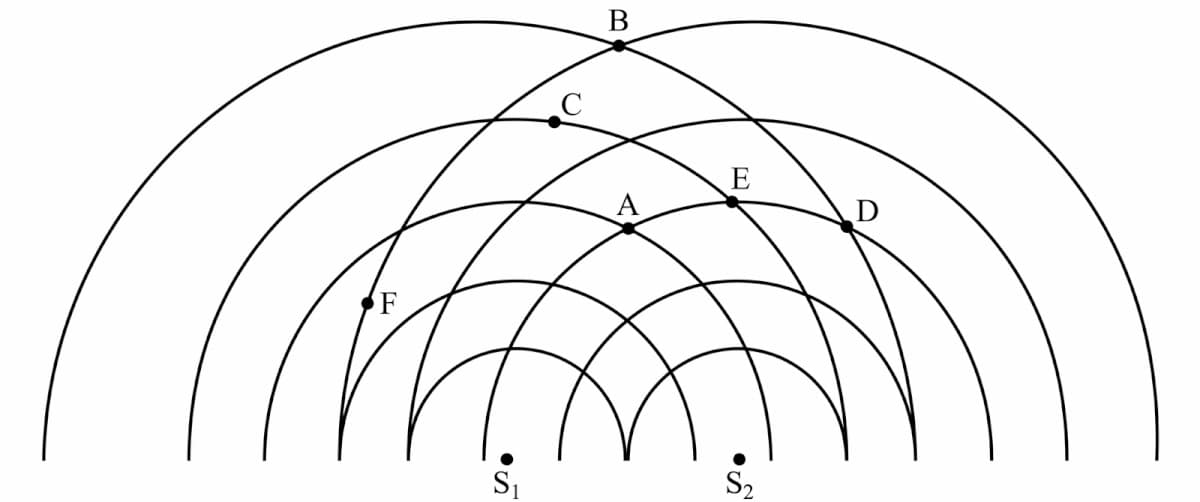
3. At a point on the screen, light from the two slits has a path difference of 1½ λ. What appears there?
4. Light of λ = 5 × 10⁻⁷ m passes through slits 1 × 10⁻⁴ m apart onto a screen 2 m away. How far is the first bright line from the center?
5. What type of light source gives the clearest double-slit pattern?
How LCD Screens Use Polarized Light
An LCD screen sits between two polarizing filters. Liquid crystals in between can rotate the plane of polarization of light. By controlling the crystals, the screen decides how much light gets through the second filter.
LCD screens depend on light being polarized. What does this show about light?
▶ Want a challenge? Open 6 more Regents-style questions (harder · mixed formats)
Challenge score: 0 / 6
C1. A student makes the following claim.
Place a check mark in either the Support or Refute box. Justify your response.
C2. Two polarizing filters are lined up with their axes parallel. The second filter is then rotated 90°. What happens to the light passing through both?
C3. Place a check mark in three boxes to indicate the waves that can be polarized.
C4. The glass covering an LCD screen has an index of refraction of 1.50. Substitute numerical values into a mathematical representation that can be used to determine the speed of light in the glass. Then calculate the speed.
C5. Light travels from air into glass. Which property stays the same?
C6. An LCD’s first polarizing filter blocks about half of the light from the screen’s backlight before any image is formed. Identify one benefit and one drawback of using polarizing filters to control the brightness of each pixel.