a. Vibration of particles

Requires a medium for transfer.
Mechanical wave
Examples: sound, water waves, and spring waves
Vibrations and disturbances that transfer energy through matter or space
Video Instruction
showmethephysics.com
I. Introduction to Waves

Sound, water waves, light, microwaves, and heat rays

1. Waves transfer energy from one place to another with no transfer of mass.
2. Waves can be produced in two ways:
Requires a medium for transfer.
Mechanical wave
Examples: sound, water waves, and spring waves

Small changes in the strength of an electromagnetic field require no medium for transfer.
Electromagnetic wave
Examples: light, microwaves, and X-rays

ERPI Classroom Films, Inc. · Encyclopedia Britannica · Public domain

Splash of a Water Drop
N. Carolina School of Science and Mathematics
3D Electromagnetic Wave #1 — David M. Harrison
3D Electromagnetic Wave #2 — David M. Harrison
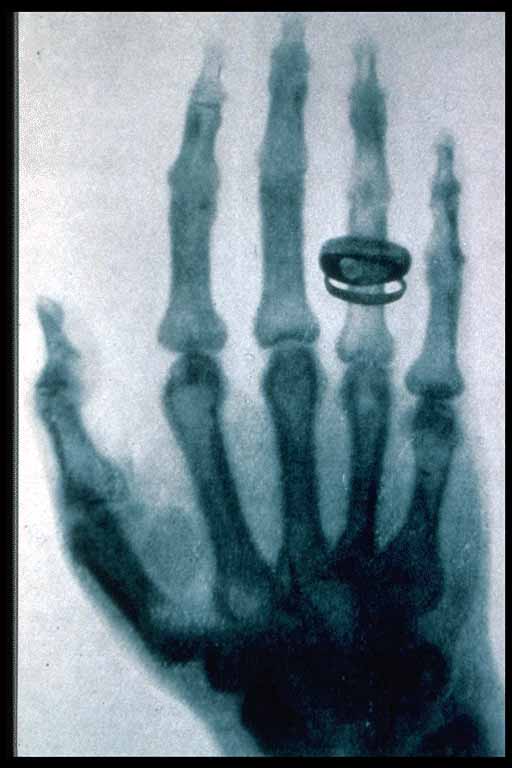
Biswajeet — India
5 quick questions — pick an answer to see if you’re right.
1. A wave is best defined as
2. What do waves transfer from one place to another?
3. Which wave is a mechanical wave that requires a medium?
4. Electromagnetic waves are produced by
5. Why can astronauts see the Sun's light but never hear sounds from it through space?
During an earthquake, energy released underground travels outward as seismic waves. P-waves are longitudinal and can travel through solids and liquids. S-waves are transverse and travel only through solids. Seismographs around the world detect both.
What do seismic waves transfer from the earthquake’s origin to distant cities?
Challenge score: 0 / 6
C1. S-waves are not detected on the side of Earth opposite an earthquake. What does this suggest about Earth’s interior?
C2. A seismograph station 1200 km from the earthquake’s origin detects the first P-wave 200. s after the earthquake occurs. Substitute numerical values into a mathematical representation that can be used to determine the average speed of the P-wave. Then calculate the speed.
C3. A student makes the following claim.
Place a check mark in either the Support or Refute box. Justify your response.
C4. Place a check mark in three boxes to indicate the waves that are mechanical waves (waves that require a medium).
C5. Two earthquakes occur. Earthquake X produces waves with twice the amplitude of earthquake Y. Which statement is correct?
C6. Earthquake early-warning systems detect P-waves near the origin and send an electronic alert to nearby cities before the more damaging S-waves arrive. P-waves travel faster than S-waves. Explain why the warning is possible, and identify one limitation of the system.