Analog vs. Digital
Samples, bits, and why digital copies stay perfect

Do Now: If you copy a cassette tape, then copy the copy, again and again, the music gets worse each time. If you copy a song file 100 times, the last copy sounds exactly like the first. Why?
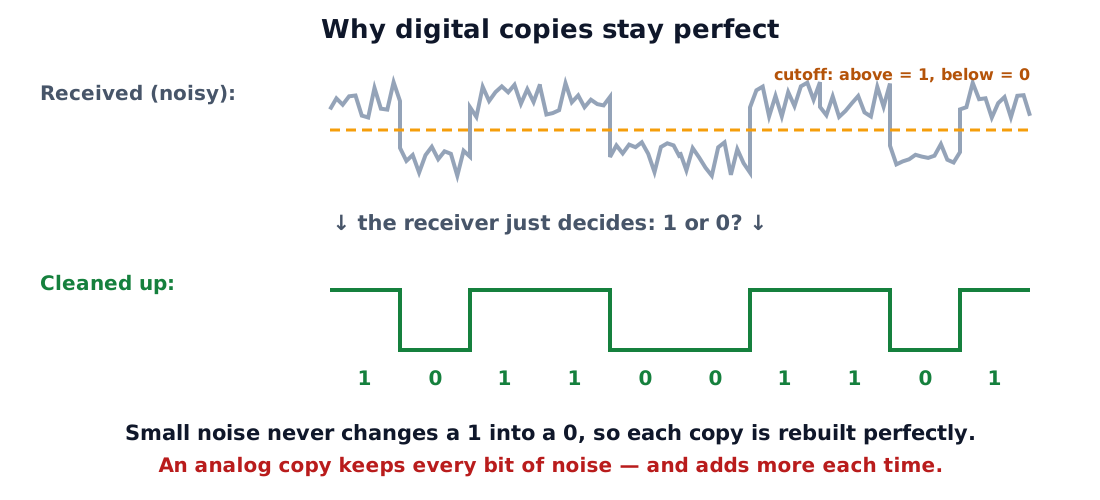
The tape is analog; the file is digital. Analog copies pick up a little noise every time. Digital copies are just 1s and 0s, which can be copied perfectly.
A. Two Ways to Store a Signal
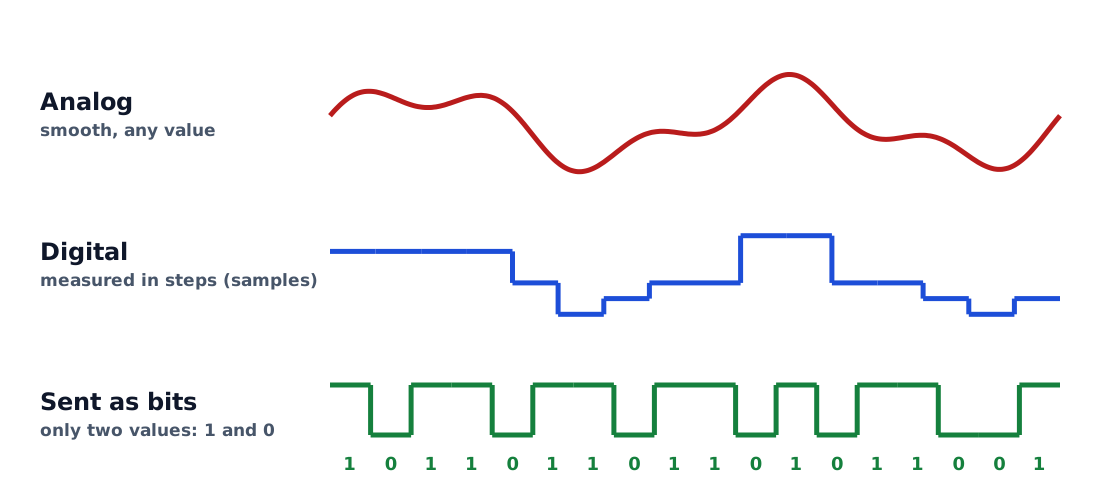
Analog
A smooth signal that can have any value.
Examples: vinyl records, cassette tapes, film photos, an old thermometer.
Digital
The signal is measured at regular times and each value is stored as a number made of bits (1s and 0s).
Examples: song files, digital photos, texts.
B. Sampling and Bits
Sampling: measuring the signal at regular times. More samples per second → captures faster changes.
Bits per sample: each bit doubles the number of levels. 3 bits → 23 = 8 levels; 8 bits → 256 levels; 16 bits → 65,536 levels.
Trade-off: more samples and more bits make a more accurate copy — but a bigger file.
CD-quality music uses 44,100 samples per second, 16 bits per sample, and 2 channels (stereo). How many bits per second is that?
44,100 × 16 × 2 = 1,411,200 bits per second (about 1.4 million). A 3-minute song is about 254 million bits — around 32 megabytes before compression.
C. Why Digital Copies Stay Perfect
Explore: Analog vs. Digital
Change the samples and bits, then add noise and make copies.
1. Set bits per sample to 1, then 6. What happens to the blue digital wave?
2. Set samples to 4, then 40. What changes?
3. Make 20 copies with a little noise. Compare the analog and digital copies.
4. Turn the noise all the way up. What finally happens to the digital copy?
1. More bits → more levels → the steps fit the wave much better. 2. More samples → the digital wave follows quick changes. 3. The analog copy gets worse with each copy; the digital copy stays perfect. 4. When noise is big enough to flip 1s and 0s, the digital copy gets bit errors. Real systems add error-correcting codes to catch and fix these.
Check Your Understanding
5 quick questions — pick an answer to see if you’re right.
1. Which of these stores information digitally?
2. How many different levels can be stored with 4 bits?
3. Increasing the number of samples per second will
4. Why can a digital signal be copied many times without losing quality?
5. What happens to an analog signal each time it is copied?