Static Electricity
Charge, atomic structure, attraction, repulsion, and the origins of electrostatics
|
Static Electricity
Show Me The Physics
Static Electricity
Unit III Electricity & Magnetism
Static Electricity Intro
I.
Static Electricity - electronic
charges flowing in no particular direction. (trapped in a body)
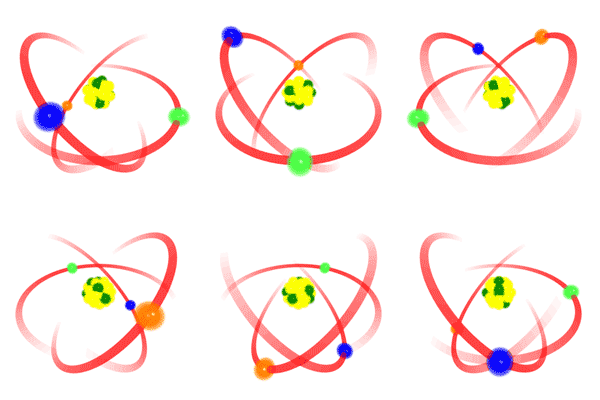
A) Electricity of the Atom
#p = #e-
n has no charge
p has +1 charge
e- has -1 charge
Charge
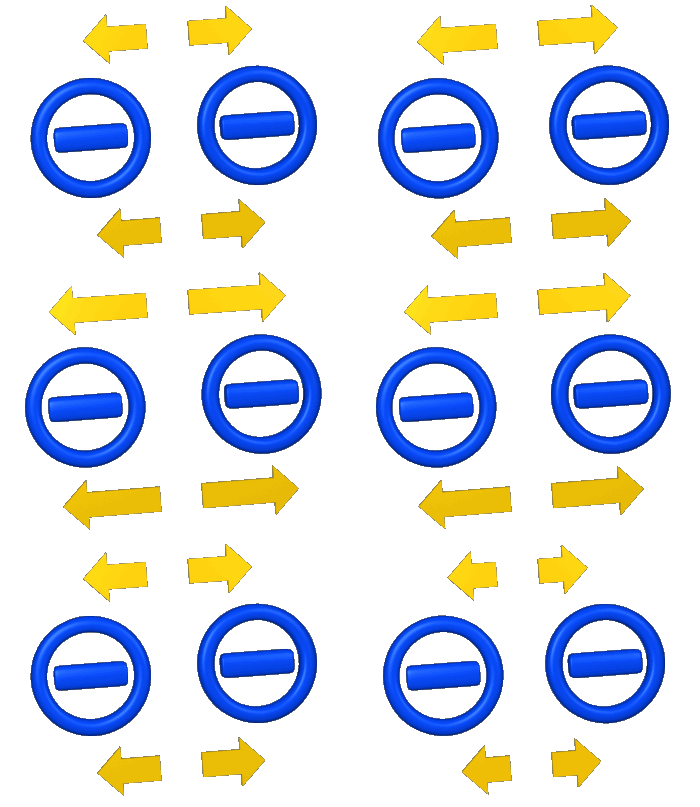
electron
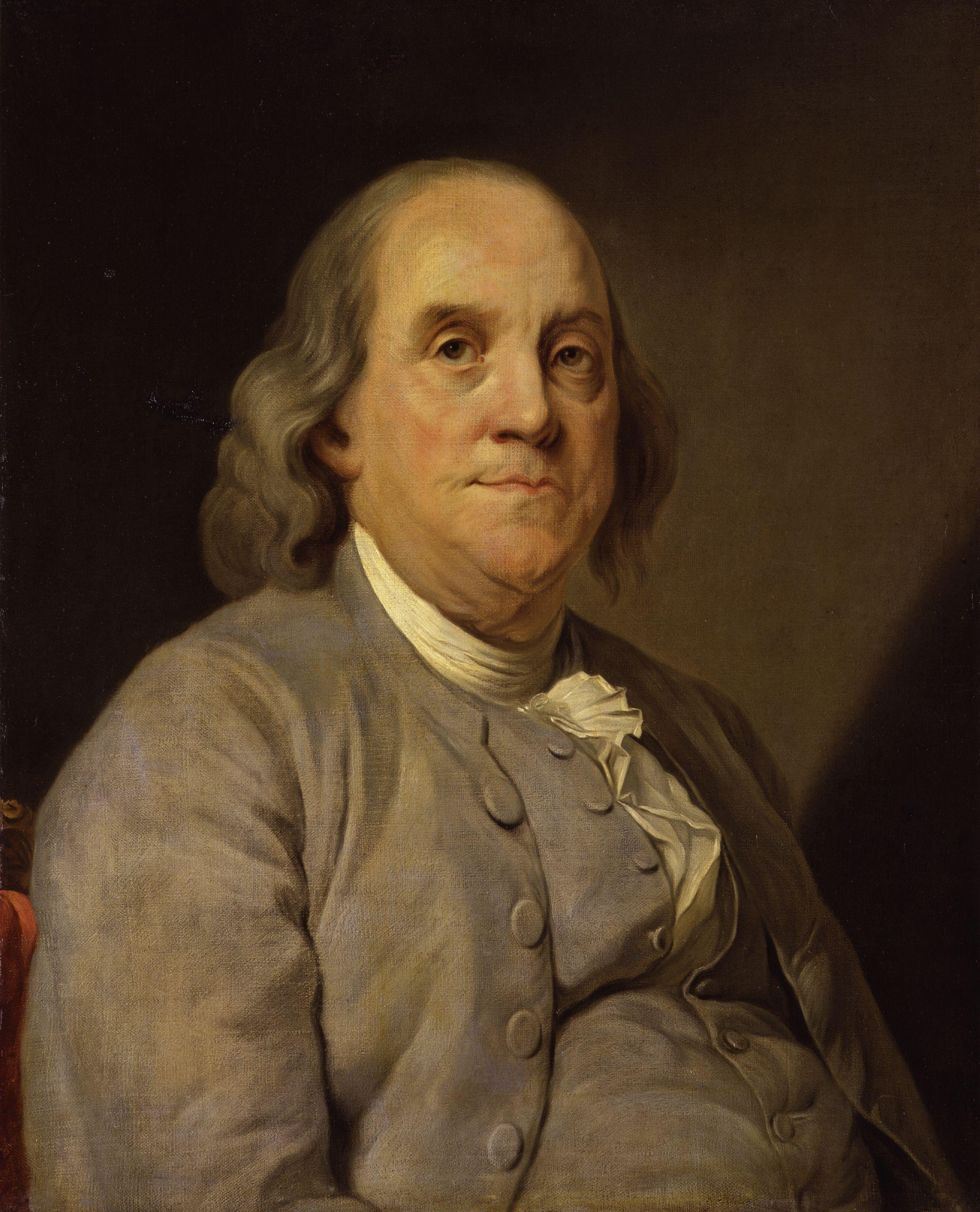
Ben Franklin
Franklin
1. Atoms become charged by gaining or losing ...
Electrons
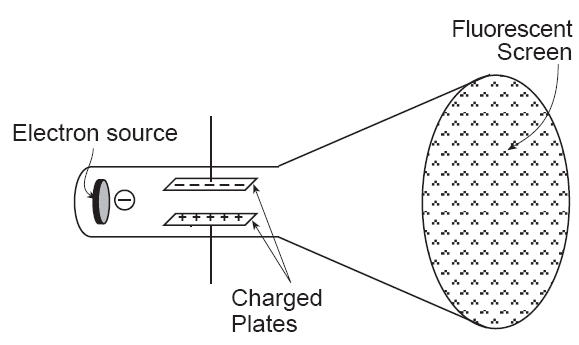
Charge plates can deflect an electron
20 p , 18 e-
+ 2
Why are protons never lost or gained?
Protons are held in the nucleus by the strongest forces in the universe
a) Ion: electrically charged particle:
Charge is unbalanced
negative charge
#e > #p
positive charge
#p > #e
2. Charged
objects lose their charge when grounded. (become neutral)
When grounded:
Negatively charged objects ...
... lose electrons and become neutral.
Positively charged object ...
... gain electrons and to become neutral.
|
|||||||||||||||



NYSSLS Reading Passage · Electricity & Magnetism
The Electrician of Philadelphia: How Benjamin Franklin Gave Electricity Its Language
Open Reading Passage →Check Your Understanding
5 quick questions — pick an answer to see if you’re right.
1. An atom is ordinarily neutral. What does that mean?
2. Atoms become charged by gaining or losing which particle?
3. An ion has 20 protons and 18 electrons. What is its net charge?
4. An object gains 3 extra electrons. What is its net charge? (Electron charge = −1.6 × 10⁻¹⁹ C)
5. A positively charged object is grounded and becomes neutral. What happened?