
I. Intro to Circular Motion
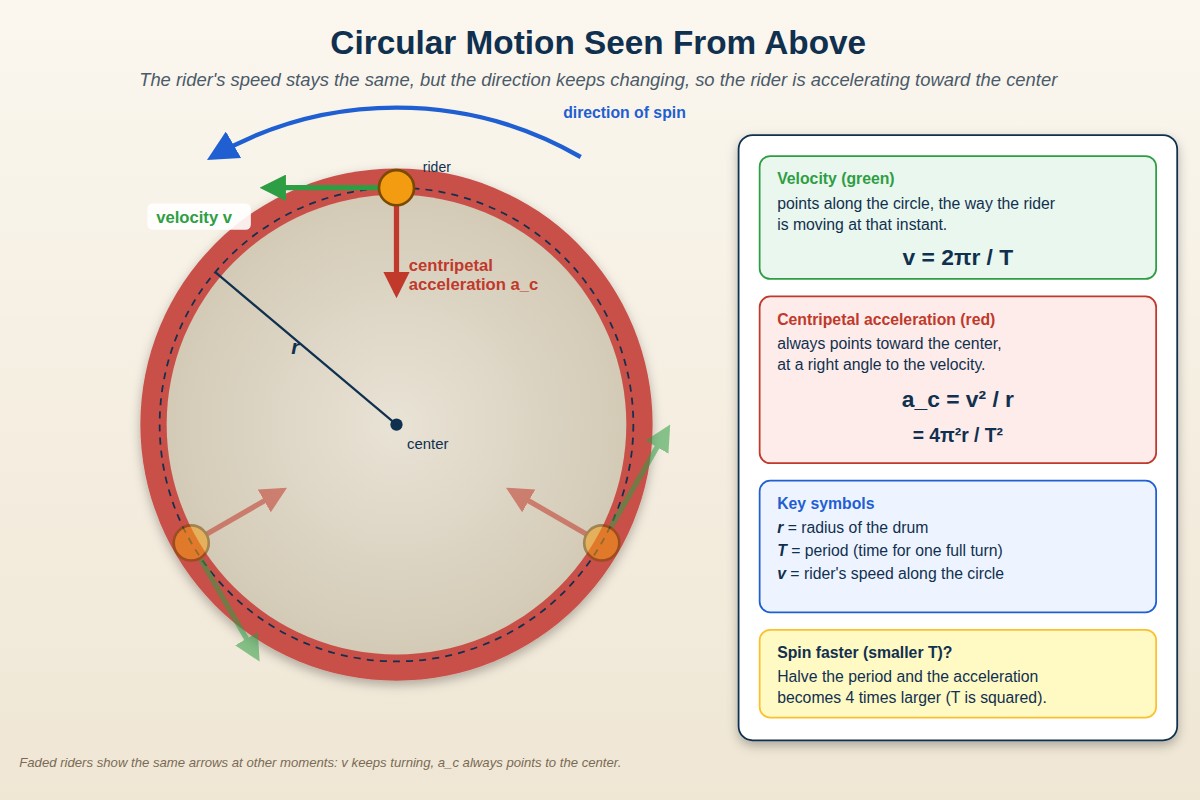
a) When an object is moving in a circle, at a constant speed, it is accelerating because it is
b) The direction of the velocity is to the circle.
Ex 1) In which direction will the car go when it hits the ice?

c) The direction of the force and acceleration vector:
a/r relationship? | a/v relationship?
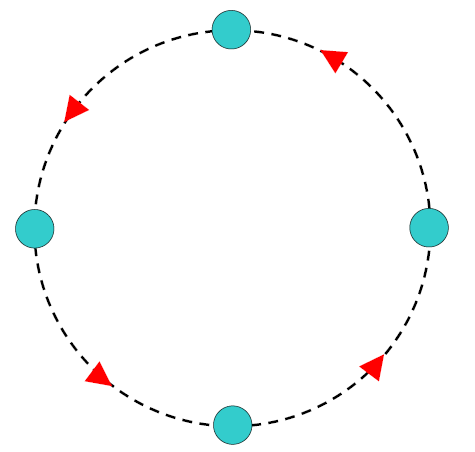
Ex 2) Draw the velocity, acceleration and force vector arrows for all 4 positions
F = ma =
Ex 3) A car is moving with a constant velocity in a circle with a diameter of d. It takes the car 36 seconds to make 6 trips around the circle. Find the car's acceleration.
Ex 4) Calculate the speed an earth satellite must have to maintain a circular orbit at an altitude of $2.0 \times 10^5 \text{ m}$ ($200,000 \text{ m}$) where the acceleration due to gravity is $9.2 \text{ m/s}^2$ (radius of the earth is $6,400,000 \text{ m}$).
Quick Check
3 questions on I. Kinematics & Fundamentals — pick an answer to check yourself.
1. A car moves in a circle at constant speed. If its speed doubles but the radius stays the same, its centripetal acceleration becomes…
2. A car travels at 10 m/s around a circular curve of radius 20 m. What is its centripetal acceleration?
3. A car circling a track suddenly hits frictionless ice. Which way does it move?
II. Surface &
Vertical Motion
Circular Motion Horizontal Surface w/ Friction
Ex 5) A penny with a mass $M$ is placed at a distance $R$ from the center of a moving record with a coefficient of static friction of $\mu$. The radius of the record is $R$ and it moves with a speed of $V$.
- a) What is the direction of the force on the penny?
- b) What is the speed of the penny in terms of the variables given?
Mass on a String - Vertical Circle
Mass $M$ attached to a string moves at a constant speed of $v$ in a vertical circle of radius $r$. Find string tension $T_{top}$ and $T_{bottom}$.
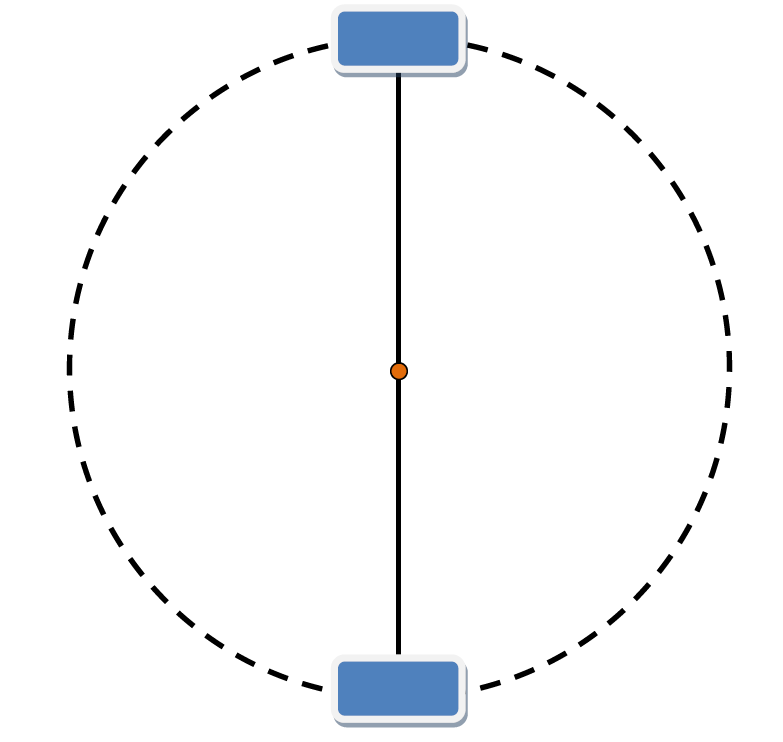
a) Tension Top - Make center of circle +
b) Tension at Bottom
Ex 7) What is the minimum speed needed to maintain the object's circular motion? What is $T_{top}$ at the minimum speed?
Roller Coaster
Ex 8) Car of mass $M$, circle radius $r$, speed $v$. Find Normal Force at top.
Interactive: Circular Motion Vectors (Velocity, Acceleration, and Force)
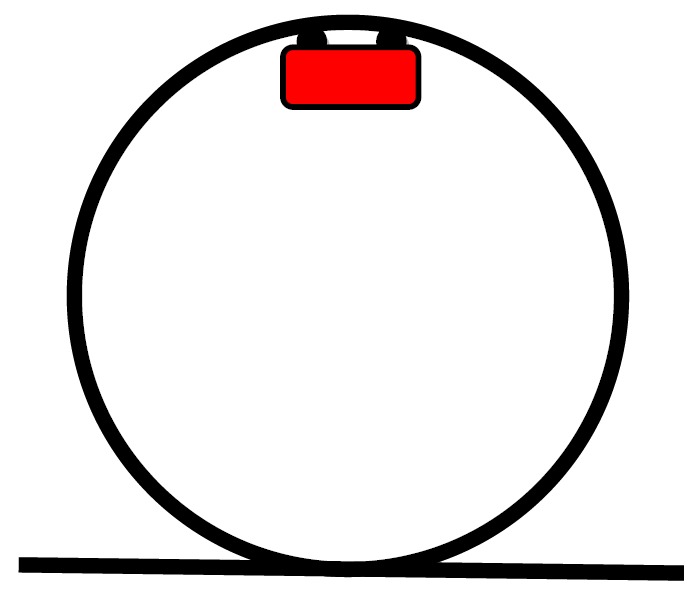
What minimum velocity is required for the roller coaster to prevent the passengers from falling off? Minimum $v$ occurs when
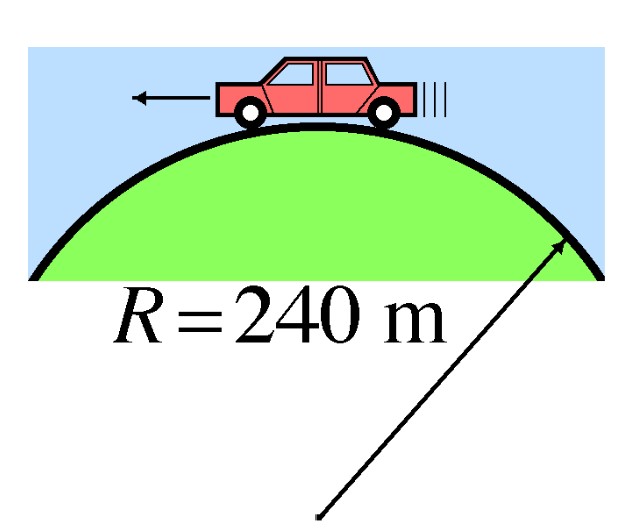
1. Find the normal force on the car.
b) Above what minimum speed will the car leave the road?
Quick Check
3 questions on II. Surface & Vertical Motion — pick an answer to check yourself.
1. A penny rides on a spinning record without slipping; static friction supplies the centripetal force, so v_max = √(μgR). If the penny is moved to a radius 4 times larger, its maximum speed becomes…
2. A 2.0 kg mass on a string moves in a vertical circle of radius 1.0 m at 4.0 m/s. What is the tension at the top? (g = 10 m/s²)
3. A roller coaster car goes over the top of a vertical loop at the minimum speed needed to stay on the track. At that moment, what provides the centripetal force?
III. Centripetal
Force Problems
- Find the force needed to keep a $0.50 \text{ kg}$ rat circling $15$ times every $10. \text{ seconds}$, if it is spun in a circle with a radius of $70. \text{ cm}$.
- Find the force of friction needed to keep a $3000. \text{ kg}$ car traveling on an exit ramp of $100. \text{ m}$ radius, with a speed of $22 \text{ m/s}$.
- A passenger cresting a hill at $15 \text{ m/s}$ ($r=30\text{m}$). Force felt from seat? ($g=10\text{m/s}^2, M=50\text{kg}$).
- Loop coaster ($r=40\text{m}$). What speed at top makes $60\text{kg}$ rider feel "weightless?"
- Rotor ride ($56 \text{ rpm}, d=6.0\text{m}$). Force on $90. \text{ kg}$ rider?
- How many g's does a pilot feel when executing a $100. \text{ m}$ radius turn at $100. \text{ km/hr}$?
(2) Car: $F_{friction}$ $= F_c$ $= \frac{(3000 \text{ kg})(22 \text{ m/s})^2}{100 \text{ m}}$ $= 14,520 \text{ N}$.
(4) Coaster: Weightless when $F_N$ $= 0 \text{ N}$ $\implies v$ $= \sqrt{gr}$ $= \sqrt{(10 \text{ m/s}^2)(40 \text{ m})}$ $= 20 \text{ m/s}$.
(6) Pilot: $v$ $= 100 \text{ km/hr}$ $= 27.78 \text{ m/s}$. $a_c$ $= \frac{(27.78 \text{ m/s})^2}{100 \text{ m}}$ $= 7.72 \text{ m/s}^2$. Dividing by $g$ ($10 \text{ m/s}^2$) yields $0.77 \text{ g}$'s.
Quick Check
3 questions on III. Centripetal Force Problems — pick an answer to check yourself.
1. A car rounds a curve of fixed radius. If its speed doubles, the centripetal force needed becomes…
2. A 1000 kg car travels at 20 m/s around a curve of radius 50 m. What centripetal force is needed?
3. A car rounds a flat, unbanked exit ramp at constant speed. What force supplies the centripetal force?
IV. Conical Pendulum
Ex) $1.00\text{-meter}$ pendulum, $m$, $r=0.50\text{ m}$.
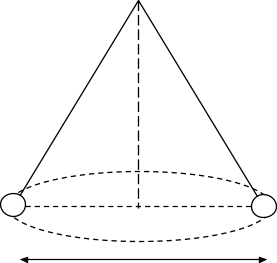
- Draw the FBD.
- Find $\theta$.
- Find $F_{net}$ in y and x.
- Find $v$.
- Find Period $T$.

y-direction (equilibrium): $T \cos(30^\circ)$ $= mg$ $\implies T$ $= \frac{mg}{\cos(30^\circ)}$.
x-direction (centripetal): $T \sin(30^\circ)$ $= \frac{mv^2}{r}$.
Substitute $T$: $mg \tan(30^\circ)$ $= \frac{mv^2}{r}$ $\implies v$ $= \sqrt{rg \tan(30^\circ)}$. Using $g$ $= 10 \text{ m/s}^2$, $v$ $= \sqrt{(0.50 \text{ m})(10 \text{ m/s}^2)(0.577)}$ $\approx 1.7 \text{ m/s}$.
Quick Check
3 questions on IV. Conical Pendulum — pick an answer to check yourself.
1. A bob swings in a horizontal circle as a conical pendulum. What force provides the centripetal force?
2. A conical pendulum has a 1.0 m string, and the bob moves in a circle of radius 0.50 m. What angle does the string make with the vertical?
3. For a conical pendulum, how does the string tension T compare with the bob's weight mg?
A 0.50 kg ball on a light string moves in a horizontal circle at constant speed, with the string making 37° with the vertical. Use $\sin37^\circ = 0.60$, $\cos37^\circ = 0.80$.
- Draw the free-body diagram of the ball. In which direction does the net force point?
- Predict: if the ball is made to go faster, does the angle get bigger, smaller, or stay the same? Could the string ever be perfectly horizontal?
- Check: find the tension and the ball's centripetal acceleration at 37°.
More Circular Motion Concept Challenges →
V. Concept Questions
(MCQ)
-
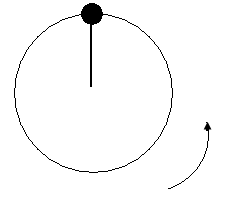
1. A ball is fastened to a string and is swung in a vertical circle. When the ball is at the highest point of the circle its velocity and acceleration directions are:
 (A)
(A)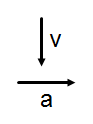 (B)
(B)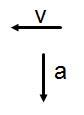 (C)
(C)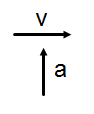 (D)
(D)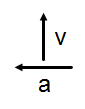 (E)
(E)
- 2. A ball with a mass $m$ is fastened to a string and is swung in a vertical circle. When the ball is at the highest point of the circle the tension in the string is:
-
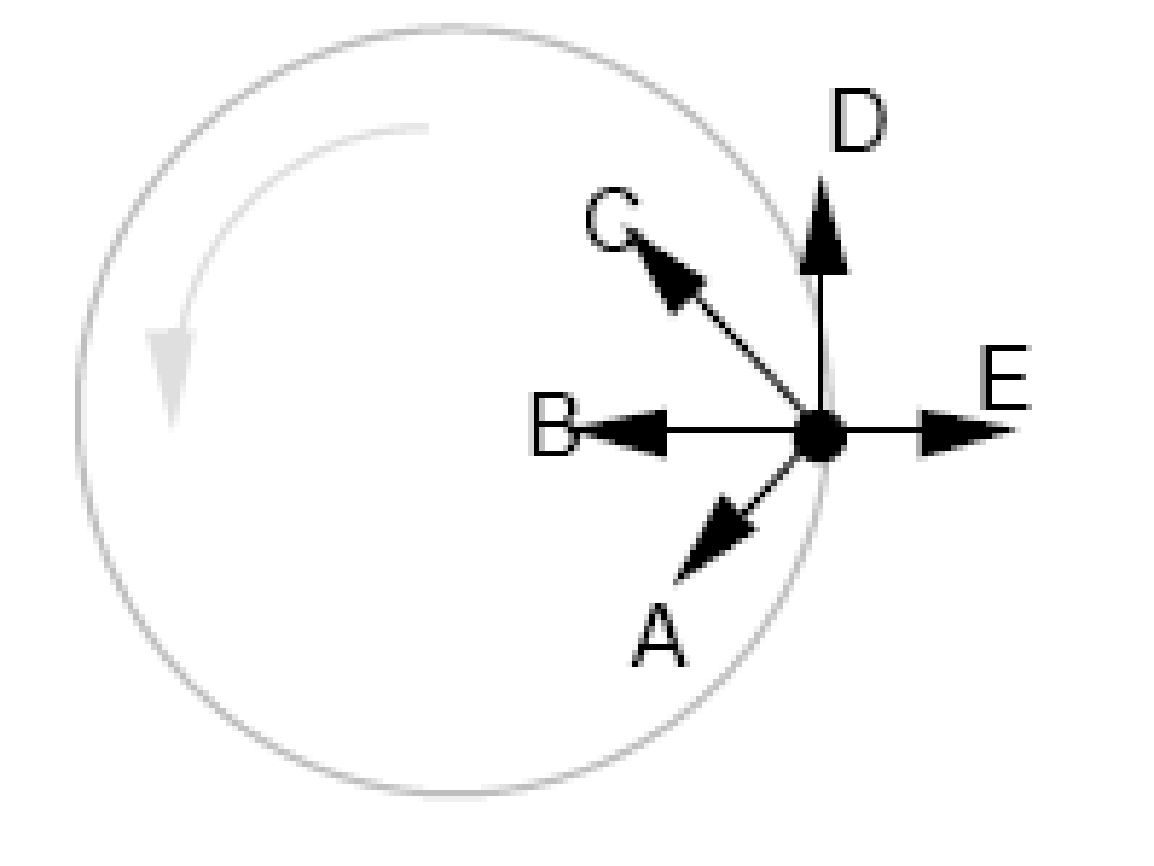
3. An object moves with uniform circular motion. Which arrow best depicts the net force acting on the object at the instant shown?
-
4. A motorcyclist moves at a constant speed down one hill and up another hill along the smooth curved surface. When the motorcyclist reaches the lowest point of the curve its velocity and acceleration directions are:
 (A)
(A) (B)(C)
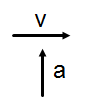 (D)
(D)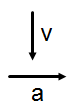 (E)
(E)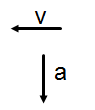
- 5. A car moves along the curved track. What is the apparent weight of the driver when the car reaches the lowest point of the curve?
- 6. What is the direction of $F_N$ of the driver at the lowest point?
- 7. A car is traveling on a road in hilly terrain. Assume the car has speed $v$ and the tops/bottoms have radius $R$. The driver is most likely to feel weightless:
- 8. What is the centripetal acceleration of a $0.2 \text{ kg}$ ball rotating at $3 \text{ m/s}$ on a $1.2 \text{ m}$ string?
- 9. What is the centripetal force exerted on the object in #8?
- 10. When a student stands on a rotating table, the frictional force exerted on the student by the table is:
- 11. A child whirls a ball in uniform circular motion. Which is NOT true?
-
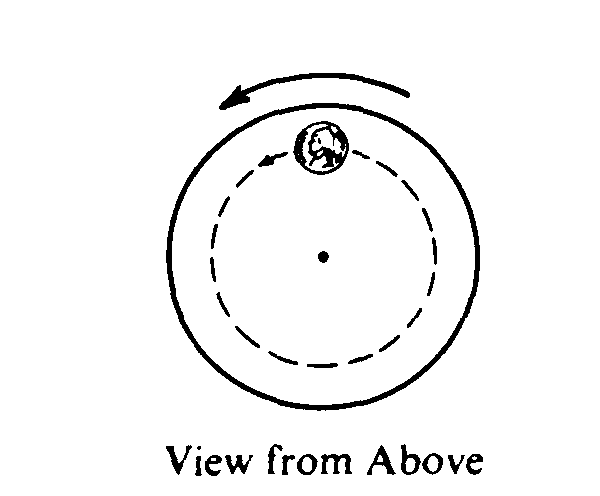
12. Turntable overhead view, coin moves counterclockwise. Which vector represents frictional force?
 (A)
(A)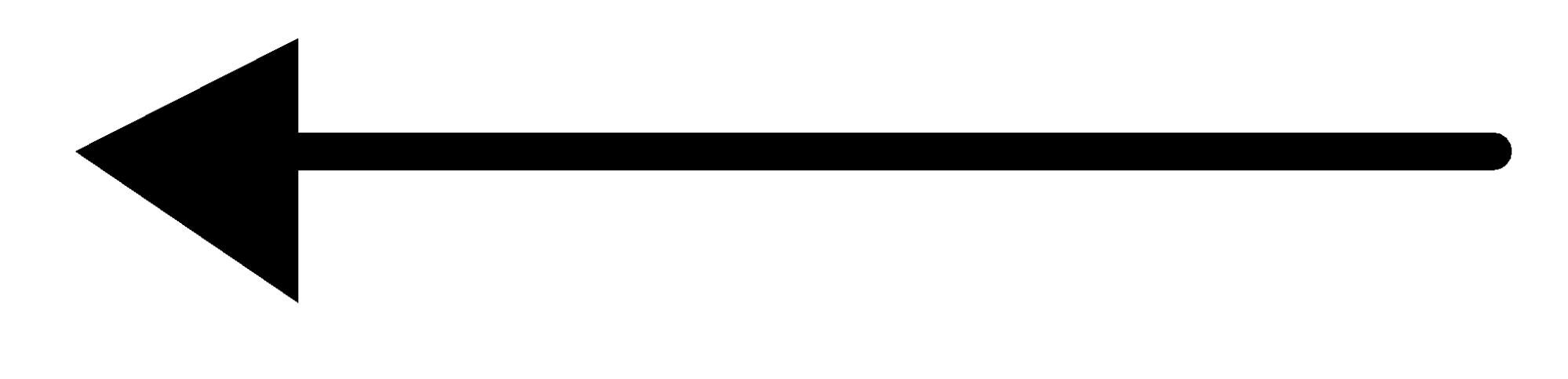 (B)
(B)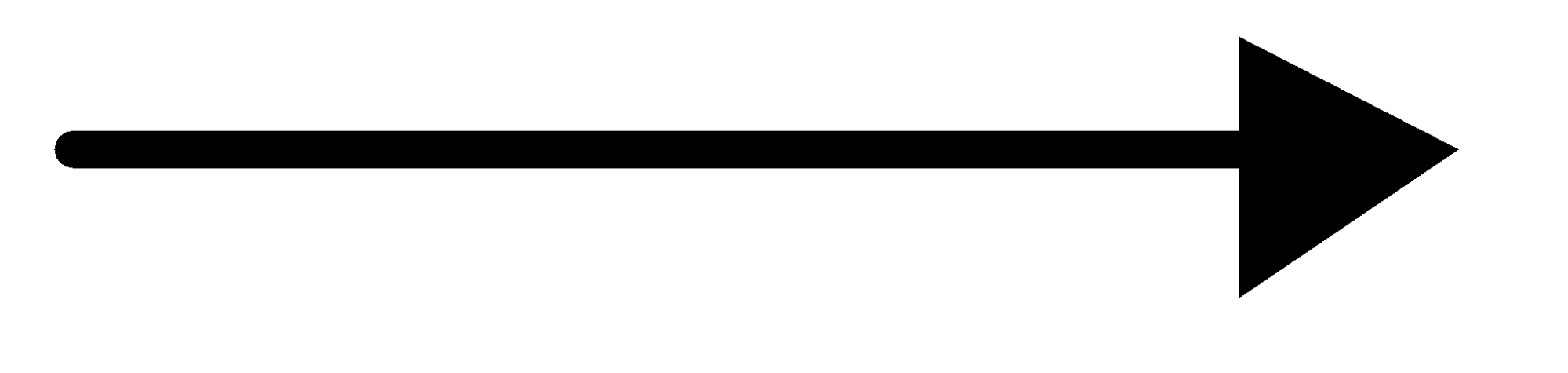 (C)
(C)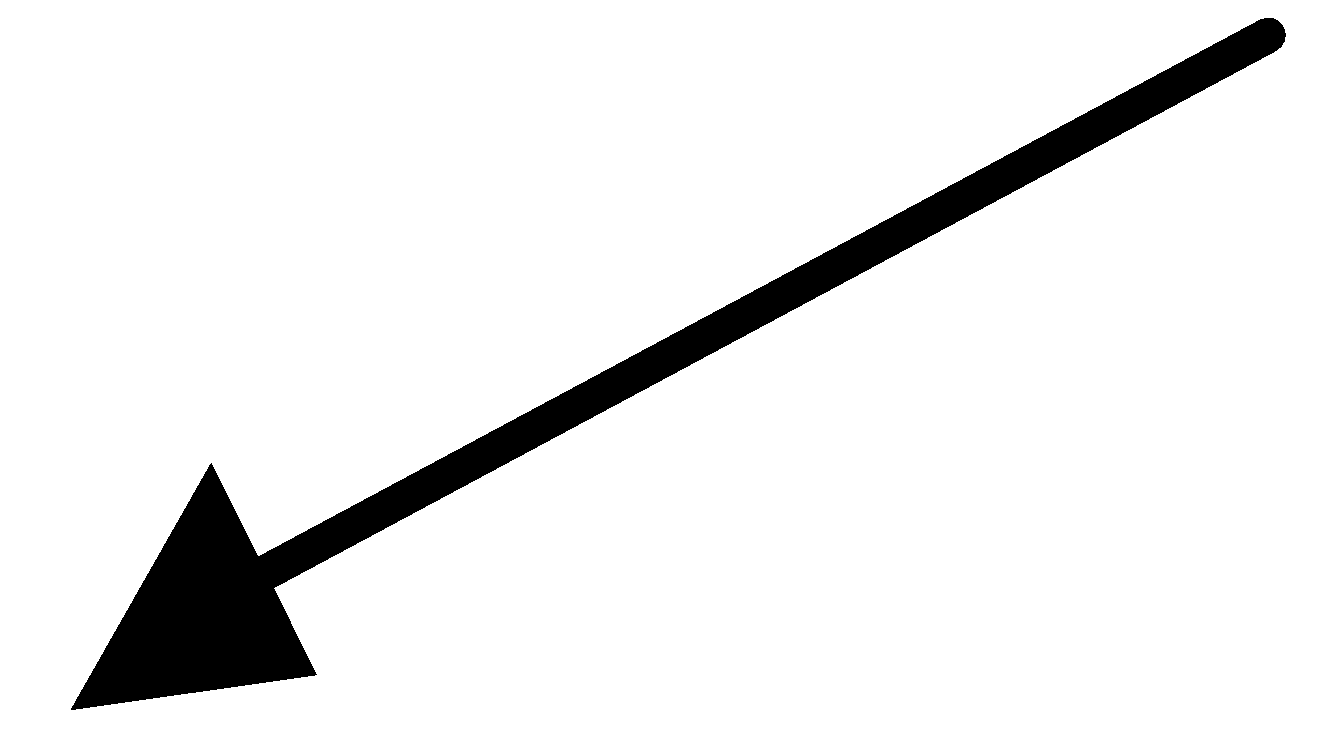 (D)
(D)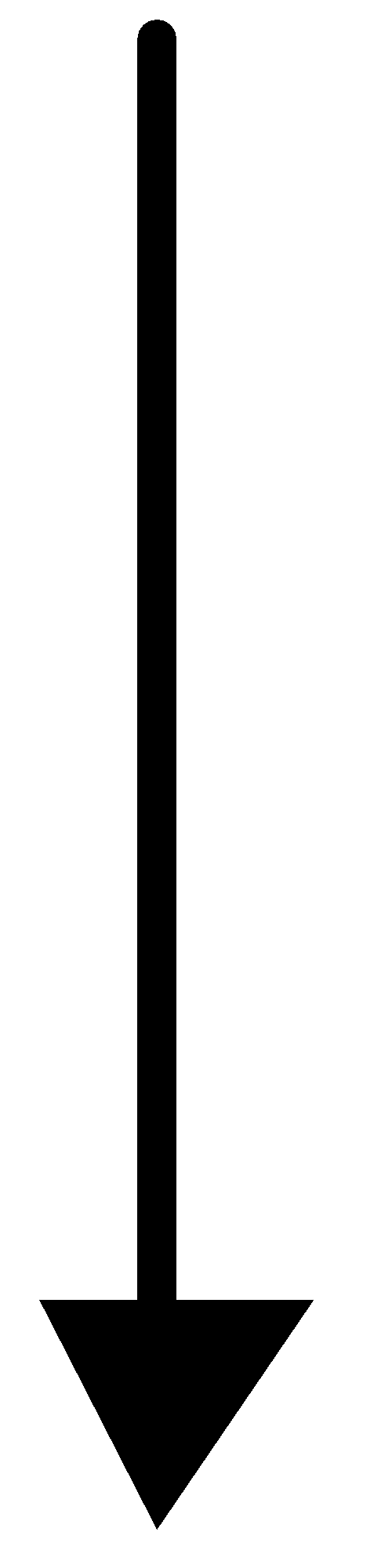 (E)
(E)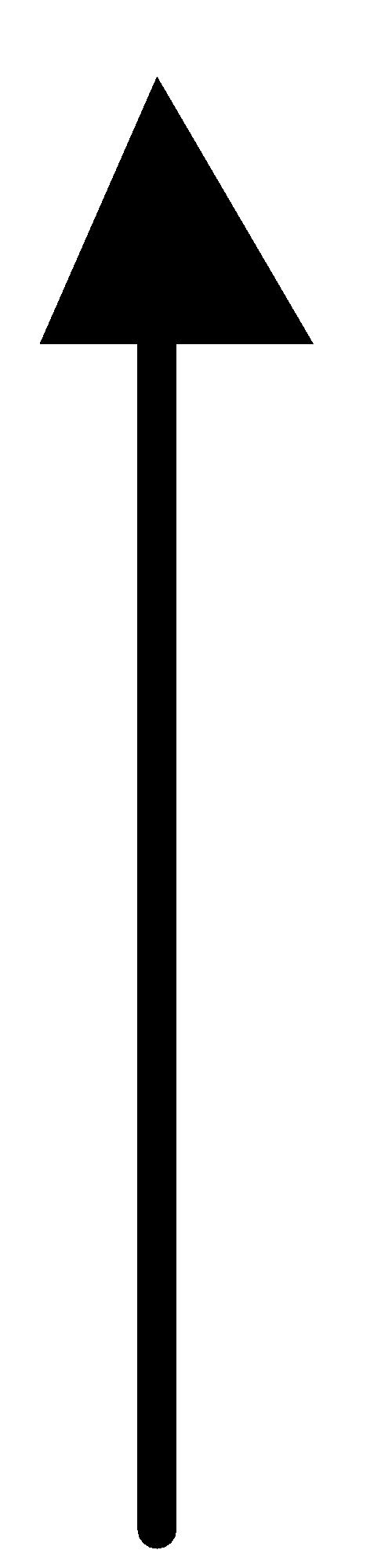
- 13. Force $F$, speed $v$, radius $r$. If $F$ is constant but $r$ is halved, the speed becomes:
- 14. If radius is quadrupled and speed is doubled, centripetal force:
-
15. Snapshot of three cars on elliptical track. Smallest displacement?
- 16. Which car in #15 must have non-zero acceleration?
- 17. Which car in #15 must have centripetal force directed to the center of curvature?
- 18. Roller coaster loop radius $R$. To just maintain contact at top, minimum velocity is:
- 19. Coin distance $r$ on turntable speed $v$. Minimum coefficient of static friction:
- 20. Car curve radius $r$ speed $v$ friction $\mu$. Maximum velocity to prevent skidding:
-
21. Object $m$ moves on frictionless table connected to $M$ through hole. Value of $M$ if stays in equilibrium:
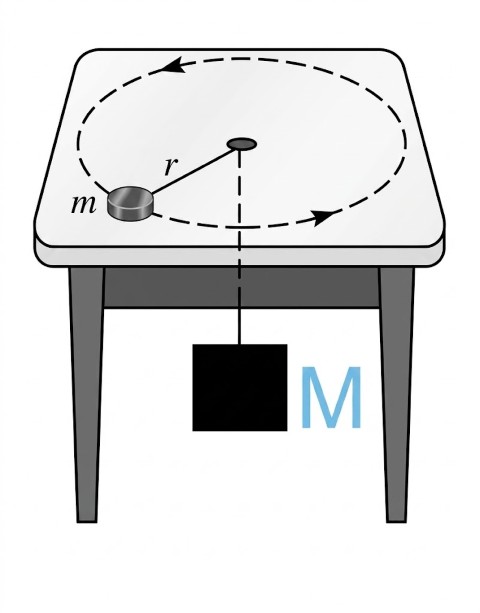
- 22. Rough turntable $2\text{m}$ from center, $2\text{kg}$ object, $5\text{s}$ period. $\mu_k=0.5, \mu_s=0.8$. Force of friction?
1:B | 2:C | 3:B | 4:C | 5:B | 6:A | 7:A | 8:C | 9:D | 12:D | 13:E | 14:C | 15:A | 17:All | 18:E | 19:B | 20:C | 21:A | 22:D
(Click the options above to check your answers!)
VI. Free Response
- Determine minimum angle at which a frictionless road should be banked for $20.0 \text{ m/s}$ at radius $200.0 \text{ m}$. (Use $g=10 \text{ m/s}^2$).
- Determine the velocity that a car should have while traveling around a frictionless curve of radius $100 \text{ m}$ and that is banked $20^\circ$.
- If the road was not frictionless, which way would friction point if the car exceeded this velocity? Slower?
- Radius $50 \text{ m}$, banked $25^\circ$, $\mu_s = 0.3$.
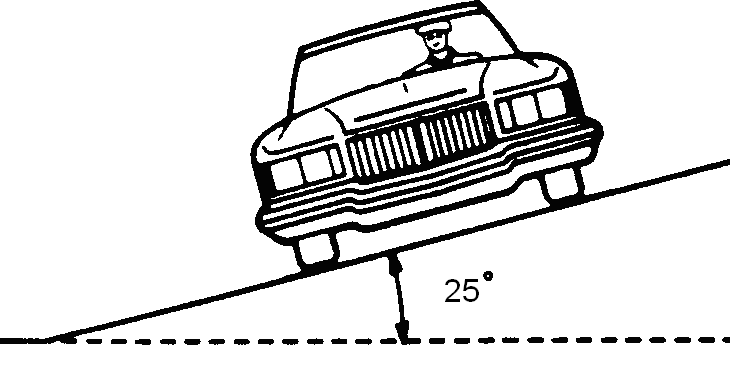
- Speed without friction.
- Max speed before sliding up.
- Min speed before sliding down.
- Ball $M$, length $L$ in vertical plane. At top $T=2Mg$.
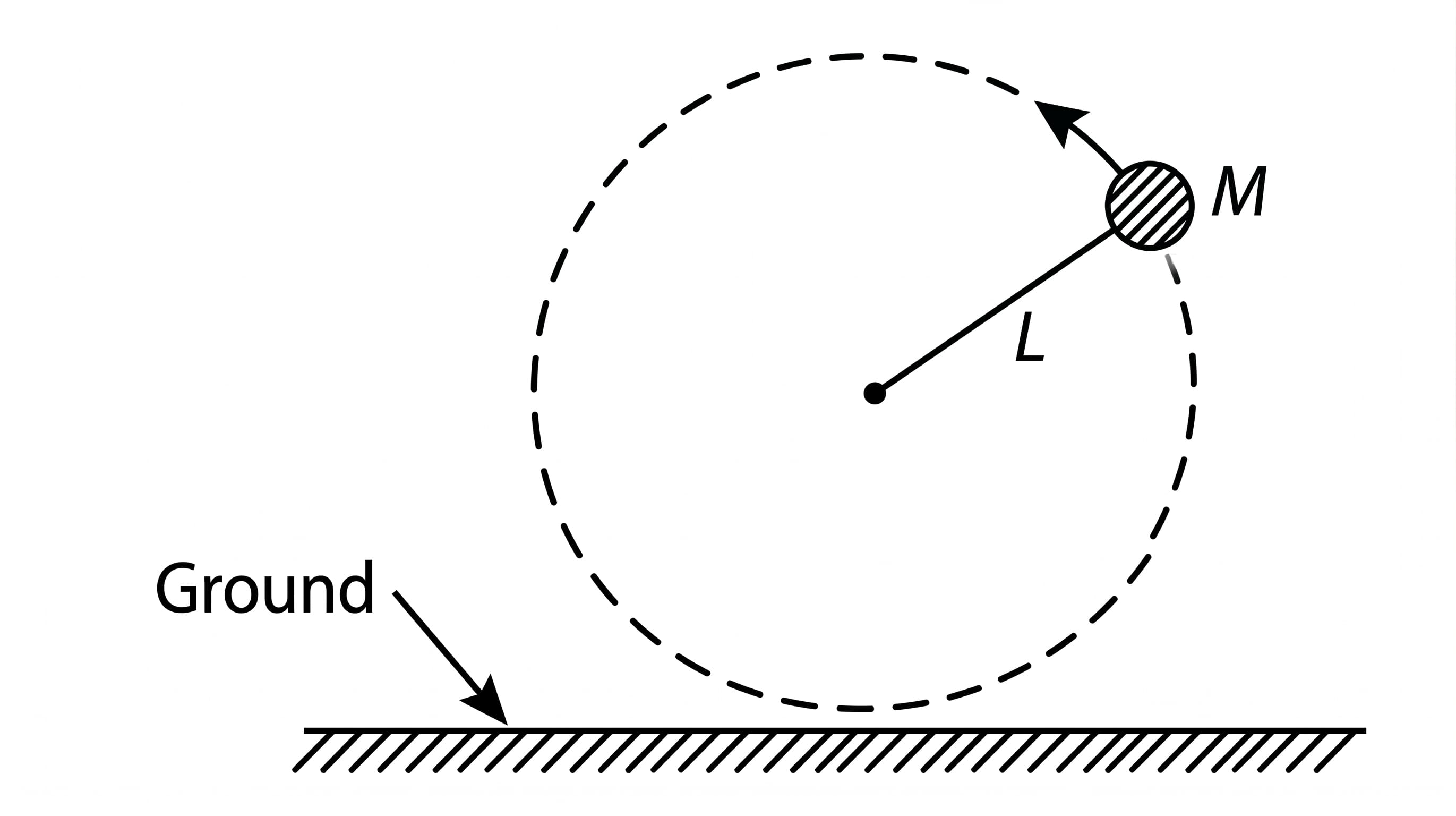
- Net force at top.
- Speed $v_o$ at top.
- Time to hit ground if breaks at top.
- Ball $M$, $R$, clockwise vertical circle.
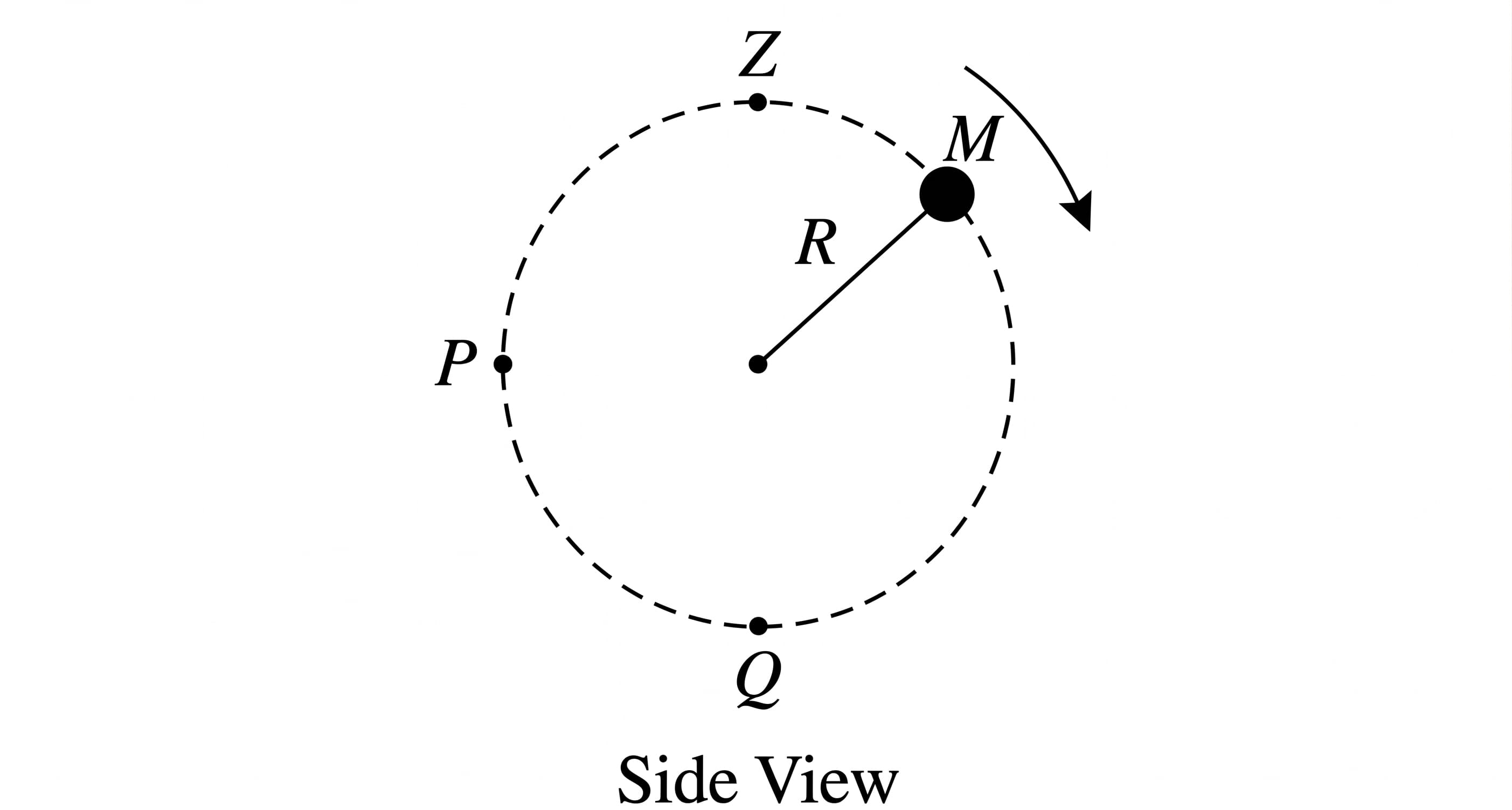
- Draw forces at P and Q.
- Derive $v_{min}$ at Z.
- Derive $v_{max}$ at Q without breaking ($T_{max}$).
- $0.10\text{-kg}$ rubber ball, $0.80\text{-m}$ thread. $v_{top}=6.0 \text{ m/s}$.
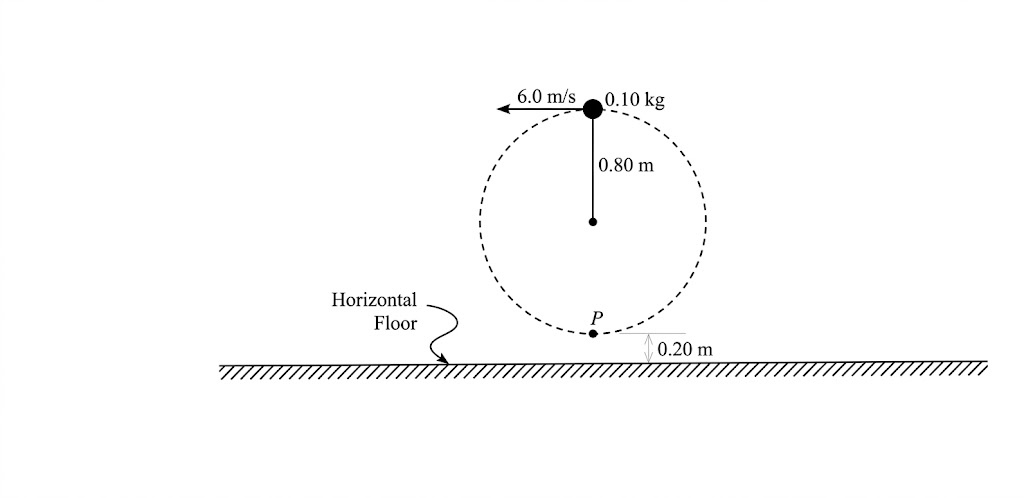
- Mechanical energy.
- Speed at P.
- Tension at top and bottom.
- Hand-held device swinger. $0.200 \text{ kg}$, radius $0.500 \text{ m}$.
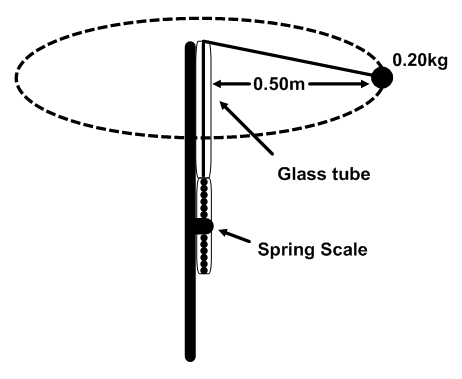
- Explain speed determination.
- Work in one revolution?
- Tension at $3.7\text{m/s}$.
- Angle if horizontal is impossible.
- String breaks at $v_o$, radius $R$, height $h$.

- Time hit ground.
- Horizontal distance.
- Draw forces acting on object.
$3Mg$ $= \frac{Mv^2}{L}$ $\implies v$ $= \sqrt{3gL}$.
If string breaks, it acts as a horizontal projectile from height $h$ $= 2L$.
$\Delta y$ $= \frac{1}{2}gt^2$ $\implies 2L$ $= \frac{1}{2}gt^2$ $\implies t$ $= 2\sqrt{\frac{L}{g}}$.
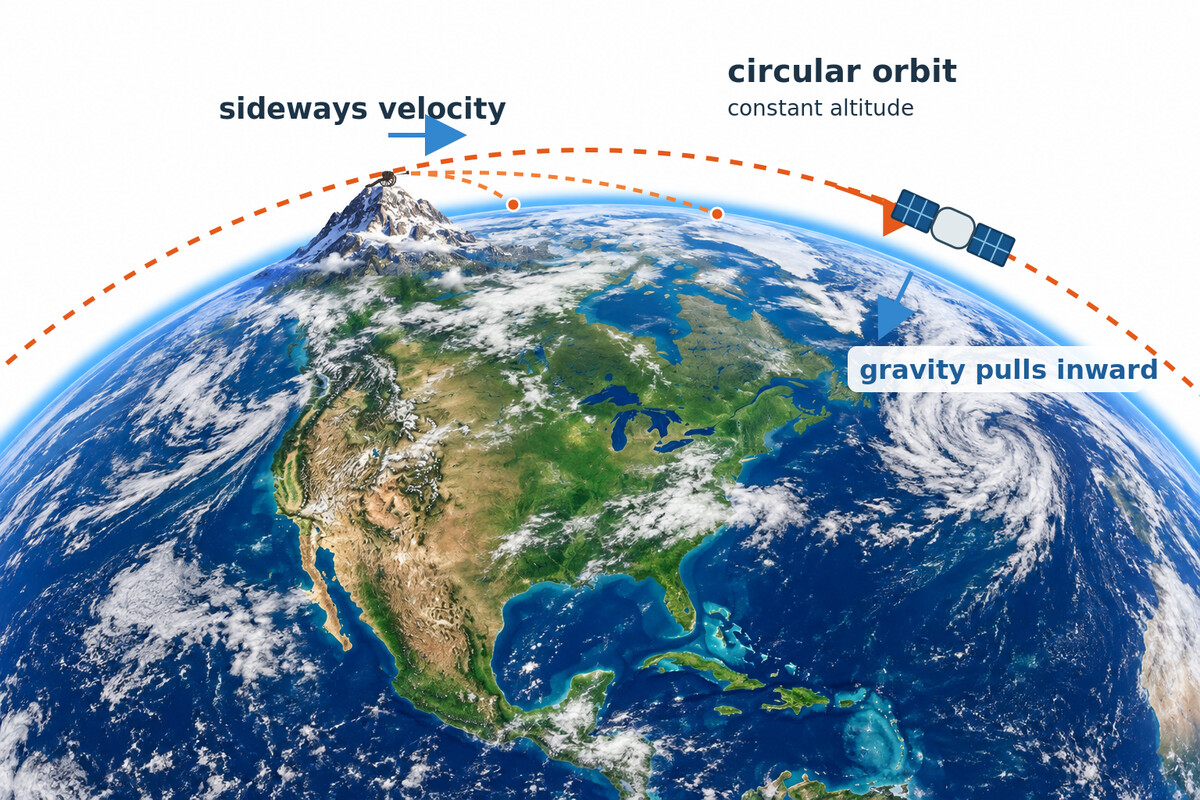

NYSSLS Reading Passage · Circular Motion
Falling Sideways: The Hidden Physics of Turns, Loops, and Orbits
Open Reading Passage →Check Your Understanding
5 quick questions — pick an answer to see if you’re right.
1. A car moving in a circle hits a patch of ice and loses all friction. In which direction does it move?
2. A roller coaster loop has a radius of 40 m. What is the minimum speed at the top so riders feel weightless? (g = 10 m/s²)
3. What friction force keeps a 3000 kg car moving at 20 m/s around a curve of radius 100 m?
4. A 50 kg passenger crests a hill of radius 30 m at 15 m/s. What normal force does the seat exert? (g = 10 m/s²)
5. A ball is whirled in uniform circular motion. Which quantity is NOT constant?
Looking down from above, a ball on a string moves in a horizontal circle at constant speed. A student draws the velocity and a force on the ball at the instant shown:
Student: "The ball moves at a constant speed, so its acceleration is zero. The outward force I drew is what keeps the string tight. It pushes the ball out away from the center."
What, if anything, is wrong? If something is wrong, explain the error and fix it. If nothing is wrong, explain why it is correct.
More Circular Motion Concept Challenges →